After wrapping up as a judge for the Bookstagang 2024 picturebook awards and looking at my tallied list of themes that recurred in the 570 new releases that were submitted for scoring, I have serious question to ask our publishing friends.
Are you guys okay?
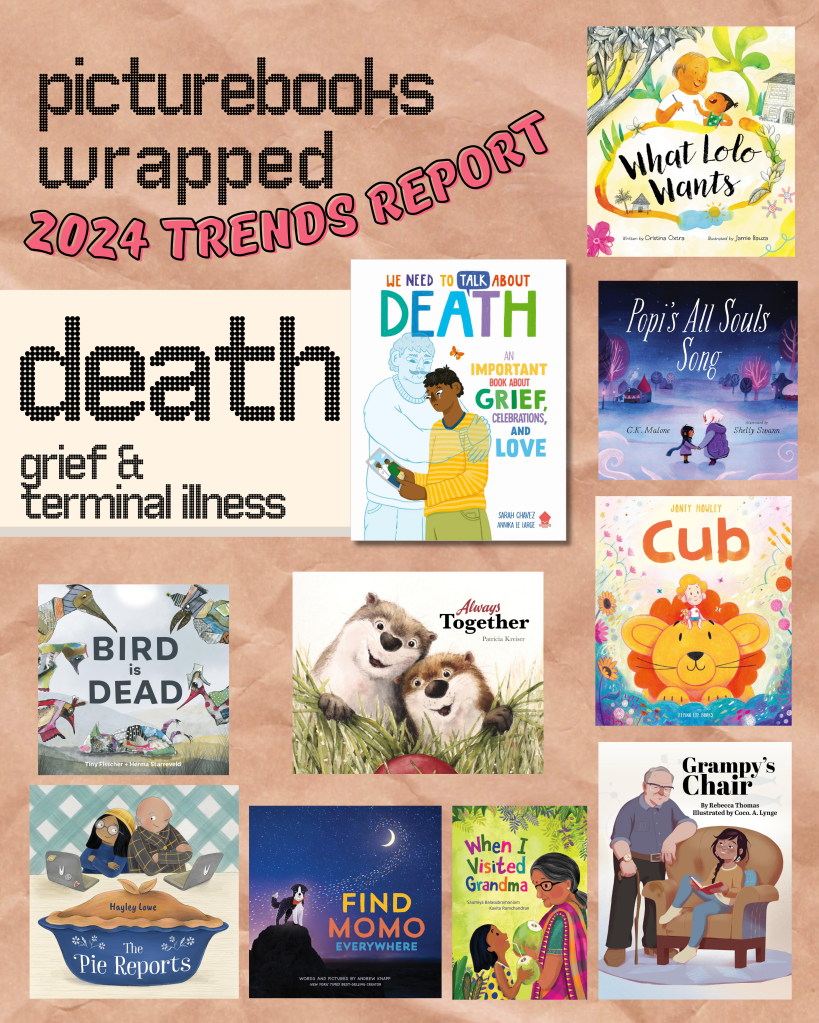
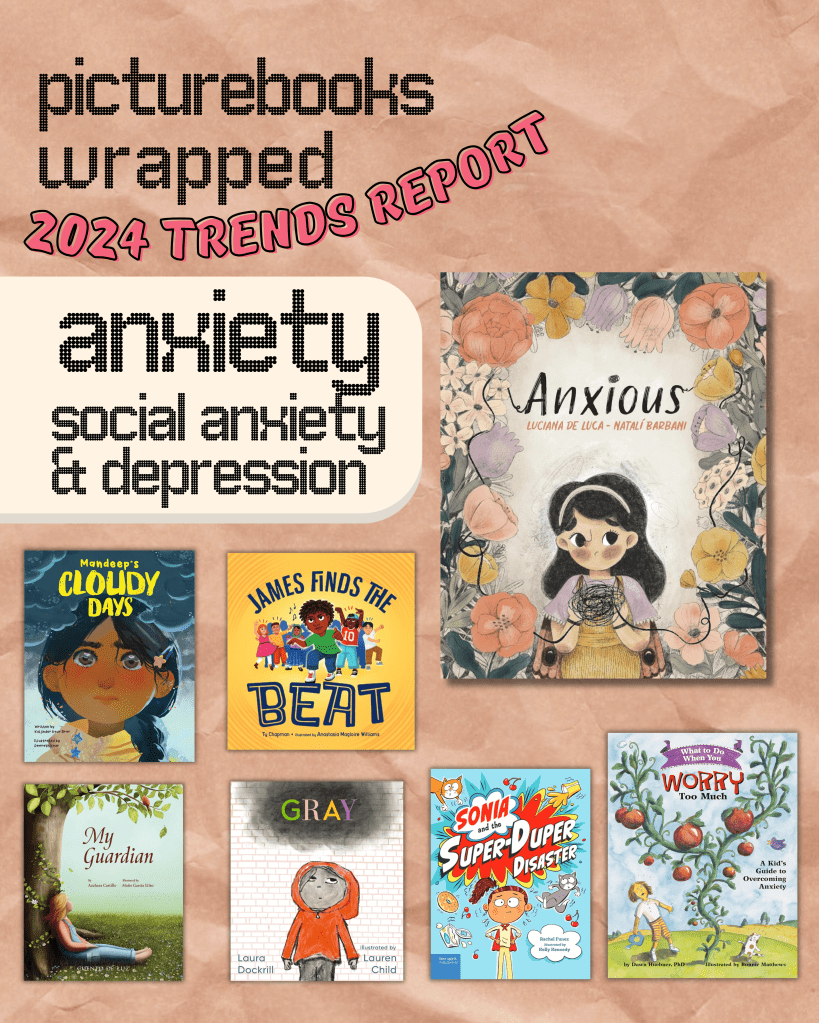
I am almost certain the answer is no, because nobody seems to be okay anymore and this year’s big trends are really driving that stake into our collective barely beating hearts. We’re seeing an unprecedented number of picturebooks about; death, depression, dementia, displacement, and a concerning dose of severe anxiety.
Little Bo Peep needing to practice therapeutic coping mechanisms to deal with the panic attacks brought on by the death of her sheep, as she wanders the moors in search of a new home would fit right in with this year’s catalogues.
Gone are the days of kindness and capybaras, oh no, now it’s dead dogs and dead otters and dead grandparents galore. Every time I saw a grandparent appear on a spread I clenched my butt hole readying myself for their inevitable and untimely demise.
It makes sense when you consider these books were acquired most likely some time in 2022. We were still in the throes of pandemic pandemonium, and had not become quite as desensitized to the ongoing onslaught of covid as it continues today. We were definitely not okay. Was that back when there were still killer bees, or murder hornets, maybe there were the wildfires? Or was that 2023? Please someone put out a recent history book because I can’t keep track anymore and it’s still as fresh as the corpse of the dead bird in BIRD IS DEAD.
The question I have is, if this was the vibe that 2022 brought forth in picturebooks then what fresh illustrated hells will be unleashed upon us yet to come? Our global situation has moved laterally at best since 2022 and the forecast for 2025 isn’t looking sunny.
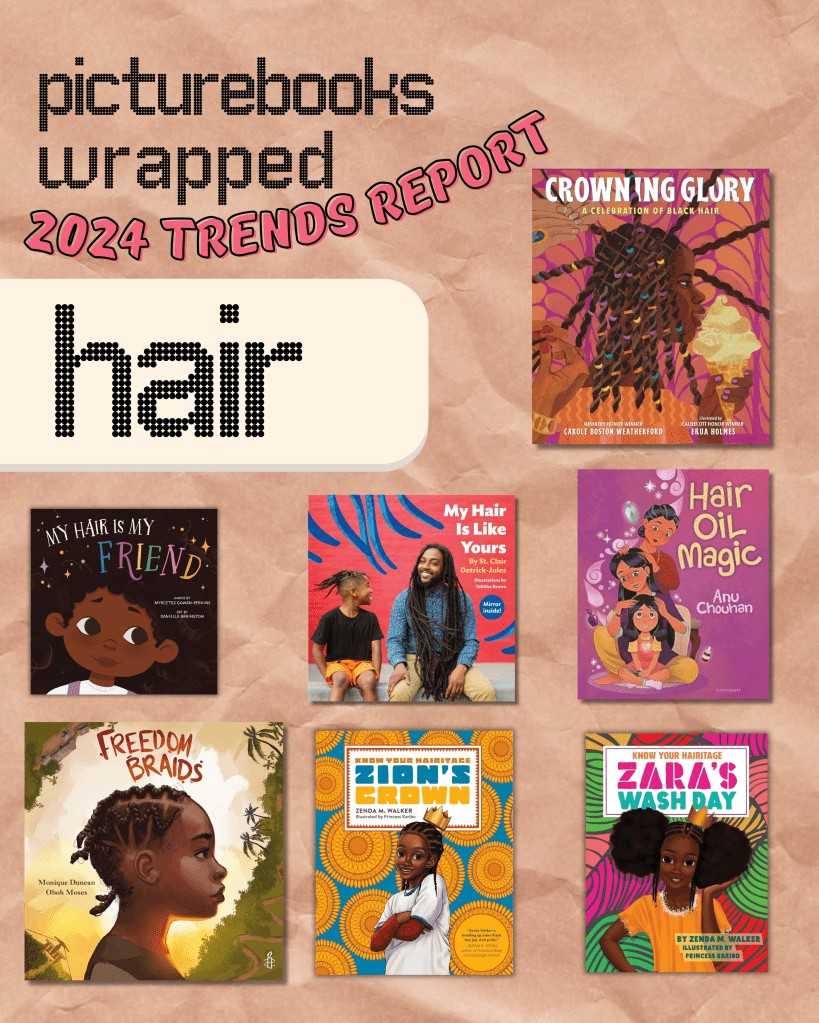
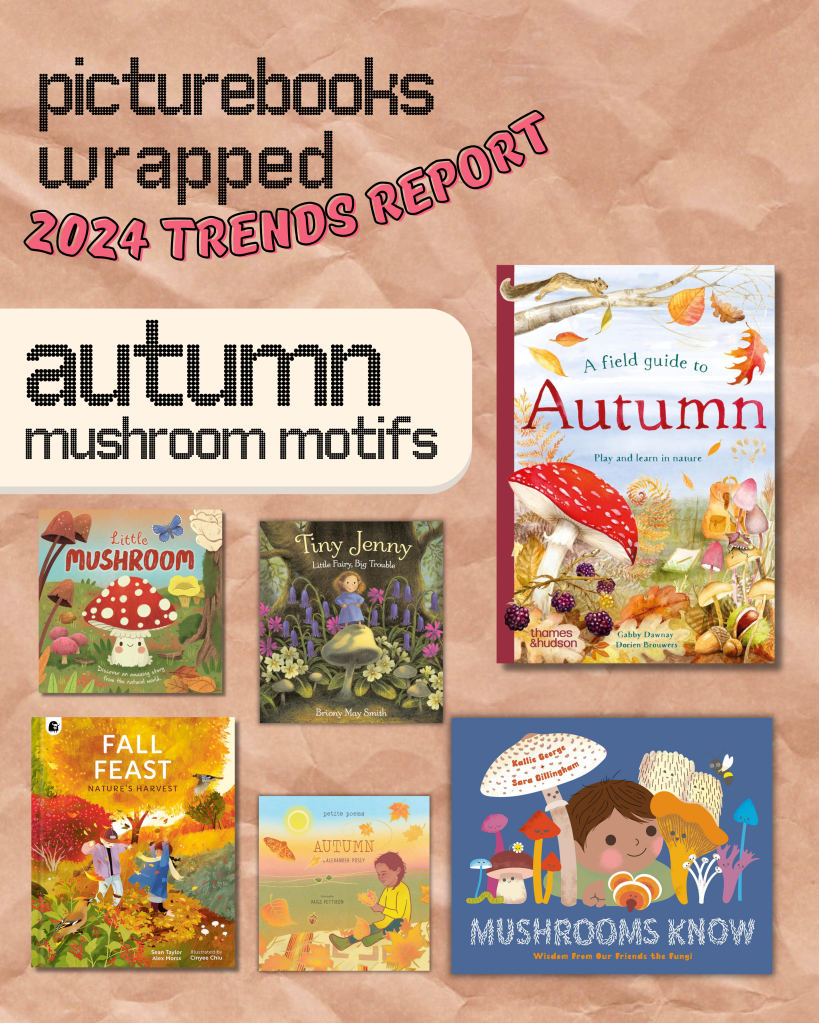
Not to worry, it’s not all doom and gloom, 2024 brought us a lot of very nice books about hair and a good number of cosy autumnal mushroom books popping up to soften the harshness of mortality in this cruel world. So there’s that to find comfort in.
There is a continued general movement away from the minimalism in design and efficiency of word counts that we were seeing back in 2020. The picturebook trends are flowing into full blown maximalism in almost every element except for paper printing and binding details. I’m seeing a real lack of gold foil and everyone is skipping the embossed covers (expensive paper engineering and print details are no longer in the budget it seems).
Word counts are way up, testing and stretching the boundaries of this screen fed generation. It’s no longer a Hemingway-esque test of economy to see how much meaning you can jam into a paragraph shorter than a haiku and I for one am relieved. The scripts are getting downright flowery, poetry is seeping into every genre, both verse and prose. We’re even seeing poetry appearing in our non-fiction new releases. This is a nice extrapolation of the emergence of narrative non-fiction that has been really growing in the last few years.
This year saw a real variety of artistic styles, and I love to see it. The boundaries of what qualifies as an appropriate illustration for a children’s book are being explored. A number of deep richly coloured hyper realistic painted books have come out.The overall palettes are natural and warm. We’re seeing lots of details being included all over the place. The possibilities are endless it seems and I can’t wait to see how things continue next year at this rate.
I know the question everyone actually wants answered is are we really seeing a decline in diverse representation? After the recently released Guardian article citing a serious drop in diverse representation as tracked by the research from CLPE from 2022-2023 in UK published children’s there is real concern.
The CLPE data showed increase in the rise of background characters that were racially minoritized and a drop of racially minoritized main characters. Although picturebooks had the highest proportion of racially minoritized characters with a 3% increase from 2017.
“Whilst this is disappointing, we have always expressed cautious optimism regarding the increased output of recent years,” writes Farrah Serroukh, CLPE research and development director, in the report’s foreword. “Historical patterns would indicate that gains regarding inclusion are susceptible to being constrained by the cyclical nature of publishing trends.”
Do those numbers hold up for North American publishing? According to the statistics put out by the CCBC, no. 2022-2023 did not see a decline. However there wasn’t a significant increase either. The market seems to have plateaued on how much diversity it’s willing to float. Furthermore the North American statistics indicated that the representation increase that did occur was localized to the representation of minorities by authors who did not share those identities, there was no significant increase in representation written by those minorities.
So what did that mean for the books we received in 2024? The data from these organizations, the CLPE and CCBC respectively, does not exist yet for 2024. Admittedly the sample size we have here in the Bookstagang of 570 books is much smaller than the 4-5,000 that the CLPE and CCBC have for their studies, but it is an immediate look at what’s happening right now in 2024 and a more localized look at the kind of stories that are being told.
As someone who has judged this particular list for 5 of the past 6 years, I would say that I am noticing a general trend away from diverse narratives but not away from diverse representation.
It seems to me that ‘diverse stories’ are more than ever being slotted into a category of books that don’t really need to have a narrative arc and I am concerned about how tenable that is for the continuation of the diversification of children’s literature. If diversity continues to be relegated to books that do not have storylines, then ‘diversity’ may very well prove itself to be a trend that doesn’t work under capitalism, instead of a genuine move to a more just system within children’s publishing. There are only so many books that people can buy that are catalogues of what different children look like accompanied by lists or poems. I am uncertain the market will be able to carry them. Only time will tell.
Forecast for the next few years:
Now, I’m no oracle, but here’s what I think we’re going to see in the next couple of years.
I think we will probably see a continuation for a little while at least of the exceptionally heavy topics, because it’s probably the beginning of the wave and then I suspect it will get very silly (which I’m looking forward to.)
I think we will see a continuation of the trend of maximalism, and I think that there will be a continued preference for the cosy and the comforting. I think we can expect more warm palettes and frogs making stew wearing little jackets. I think that it’s a reaction to these uncertain times and that it will continue for a while.
Given the uncertain political climate, I do wonder if we are going to see a decline in efforts to continue to diversify children’s publishing at least for the next five years. Certainly I think a lot more publishers who have been open to representing LGBTQ+ stories and racially minoritized stories may feel discouraged at the risk of losing money. We will have to see how that pans out, and I think that there are a lot of fights to be had in the coming times.
If I could make one request of publishers, for any who are listening, please stop killing dogs unexpectedly. We can’t take it anymore.
How does a person get their book published? Well there are a lot of different options actually, and though at times that may seem overwhelming to a writer just trying to find their way, we are lucky to be writing in this world with all of the various avenues available to us. If you’re feeling uncertain of what is right for you, and where to begin, let me break it down for you.
First of all you have two main choices, and then within that there are a lot of variables: Traditional vs. Self-Publishing.
Traditional Publishing
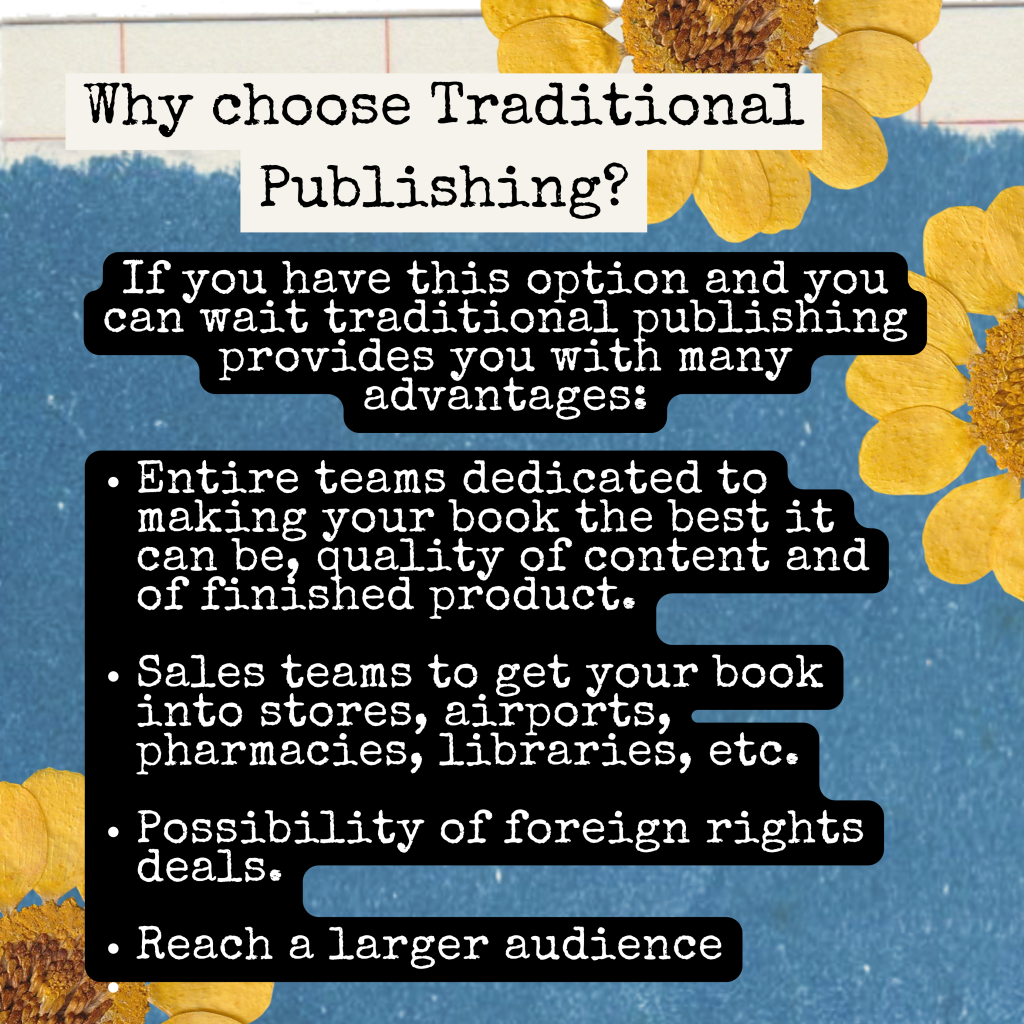
Traditional publishing is when a publishing house acquires a manuscript from a writer in exchange for an advance (money). The publishing house then takes that manuscript and it goes through several stages of development at the publisher’s expense, to bring it to it’s final form on the shelves in a bookstore. There are dedicated departments for each element of creating, selling, and publicizing the book: editing, design, layout, binding & printing, shipping, sales, marketing, and publicity. After the book is published, the author begins to receive royalty payments on book sales after the number of sales exceeds the advance that the author was paid upfront.
Variations in Traditional Publishing Houses
There is a huge variety within the realm of traditional publishing. Some publishing houses are enormous, and buy out smaller ones (such as Penguin Random house, Simon Schuster and, Hachette.) These houses publish and distribute thousands/millions of books each year world wide. Meanwhile other publishing houses (indie publishers) are tiny, a handful of people each doing three departments each and publishing only a few new titles each year with potentially very small print runs of a few thousand or less. The quality and vibe of each of these houses is entirely different and there are relative benefits to working with a big house vs. an indie.
Big House Benefits:
-Bigger budgets for every department mean a lot more is possible
-More money for marketing
-Access to more opportunities for your book to be carried in different stores worldwide
Indie House Benefits
-Each person working on your book is passionate and committed to its success.
-More likely to take risks in terms of edgy content, new and up and coming illustrators, etc.
-Authors have more contact with their publisher, and potentially more say in decisions made about their book.
Independent publishers and self-sublishing are NOT the same thing. Although often people might label a self-published book as coming from an independent publishe when it is not. There are key differences between an independent small publisher and self-publishing.
What is Self-Publishing?
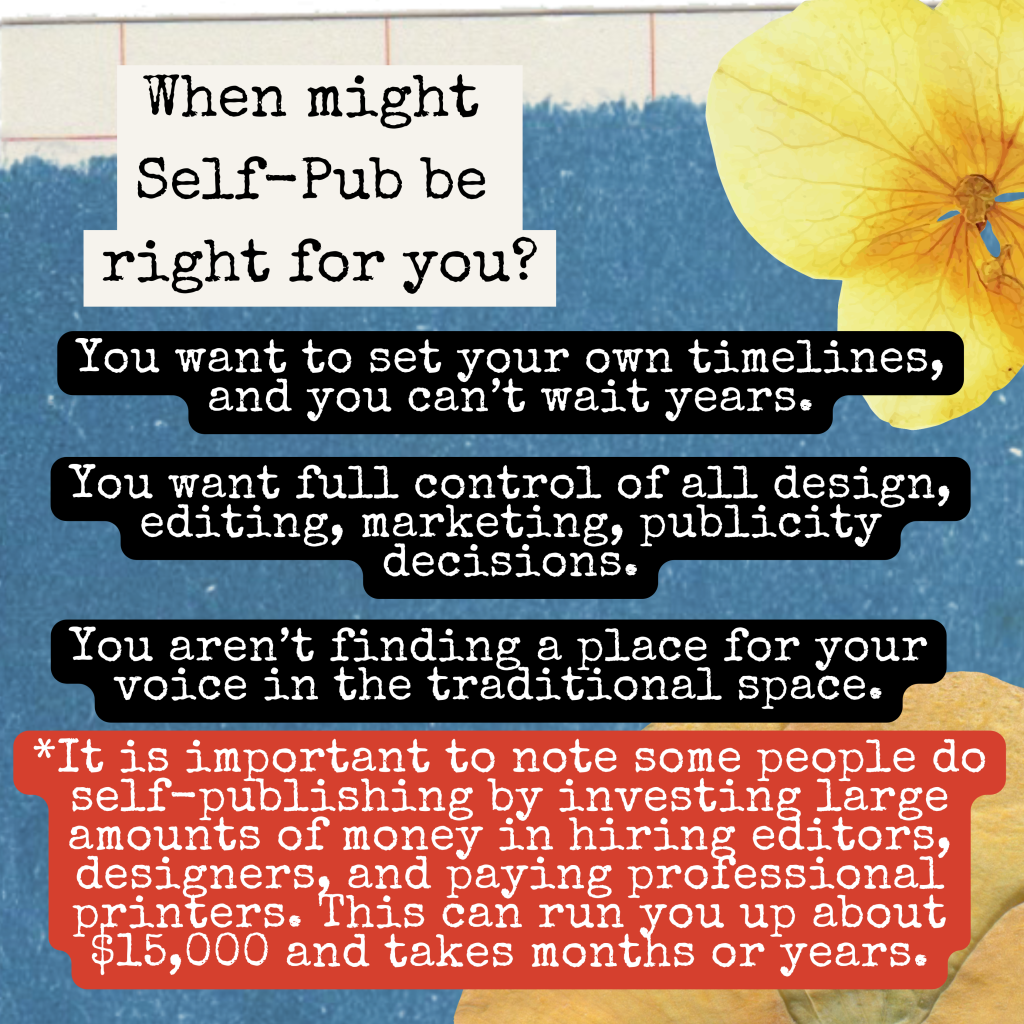
Self-Publishing is when a writer produces their own book and personally sells it. There is no submission process, no gatekeepers deciding whether or not a manuscript becomes a book. There are no outside factors in the decision to publish, it is undertaken at the author’s expense. There are different ways to self-publish, some are more expensive and time consuming than others.
The easiest and fastest way to self-publish a book is using Amazon KDP. All you have to do is upload a pdf of your manuscript and within seventy two hours it will be available for purchase in much of the world via Amazon. The most difficult part of this process is getting the formatting of your pdf correct, that can be a bit finicky and annoying. Allowing for tech difficulties in pdf formatting it will still only take you a couple of days to complete. Amazon then gives you a percentage of those sales directly deposited to your bank account, and you can control the price of the book. Amazon will take most of the profit.
Some people go to great lengths and invest huge amounts of money to take their manuscript and have it produced more like a traditionally published book than the Amazon route, this is still at their own expense. I have heard of some people doing Kickstarters to help cover the costs of self-publishing like this. There are services that offer to do much of this for a price of a few thousand dollars, but some people go all out and pay for high end editing services, layout and design, the best printing and binding, marketing assistance. This can run a writer up $15,000 or more.
Which option is right for you?
Well that really depends on you and what your needs and goals are. It also kind of depends on your personality, entering into the traditional publishing world can be quite grueling and cruel and it’s not for everybody.
Let’s compare based on a case study of my own books.
The Books in Question
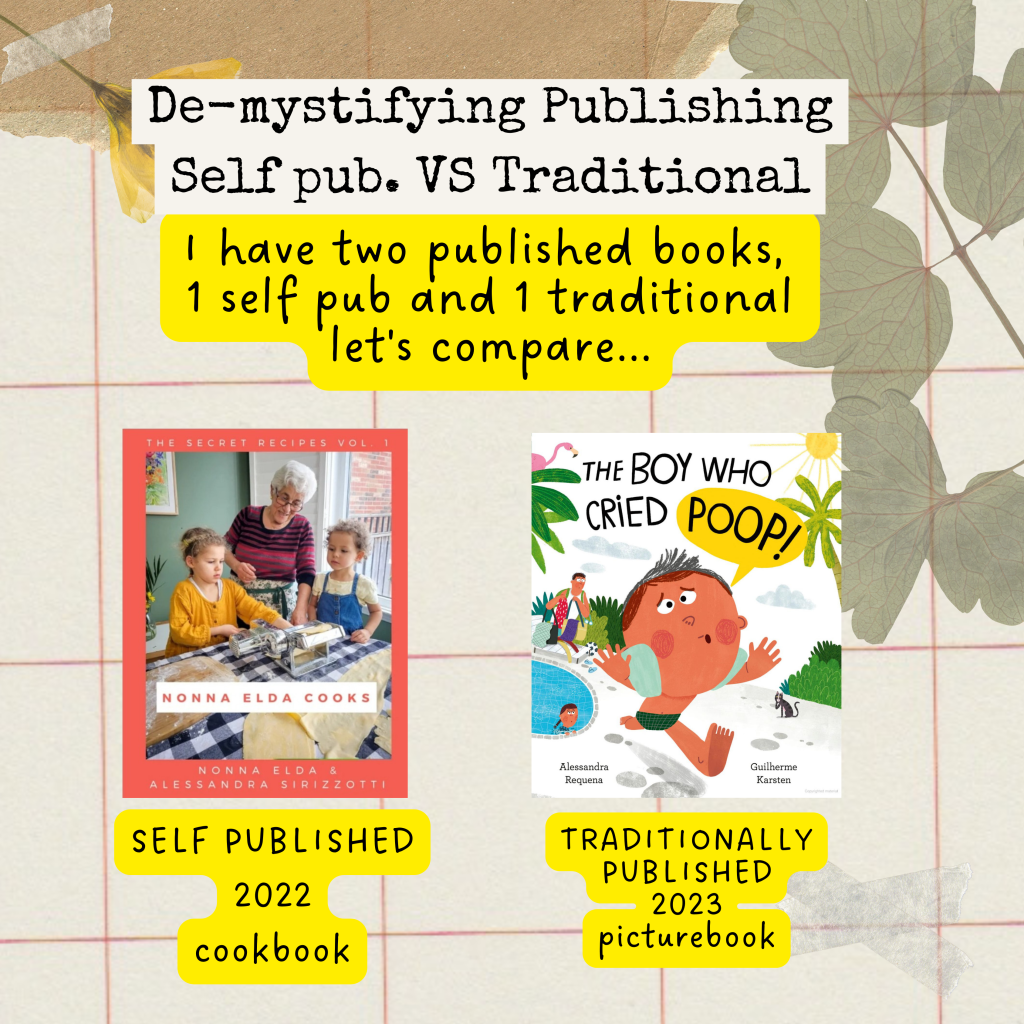
Self-Pub:
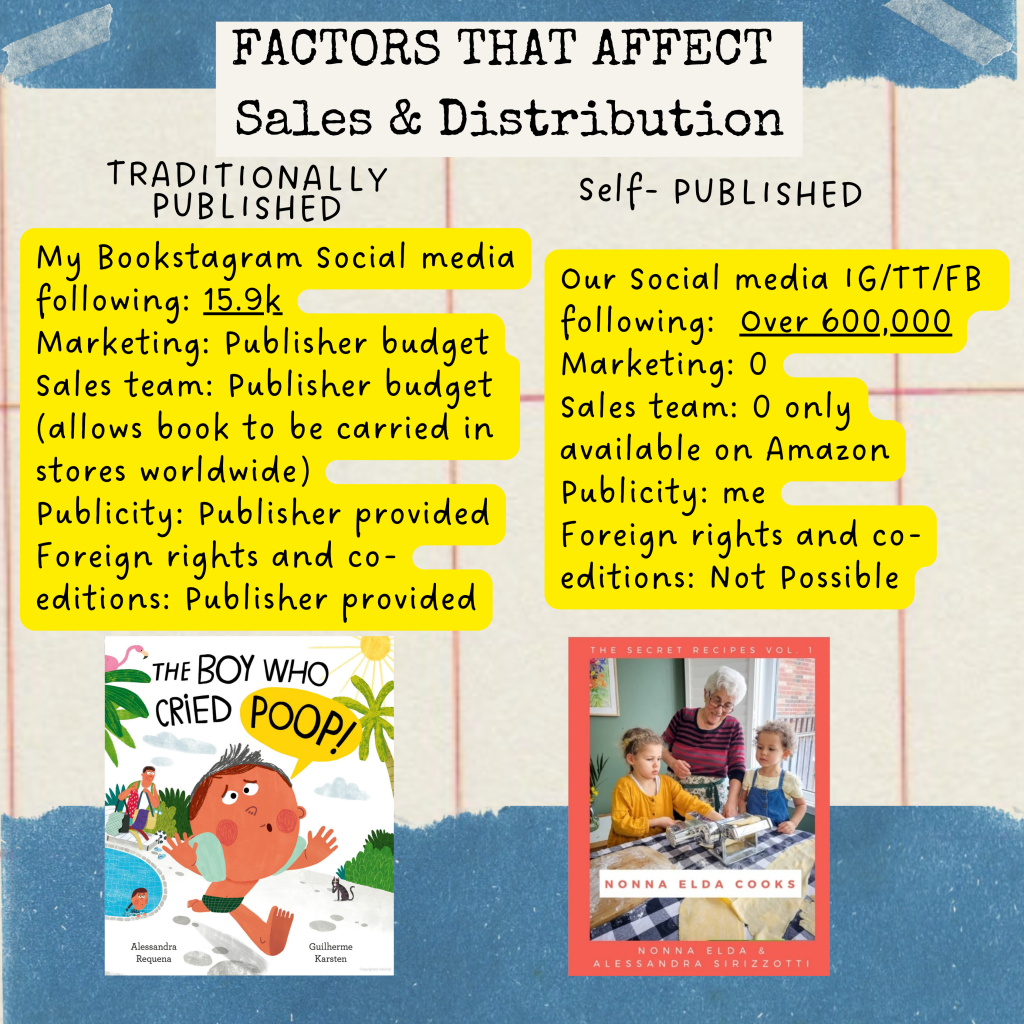
I have three self-published cookbooks available on Amazon in print form (they are also now available as pdf downloads on www.nonnaeldacooks.com for anyone who doesn’t wanna pay Jeffy). I made these cookbooks from my grandmother’s recipes, we run a social media channel where we make her recipes @nonna.elda.cooks with almost 700K followers across all of our platforms (IG/TT/FB). I made each of the three cookbooks using Canva pro, each book took me a few weeks to put together, I made them alone, no outside editors or layout designers were involved. The artistic quality is mid at best, I made it on Canva from cell phone photos what the heck do you expect? However it does the job of giving you the absolutely phenomenal secret family recipes you can’t get anywhere else and I have a large built in audience to sell it to. Today we will look at the first cookbook which was published in August of 2022 for our comparison.
Traditional Pub:
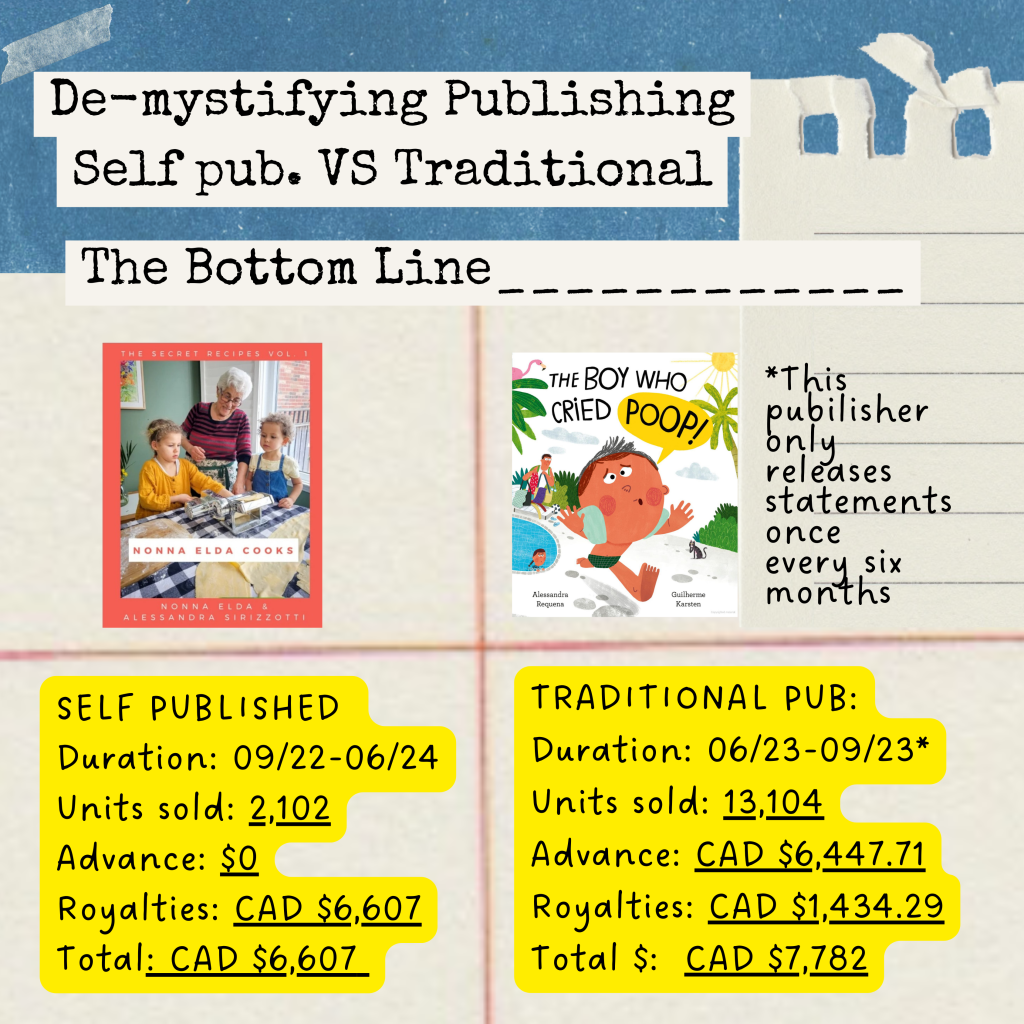
I have one traditionally published picturebook currently out “The Boy Who Cried Poop!” (about the time my brother took a dump in a pool in 1992 which I think is hilarious, he thinks it’s less hilarious). It’s out with the publisher Frances Lincoln, an imprint of a larger publisher called Quarto. The picturebook was released in June of 2023, and it is currently available in 7 languages worldwide. We will be using this book for comparison, and the numbers statements included will be from the first six months (because the publisher only issues us statements once every six months, which is annoying.)
Let’s look at the bottom line numbers here of how the two books compared on the big items.
Units Sold, Selfie 2,102 vs. Trad 13,104.
Traditional publishing destroyed this competition which was actually kind of a surprise to me because we have such an enormous following backing us up on Nonna Elda Cooks. A lot of influencers who approach me asking for advice because they want to do self-publishing often say “well selling the book won’t be a problem because I have X number of followers” the reality is only a small fraction of your following will actually click through and purchase something like a book 90% are only there for free content. (It’s much easier to get a follower to switch brands, especially for a product that they feel they need than it is to get them to purchase a recipe book especially when they can view your recipes for free.) So if you have a following behind you and think you can rely on them to purchase, you might need to readjust your expectations. Of the over 650,000 followers we have on Instagram, Tiktok, and Facebook, only 2,102 people went and purchased the book even with constant reminders. We also have a tip jar available on our blog where we share free recipe downloads with over 50,000 visitors in the last six months, not a single person has ever tipped us when taking one of the free downloads. People will absolutely not give you money on the internet unless it’s completely and totally necessary.
Traditional publishing was definitely more successful in getting a much larger volume of books out. “The Boy Who Cried Poop!” book was sold into bookstores worldwide, and translated into seven languages. Despite being available for a much shorter period than the cookbook, 6 months vs. the 1.5 years, it was purchased by way more people.
Why is traditional publishing better at selling a larger volume of books?
It comes down to resources and connections and the reason why people are purchasing the book. The self-published book is only available in one place, admittedly it’s Amazon so that means people can access it all over the world but that is still only one language and one bookseller. The people purchasing it are making that choice because they know who we are and want our recipes. They’re not buying it for its artistic integrity. People buy the picturebook because it’s beautiful and they just think their kid will like it so I don’t need to create a connection with every single buyer of the picturebook.
The traditionally published book is available in many places where books are sold, as well as libraries. The publishing house has an entire network of connections to big bookstores as well as other kinds of stores that sell a selection of books such as Walmart, Costco or pharmacies. The sales team are dedicated to going out and convincing the buyers for all of these different places to stock their books. This has so many possibilities and so much potential for reaching people in all kinds of places.
The traditional publishing house also sells the rights to the books worldwide to other publishers. For example my picturebook is published by Quarto (Frances Lincoln mprint) in Britain and the United States but in Canada its distribution rights have been sold to Manda group, in Australia those rights have been sold to Thames and Hudson. Translation rights have been sold to various publishers around the world and each of those publishers have the book translated (Korean, Danish, French, several different kinds of Spanish) and they sell the books in those countries. Those publishers each have their own connections and sales teams to get the books into stores in those countries. Multiple print runs have been ordered and sold in Korea for example. This is just not a possibility for a self-published book. This is the reason that traditional publishing will always have the ability to sell bigger numbers worldwide.
Then of course actual money is spent on the marketing of these books, so that people see the book in a variety of contexts, it’s not just being shown to my followers on social media. There are so many different reasons that the book is more readily available, and more heavily marketed with traditional publishing.
MONEY
Per book sold self-publishing put more money in my pocket. My cookbooks brought in $3.14 CAD per book direct to my account, versus the traditional publishing where between my advance and royalties each book sold brought me $0.36 CAD.
You might be yelling “36 CENTS? WHAT? WHY EVEN ASK US TO BUY IT?” To which I say, “Yeah I know! That seems really little doesn’t it!” When you consider how many people work on the book and the costs associated with it, it makes a lot of sense. So if the book is retailing for CAD $27 and they are giving me CAD $0.36 cents, the other CAD$26 bucks have to pay not just the illustrator but all the other people working at the publishing house, the paper printing and binding costs of making the book, the rent fees of housing the stock of books in warehouses, the delivery truck drivers who take it to the store, the cost of any returns of said book. A certain amount of the purchase of each book also goes towards marketing that title in future. Publishers do not turn a huge profit, the margins on selling books in a publishing house is around or less than 10%, and any profits made are being put into making offers on new book acquisitions. The CAD$27 has to do a lot of heavy lifting to support a whole industry of people who barely make a living wage and that’s why authors make almost nothing per book. It’s also why every book sale is essential to keeping the publishing house going, and also to ensuring that an author gets future book deals.
On the other hand when you’re selling with Amazon you make a higher profit per book but the rest of that cost is getting eaten up by Amazon. So each book was listed at CAD$15, I made CAD$3. Something like CAD$4 of it went to paper printing and binding costs and the remainder went to Jeff Bezos. So Jeff makes like $9 on my work, and I make $3. I have to say I don’t love that. I’d rather know my work is helping to support my editor and his wife, and the layout designer and their girlfriend, and the marketing dude and his dog, my agent who is an angel on earth and really should have all the dresses she wants off of Son de Flor. I hope I sell a million books, and my agent gets some really ridiculously extravagant dresses one day.
At the end of the day I still made more money traditionally publishing than self-publishing even though the take home per book is much higher with Amazon KDP because of the volume of the sales and distribution that a traditional publisher can support.
Time and Labour
Self-Publishing
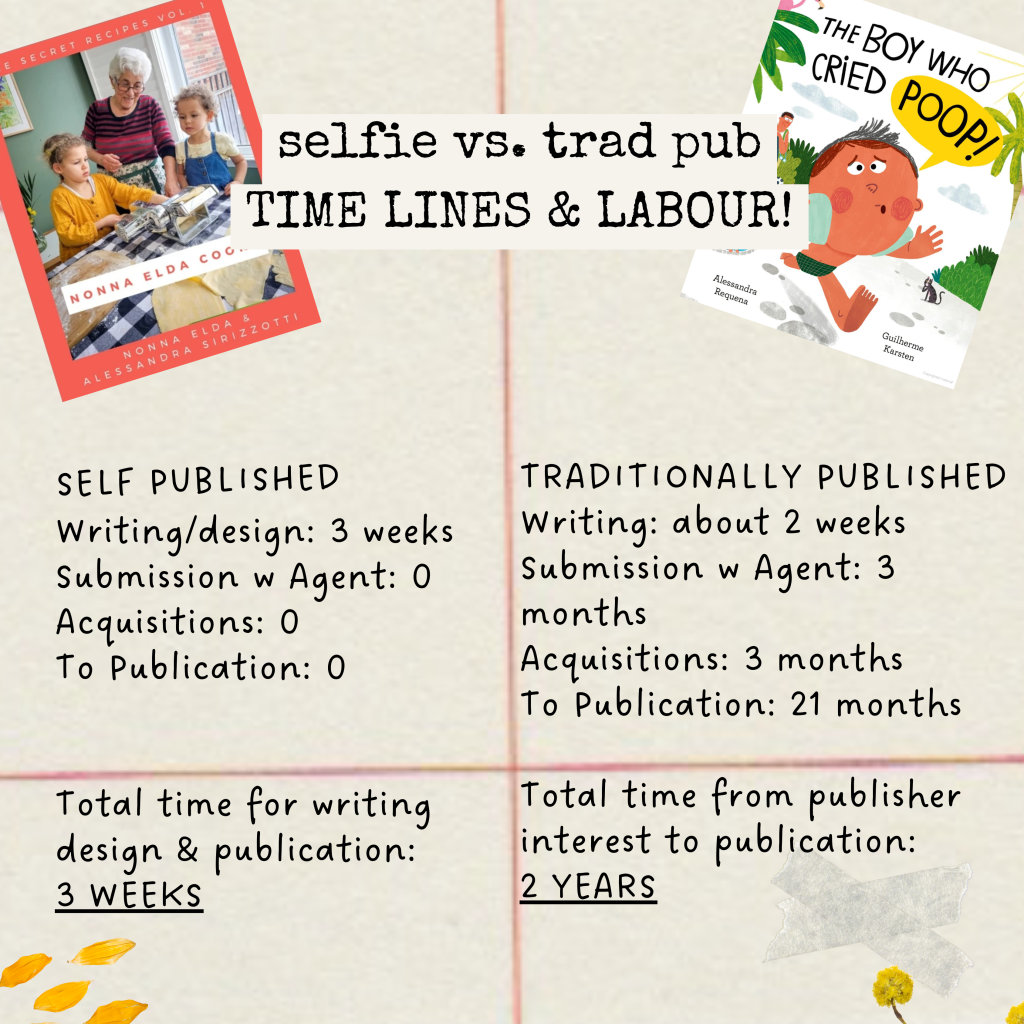
I had to do everything for the publication of the cookbooks myself, writing, editing, photography, photo edits, lay out, design, setting up the Amazon landing site, doing all the copy and SEO. Then driving traffic to the book and getting people to purchase it was again all me (and my grandmother who appears in our videos.) When you self-publish you need to find your audience and convince them to purchase your book, so that meant months of creating and putting out content on social media. Every sale made was from our own publicity we had zero dollars in marketing.
So in one way, the time it took to make the actual cookbook and push it out into the world was a lot less. It was about three weeks for me to put the actual book together and hit the publish button on KDP. But creating the audience base, making the recipes and photographing them as content, everything took months. Any ongoing sales we continue to have is because of basically a full time job creating content driving traffic. There is a lot of time and labour that goes into not just making a self-published book and then having it available for purchase, but in getting people to buy it.
Traditional Publishing
So this is a picturebook and the actual writing of the story didn’t take that long, it was maybe a two week period of thinking and editing it with my agent. My agent then took the story and did all of the work of submitting it to editors (he makes a 12% cut of all my advances and royalties, which is actually a little less than standard 15%.) I think this took a few months.
Once we had an interested publisher, between them expressing interest and us signing the book deal it was another three months or so. Then after that it was a full year and a half where the publisher was going through the process of turning it into a book. I did a few light edits with my editor Pete after the illustrator had been brought on board but that was it until the book was released.
After the release and during the lead up I did a little bit of promotion, I have a bookstagram account @readwithriver where I did some posts there. The majority of my marketing and publicity was arranged and paid for by the publisher however.
Over all I would say the traditional book was less work and labour on my part after the initial writing was done. However the time spent waiting was enormous.
From my own experiences I have to say I think self-publishing has a lot of advantages and based on your needs, goals, and particular situation might be the right choice. Try writing down what your goals are and why, to help you figure out if it’s in line with what you can get from self-publishing.
I would and will use self-publishing again. In my particular circumstance with this book I needed to have a way to monetize my social media channels to pay for the time and items needed to run the channel. I just did not have the time to shop the cookbook around extensively. We actually did pitch the cookbook to several publishers, and despite the social media following we were rejected. I didn’t have the time to approach it from another angle, and then go through the years of waiting to release it. So for us, self-publishing the cookbooks just made sense.
Additionally the cookbooks didn’t need to be art in the same way as a picturebook has to be art. Yes most traditionally published expensive cookbooks are coffee table books that double as art, but that’s not what we needed to make. The cookbooks we provide are meant to provide a written recipe and directions for our followers to use, who need to see the words written out for the dishes we make in our videos. We are capable of providing that in a simple pdf with our photos without all the bells and whistles.
For us it was a no brainer self-publishing was the only real option for us to get what we needed for these cookbooks. I think it was the right choice, and I would use this avenue again in future for a purpose like this. It’s a great tool, with no overhead costs.
Traditional publishing is full of gatekeepers, and if you don’t have personal connections with those gatekeepers it’s a huge hurdle. Getting in is almost impossible, and even if you spend years submitting to publishers and agents you just might not get through. There are thousands of submissions every year to each publisher, only a handful of manuscripts are chosen from each to be published.
There are lots of reasons for why this avenue might be closed to you so simplifying it down to whether or not you can choose to traditionally publish is reductive. However if we are simply comparing the relative benefits, the fact is that traditional publishing offers writers who have the time and resiliency to rejection to wait for an offer more of a real career long term.
If you are sitting here wondering where to go and you haven’t begun the journey of submitting your work to publishers and agents yet, you need to ask yourself what your goals are and how much you’re willing to undergo for it.
If you want to set yourself on the traditional publishing track you need to ask yourself if you are going to be ok with the following three inevitable realities:
First, there will be a lot of rejection. It will be constant and you’re going to be expected to take it with grace and say “thank you may I have another.” There’s a certain amount of masochism inherent in writing for the traditional market, sorry.
Second, it’s going to take for bloody ever. It’s going to be years. If you’ve ever built an addition on your home or done some construction project that took over your life, it’s like that. Finding out information about what’s happening? Meeting timeline goals, nope. Forget about it. Get ready to hurry up and wait.
Third, traditionally published books are a product of teamwork. This is a beautiful thing because each member of the team specializes in whatever element they’re bringing to your book. However this will mean accepting criticism, and compromising on the book you’ve written. Your final book is probably not going to look or be what you imagined initially, it’s not just your baby. You’re co-parenting that baby with a whole team now. Are you okay with that? It’s okay to say “no, I’m not” and make decisions knowing that about yourself. Personally? I’m a complete sell out, seriously the price isn’t even that high. I will add aliens, I will delete entire characters at the drop of a hat if it means I take home that advance. Artistic integrity be damned I may be an artist but I do not have any desire to starve for it.
If you’re at the beginning stages here and you’re still nodding your head saying yes I want this, I want to be a traditional author, I accept all of this but you’re not sure where to start? I have three avenues for you to consider, and some information available to you here on this blog to begin.
Next Steps for Pursuing Traditional Publishing
Peer Review/Edits/Beta Readers
First have you taken your manuscript to be peer reviewed or edited professionally? You can do this in different ways, there are organizations like SCBWI that have writing groups, or local organizations like your community library or community college. You can also enlist the help of a professional editor (I personally offer manuscript review and feedback for picturebook texts.)
2. Querying a Literary Agent
Second, approaching an agent. Do you want an agent? Not every author has an agent and you don’t strictly require one to become an author. I personally have one and I can’t live without them. You can see my blog article on literary agents for more information one what they do, and how to approach them.
3. Submissions
Third, open submissions to a publisher. Do you want to skip getting an agent, or are being continually rejected by agents and would like to go straight to a publisher? Not all publishers accept unsolicited submissions. You can check out my blog post on open submissions (that means they consider manuscripts from un-agented writers). There’s a spreadsheet with a list of traditional publishers who accept open submissions for your convenience that includes how and where to submit to them.
Hope that helps!
Subscribe and follow @readwithriver for more ‘De-mystifying Publishing’
If you found this helpful you can support my work here by buying my book “The Boy Who Cried Poop!” Or requesting it at your local library. If you already have a copy (thank you) leaving a review on Goodreads or Amazon would be such a fantastic help. I appreciate you all!
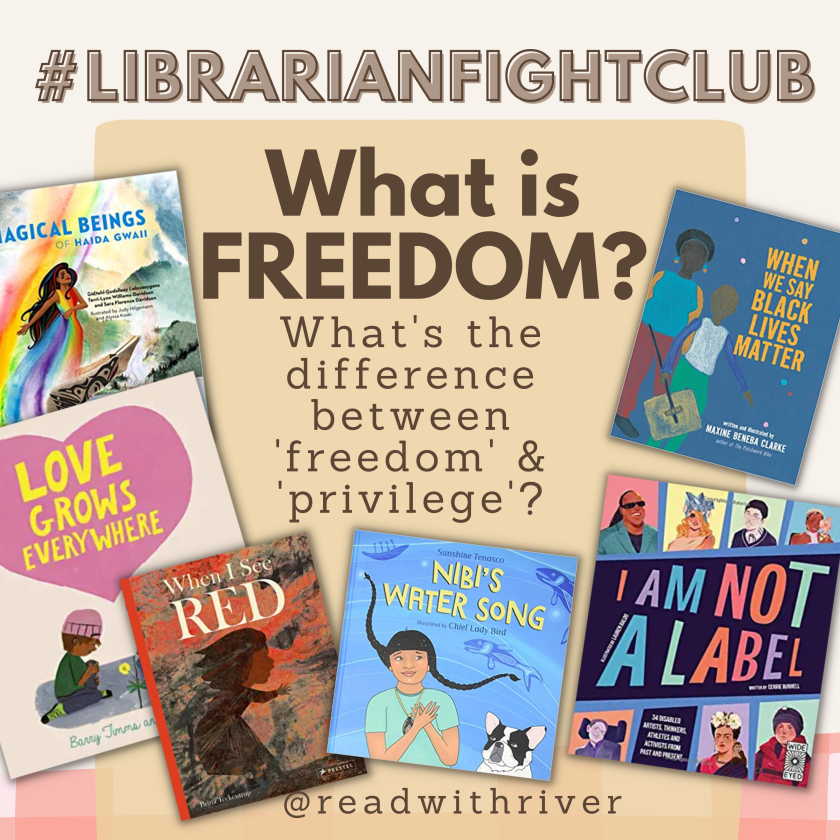
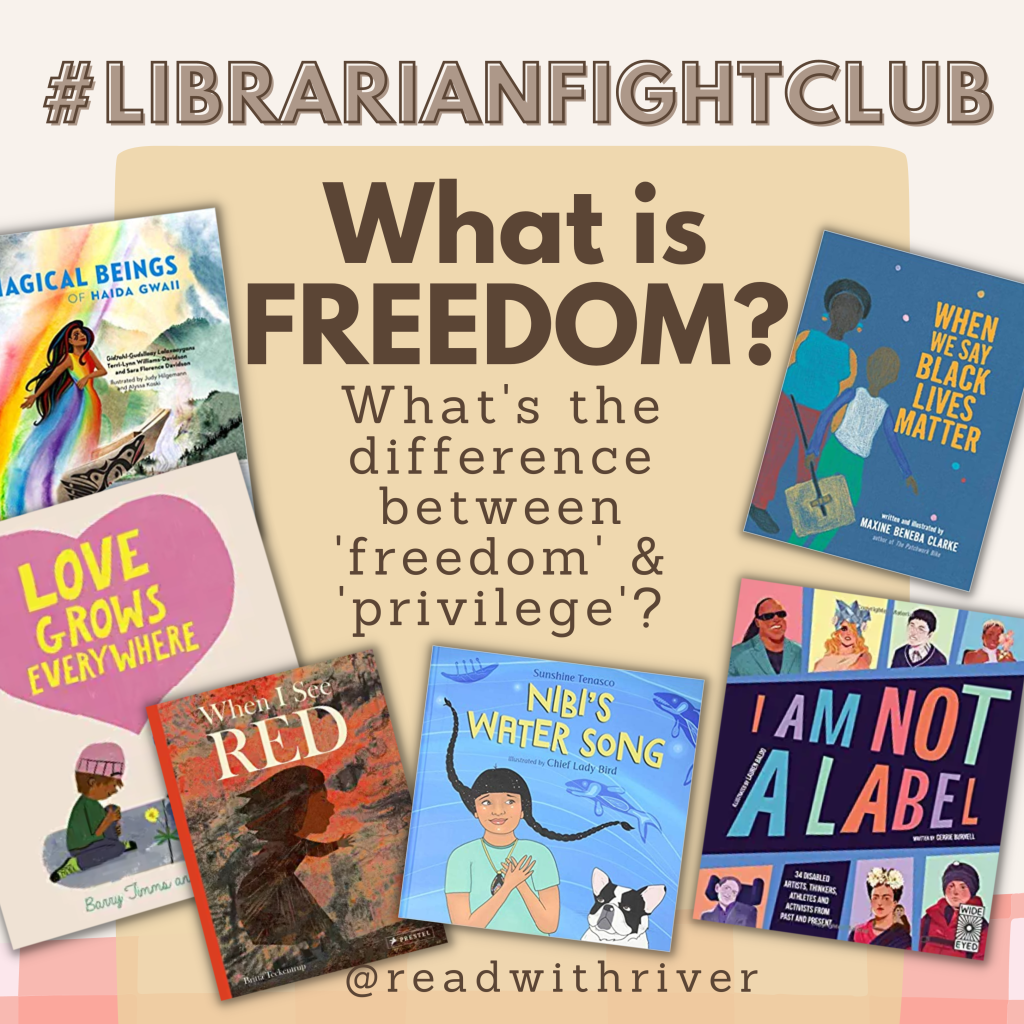
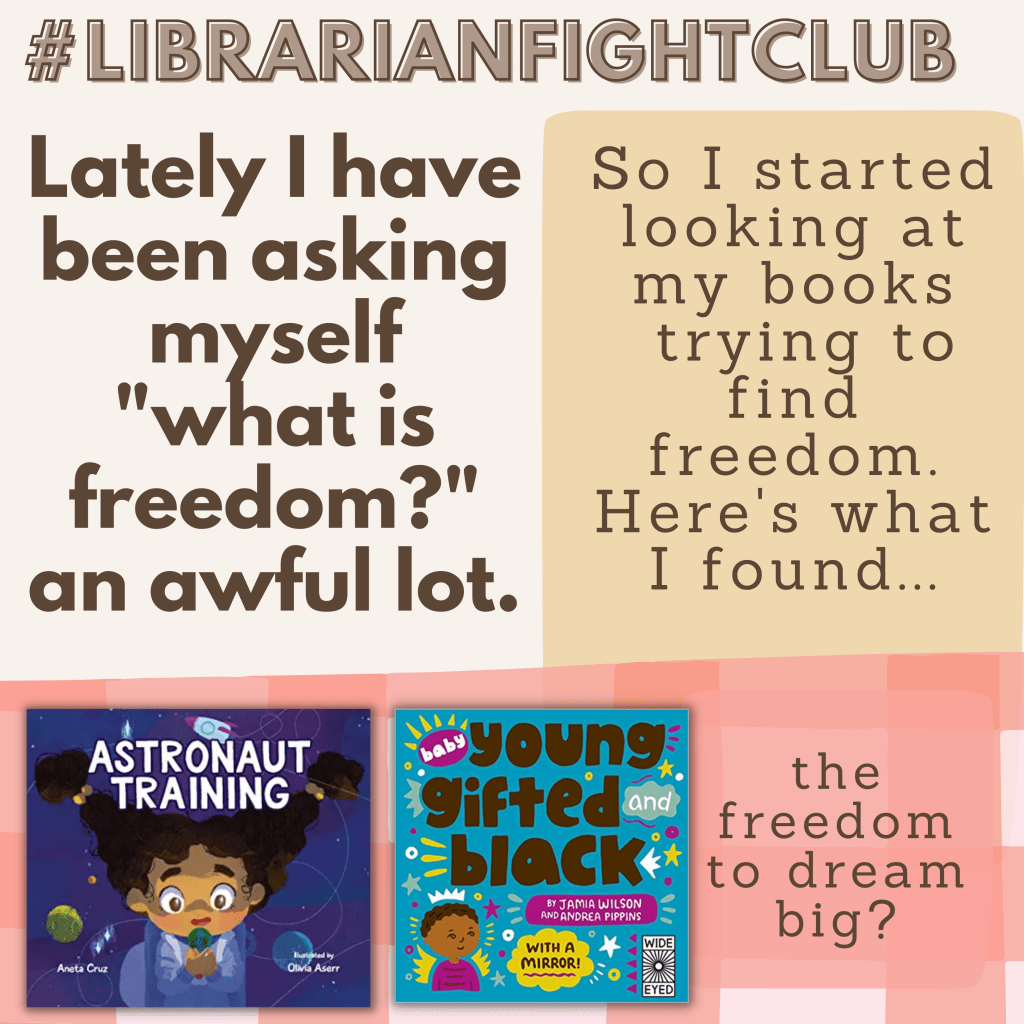
What is Freedom? What’s the difference between ‘freedom’ & Privilege’?Lately I have been asking myself “What is freedom?” an awful lot. So I started looking at my books trying to find freedom. Here’s what I found…
Growing up in Canada, we don’t’ spend a lot of time talking about the concept of ‘Freedom.’ Not in the way that seems to take over a lot of the discussion in America around what they demand from their society, what they expect of their lives. “Freedom” has never been our primary value in our Canadian society.
But lately I’ve begun to really start thinking about what it means to have freedom, and where does freedom end and privilege begin? What is a basic freedom and what is entitlement? So I turned to my books, to search for freedom and this is what I’ve found.
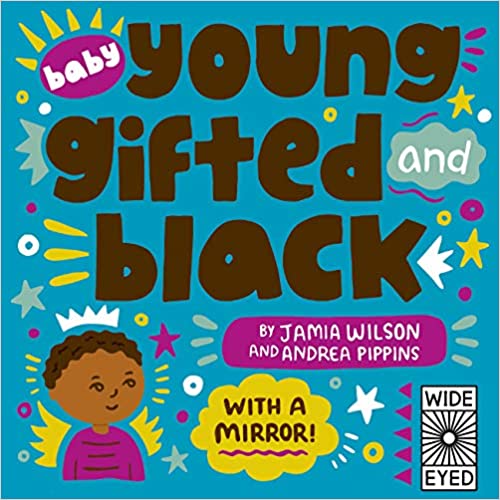
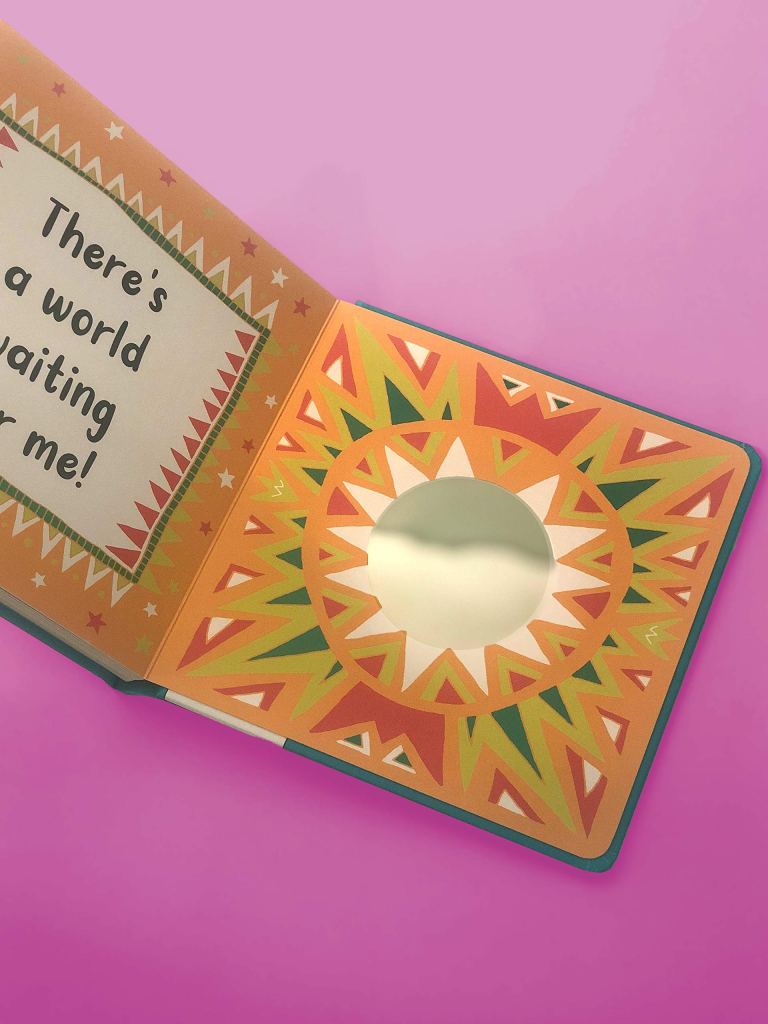
“Baby Young Gifted and Black, With a Mirror” by Jamia Wilson and Andrea Pippins from Quarto
On the surface level, I think a lot of people think of freedom as breaking free from the constraints of society, letting their hair down and, letting out their emotions.
Freedom is the space to run, to howl and cry.
“Howl” by Kat Patrick and Evie Barrow from Scribble
What did they all have in common? Safety. The safety to dream, to feel, to love, to be, to live. If your idea of freedom is directly endangering any of that safety of others, then what you’re asking for isn’t freedom, it’s privilege.
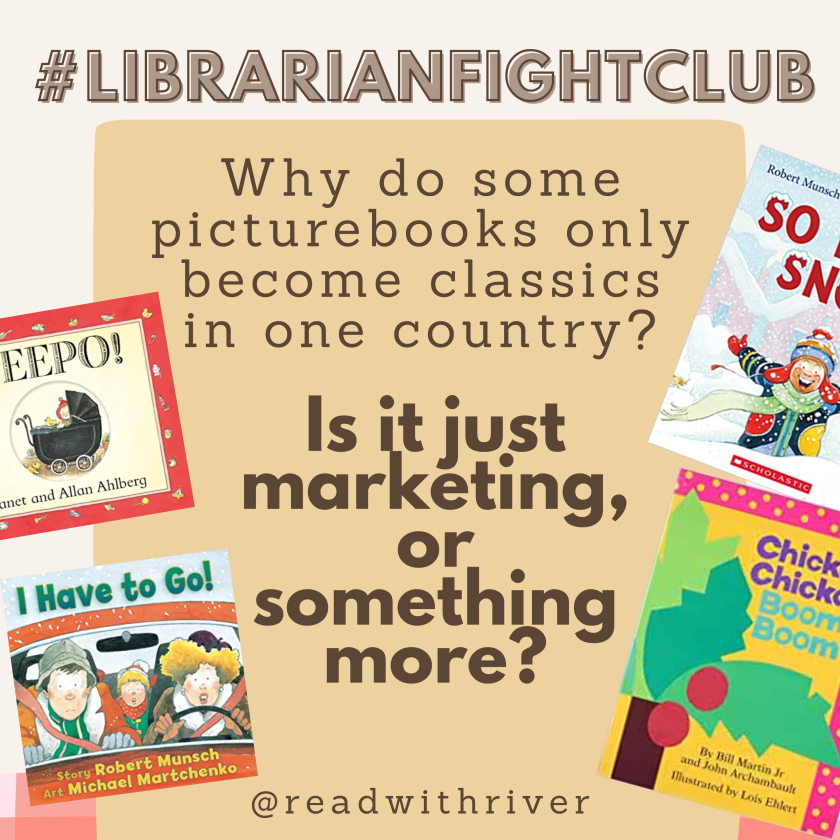
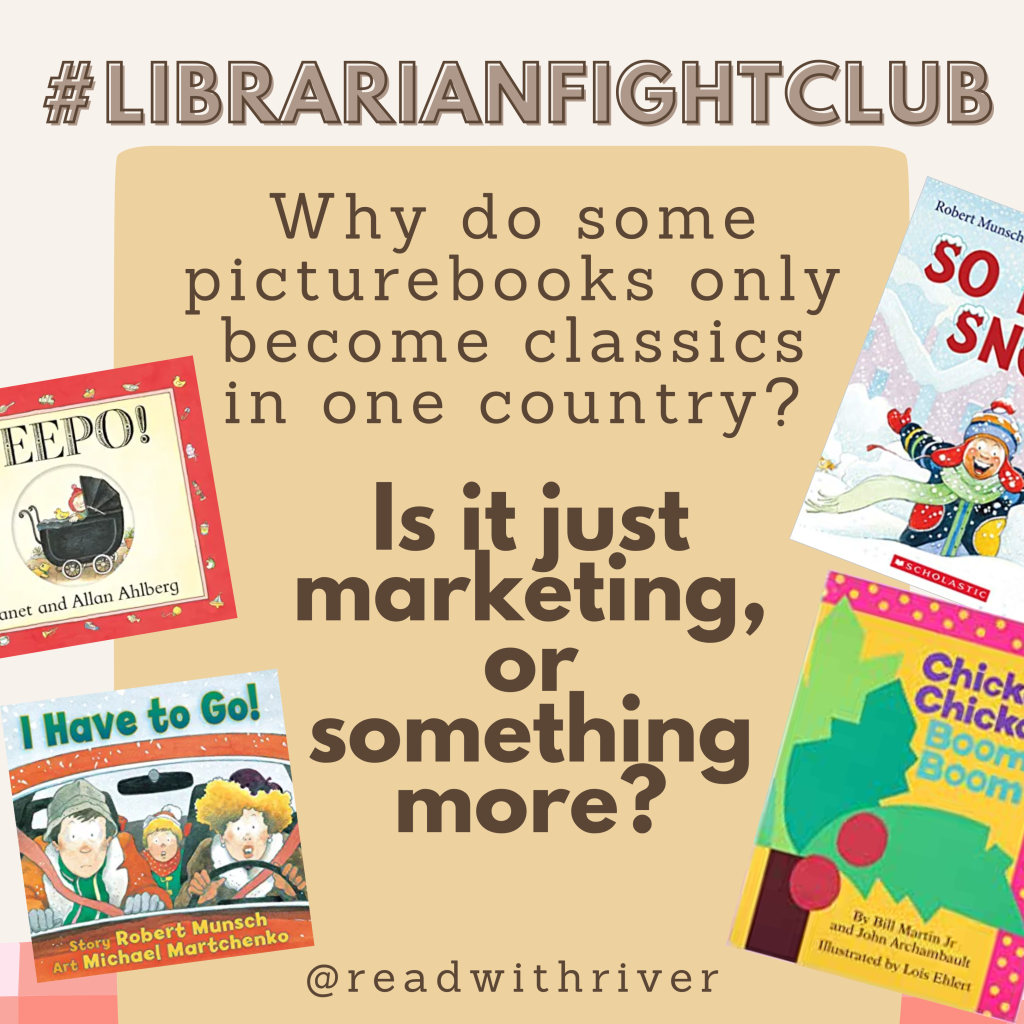
Why do some picturebooks only become classics in one country? Is it just marketing, or something more?
Becoming a picturebook reviewer in an age of social media has demonstrated to me one thing. Almost nothing is universal. Picturebooks are no exception. It’s not something the average reader questions a lot, ‘is this book famous in other countries?’ But after spending a few years making friends with picturebook reviewers around the world I’ve learned that the kinds of picturebooks that are popular in each place varies quite a lot.
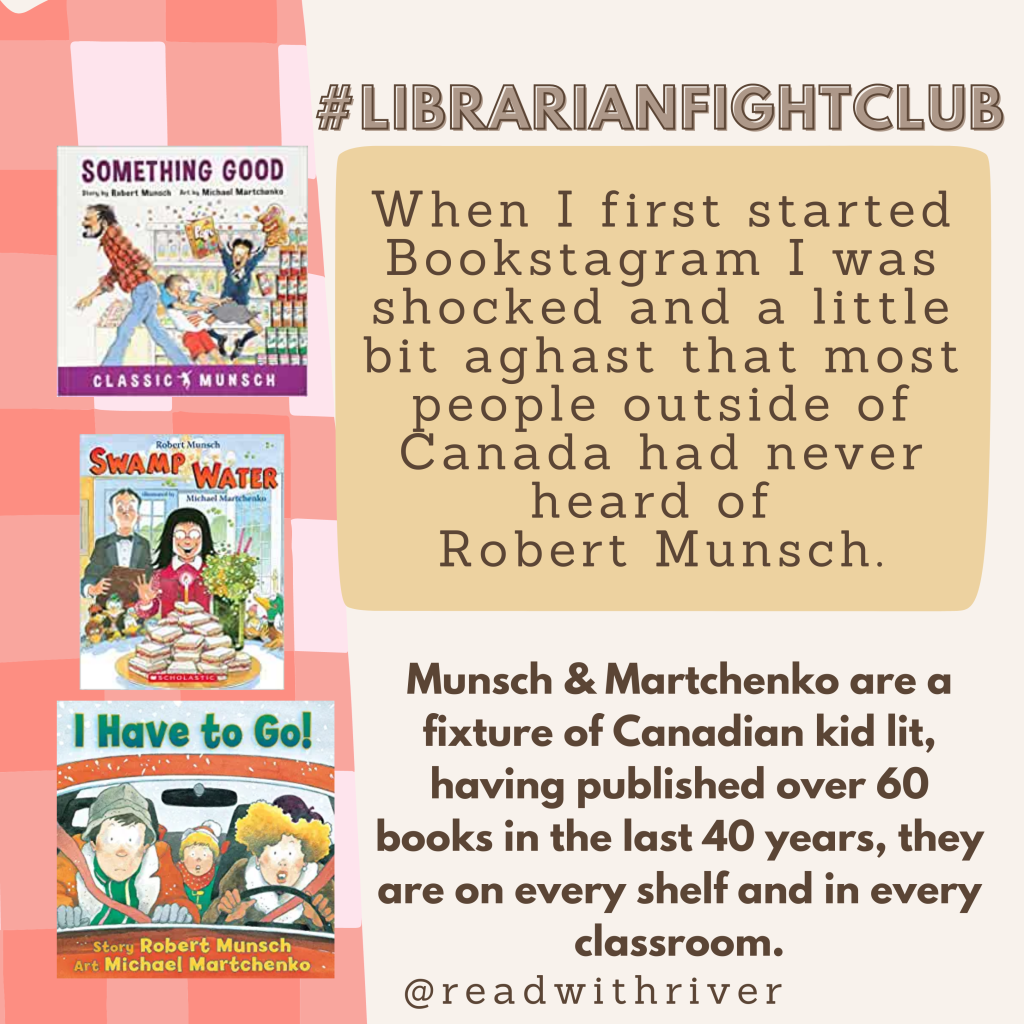
When I first started Bookstagram I was shocked and a little bit aghast that most people outside of Canada had never heard of Robert Munsch. Munsch & Martchenko are a fixture of Canadian kid lit, having published over 60 books in the last 40 years, they are on every shelf and in every classroom.
Look I could write love letters to Robert Munsch and Michael Martchenko all the live long day, and I have. Actually one time I met Martchenko at a party and I almost passed out, he was quite dashing. I’ve never been so starstruck. But I’ll spare you at the moment and get to the point, how, in the world are these books not famous everywhere? Certainly they are household staples here in Canada. For good reason, they’re unsurpassable.
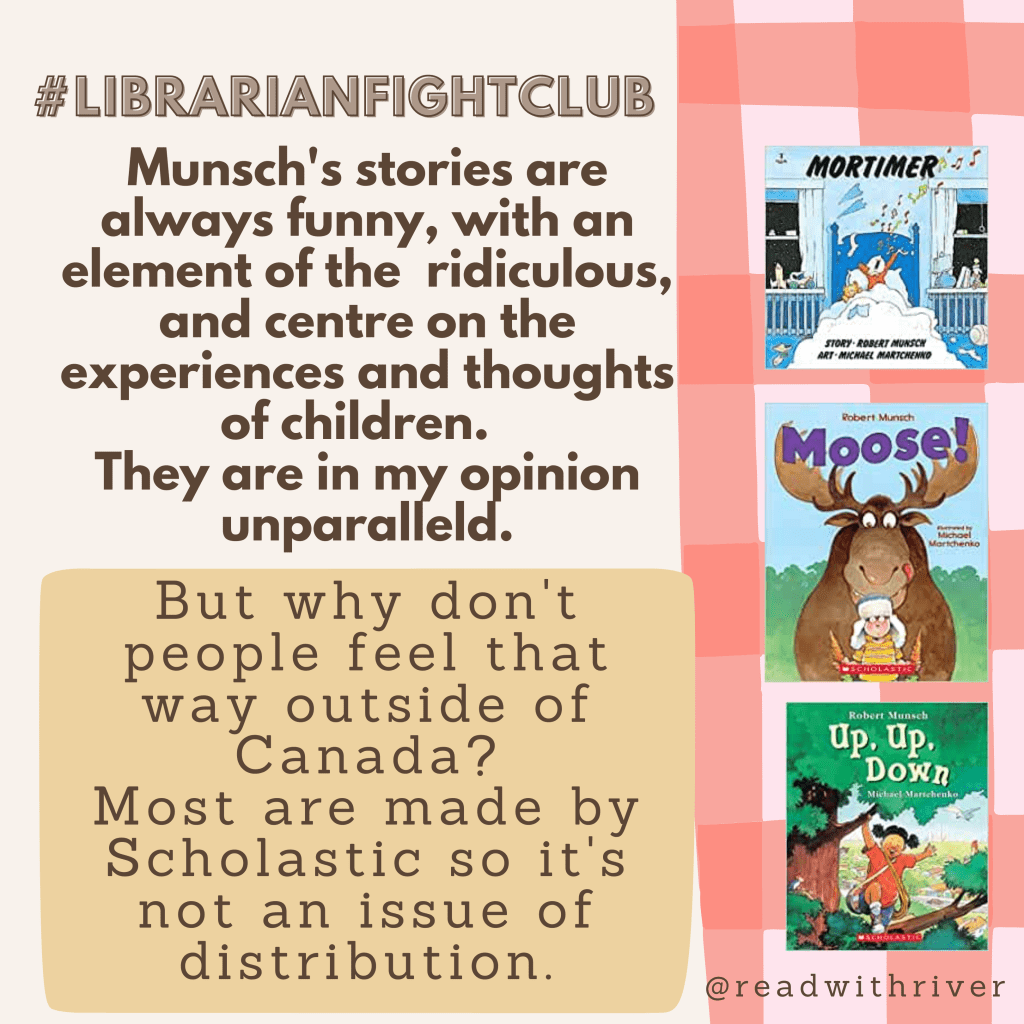
Munsch’s stories are always funny, with an element of the ridiculous, and centre on the experiences and thoughts of children. They are in my opinion unparalleld. But why don’t people feel that way outside of Canada? Most are made by Scholastic so it’s not an issue of distribution.
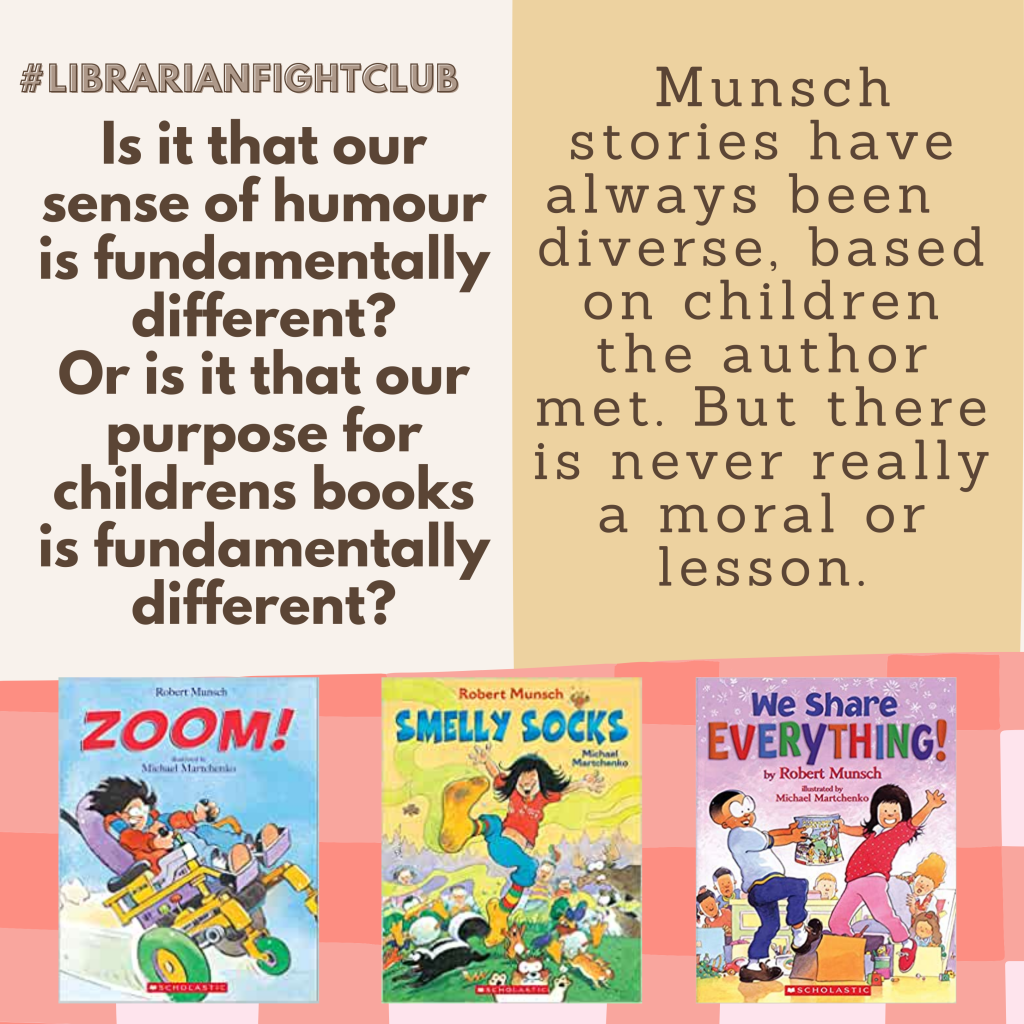
But I’m not just going to dismiss this as a matter of lack of taste. I really want to know, why aren’t Munsch books as famous in other countries? They’re all humorous, is that the issue? Is Canadian humour-an ephemeral concept to try and define-fundamentally different from humour elsewhere, and if so then what is it? Is Canadian humour too ridiculous? Is it all the snow (they don’t all have snow…)? OR is it that Munsch books avoid lessons and morals? Is it the purpose of kidlit what makes them less appealing to people elsewhere? Do Canadian families just want to read for fun, where as elsewhere, families read for other purposes?
Is it that our sense of humour is fundamentally different? Or is it that our purpose for childrens’ books is fundamentally different?
Are different topics just more popular in different countries? These Australians kids books never took off in North America, is it because we don’t have Wombats and…well do we have possums?
When you take a look at the most famous Aussie kidlit, they tend to heavily lean towards books about Australian animals. Which makes sense, it’s Australia. Are Australian readers more interested in Animal stories than elsewhere? Or did they not gain popularity elsewhere because readers in other parts of the world don’t have wombats and kangaroos?
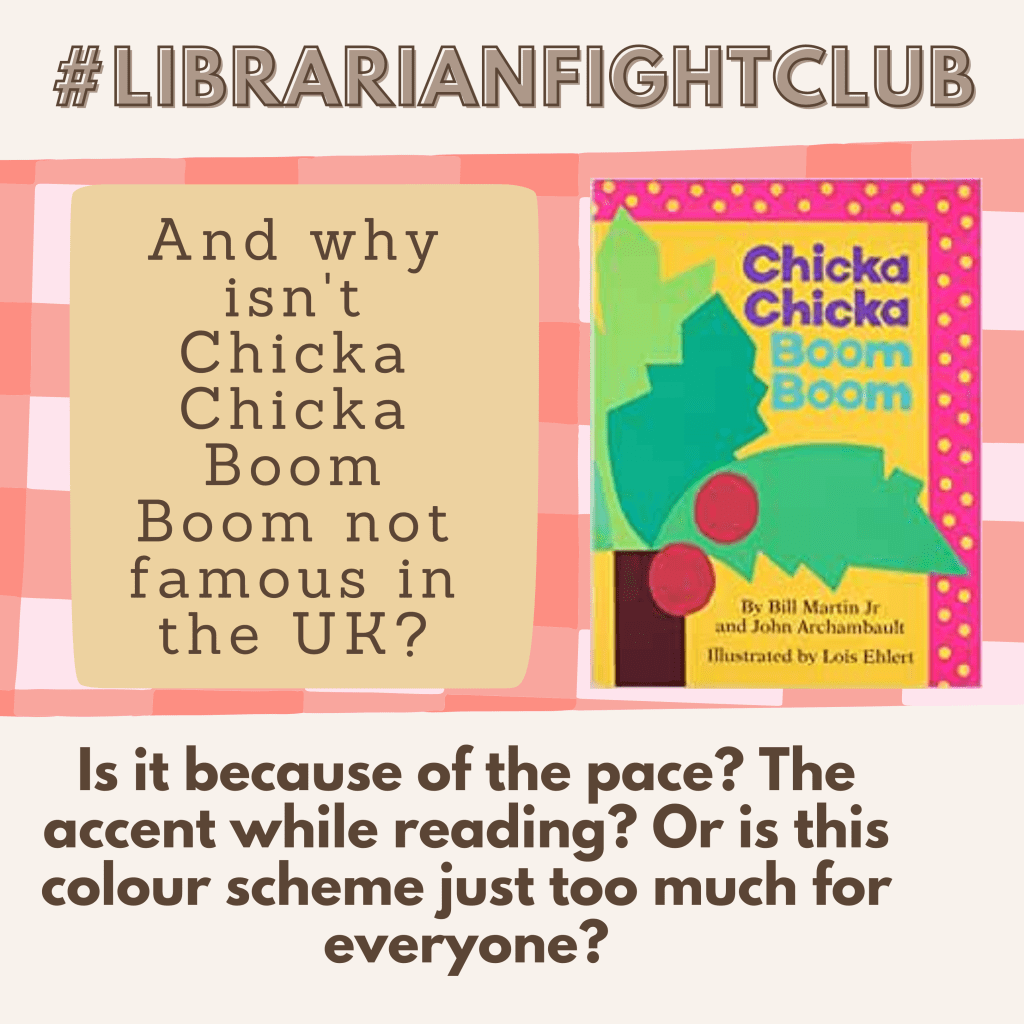
And why isn’t Chicka Chicka Boom Boom not famous in the UK? Is it because of the pace? The accent while reading? Or is this colour scheme just too much for everyone?
When it comes to style and mood how does that play into this? Chicka Chicka Boom Boom is another fixture in every North American kindergarten room, but that’s not so in the UK? Why? Clearly I have more questions than answers today.
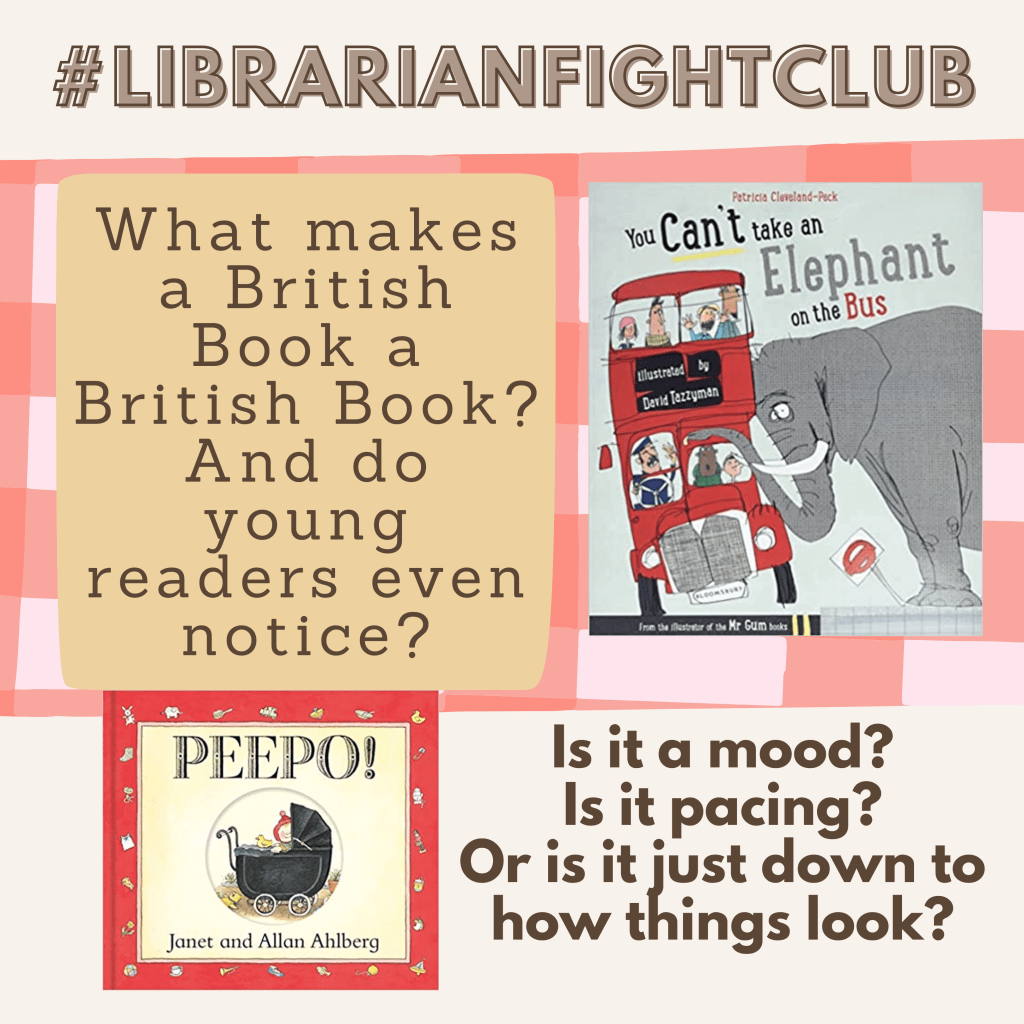
What makes a British Book a British Book? And do young readers even notice? Is it a mood? Is it pacing? Or is it just down to how things look?
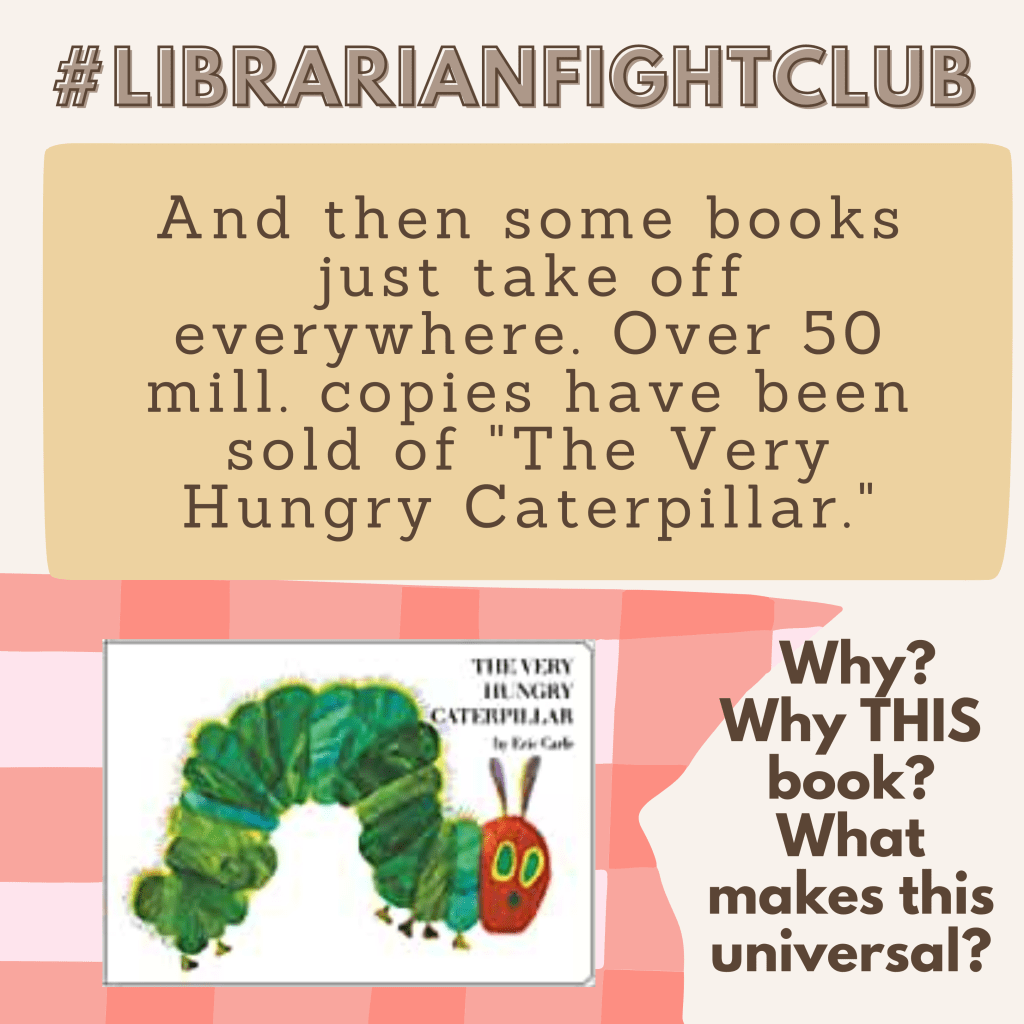
And then some books just take off everywhere. Over 50 mill. copies have been sold of “The Very Hungry Caterpillar.” Why? Why THIS book? What makes this universal?
When we look picturebooks that have ‘made it’ worldwide. Is there a theme? What connects them, is it all random? Or is it something more? “The Hungry Caterpillar” it’s simple, and carries themes of change, of growth, of hope. That’s pretty universal. But is it any more universal than any other of the thousands of books that are beloved in their home country and don’t make it abroad?
So what is it? What makes a picturebook universal? But also, what defines the needs and desires for readers of each country?
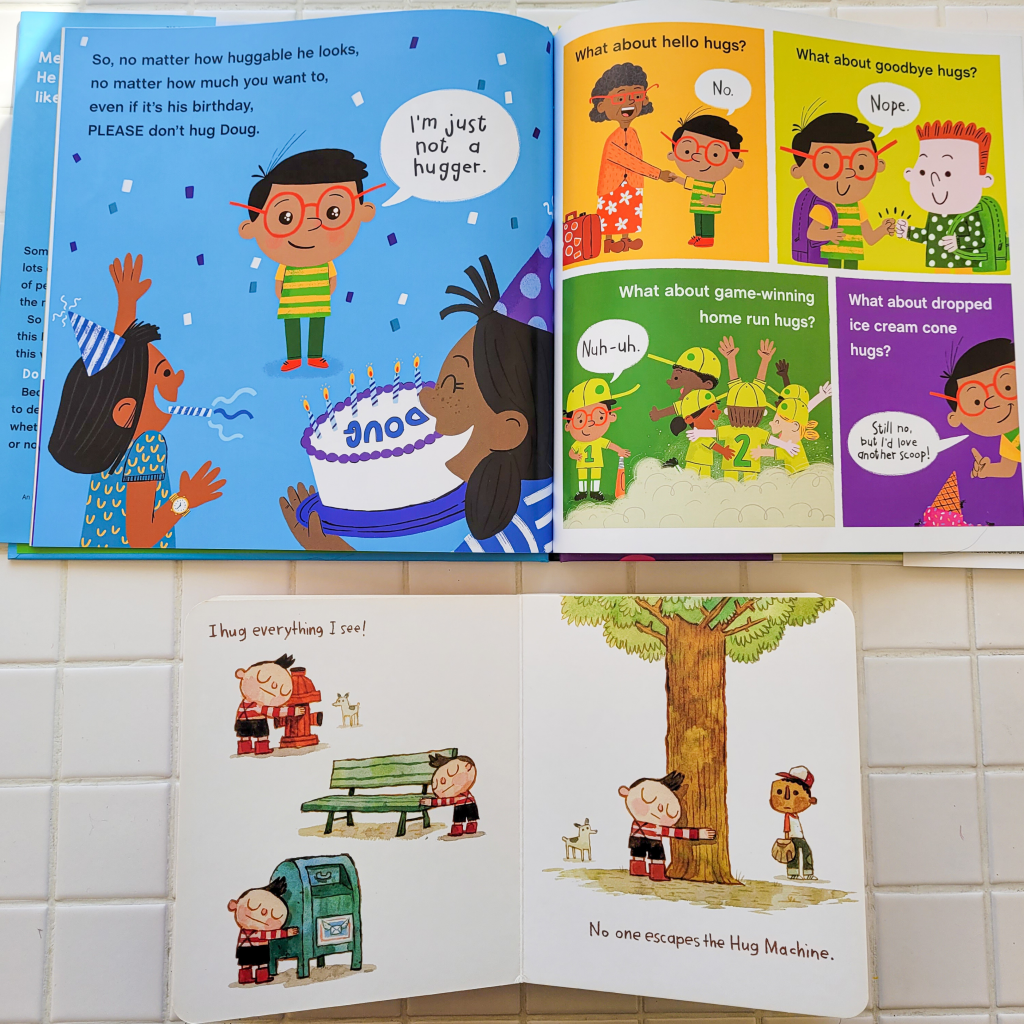
One of the reasons I love picturebooks is that they take all of the values and social discourse of the time they’re made in and present them in this beautiful little package to pick apart and wonder at. Looking at two books made a handful of years apart can show how society has grown and changed and there is no better example than this than these two hug books.
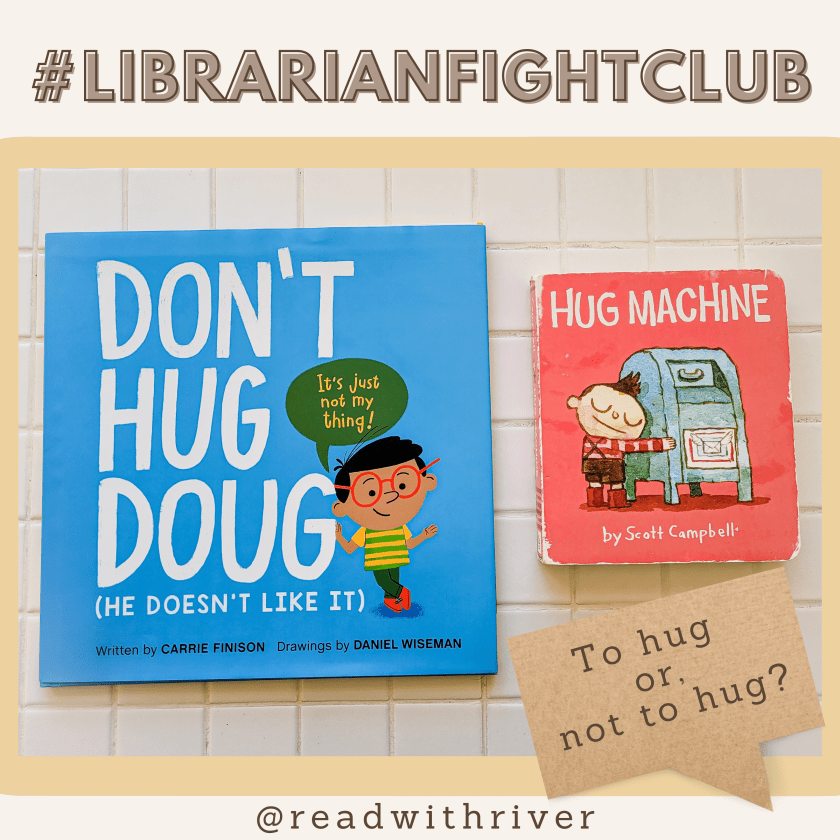
I love both of these books actually, “Hug Machine” by Scott Campbell 2014, and “Don’t Hug Doug (He Doesn’t Like it)” By Carrie Finison 2021. But what I find most fascinating about them, especially next to one another, is to marvel at how fast mainstream ideas are moving about issues around childhood, consent and, toxic masculinity.
When “Hug Machine” came out in 2014 it was subversive in quietly challenging toxic masculinity and traditional gender roles in this beautiful pale pink and red ode to a little boy who loves to love and show affection. Hug Machine is concerned with the emotional needs of those around him when; a baby is crying, a hedgehog feels unloved, etc. These things fundamentally challenge the emotional frigidity of toxic masculinity.
However, things have moved on, the world has moved on and become more complex, and isn’t that a wonderful thing? “Don’t Hug Doug” explores the complexities around consent, boundaries and, also the many ways that one can show their friendship. But I think what’s most poignant is the piece around expectations that children take on burden of emotional labour.
Less than a decade ago, it was seen as appropriate that the Hug Machine should be taking on the emotional labour of hugging literally everyone so that they felt better. The kid didn’t even have a name he was reduced to his performance of giving. In “Don’t Hug Doug” the onus is not on Doug to take on that burden, the children in this book are being relieved of that expectation and being given agency regarding their personal space. This is a major step forward in society’s understanding of the fundamental rights of a child, and the nature of childhood itself.
Is there space to celebrate both of these books? Are they even fundamentally in opposition? #LibrarianFightClub
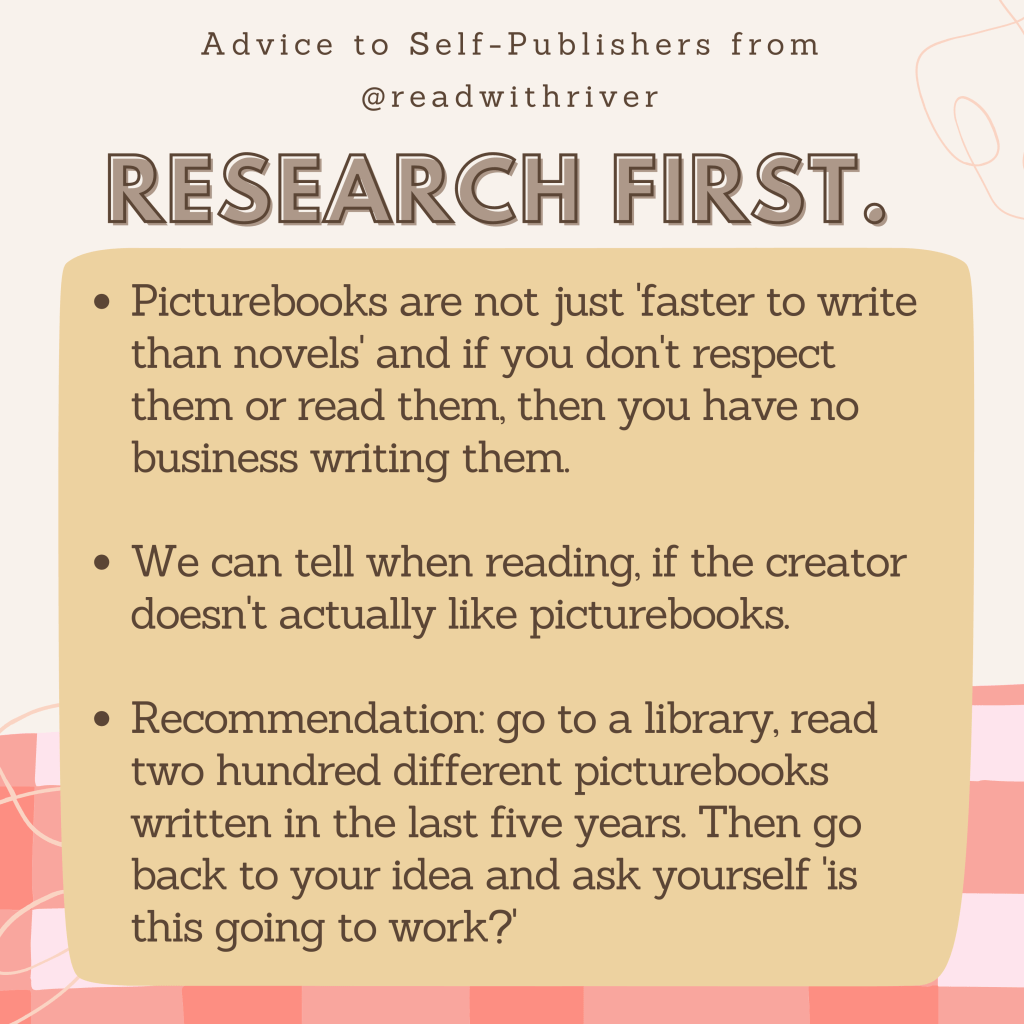
So you want to launch a self-published book. Common Problems to Avoid & Boundaries with Influencers You Need to Respect. Research First: Picturebooks are not just ‘faster to write than novels’ and if you don’t respect them or read them, then you have no business writing them.
We can tell when reading, if the creator doesn’t actually like picturebooks.
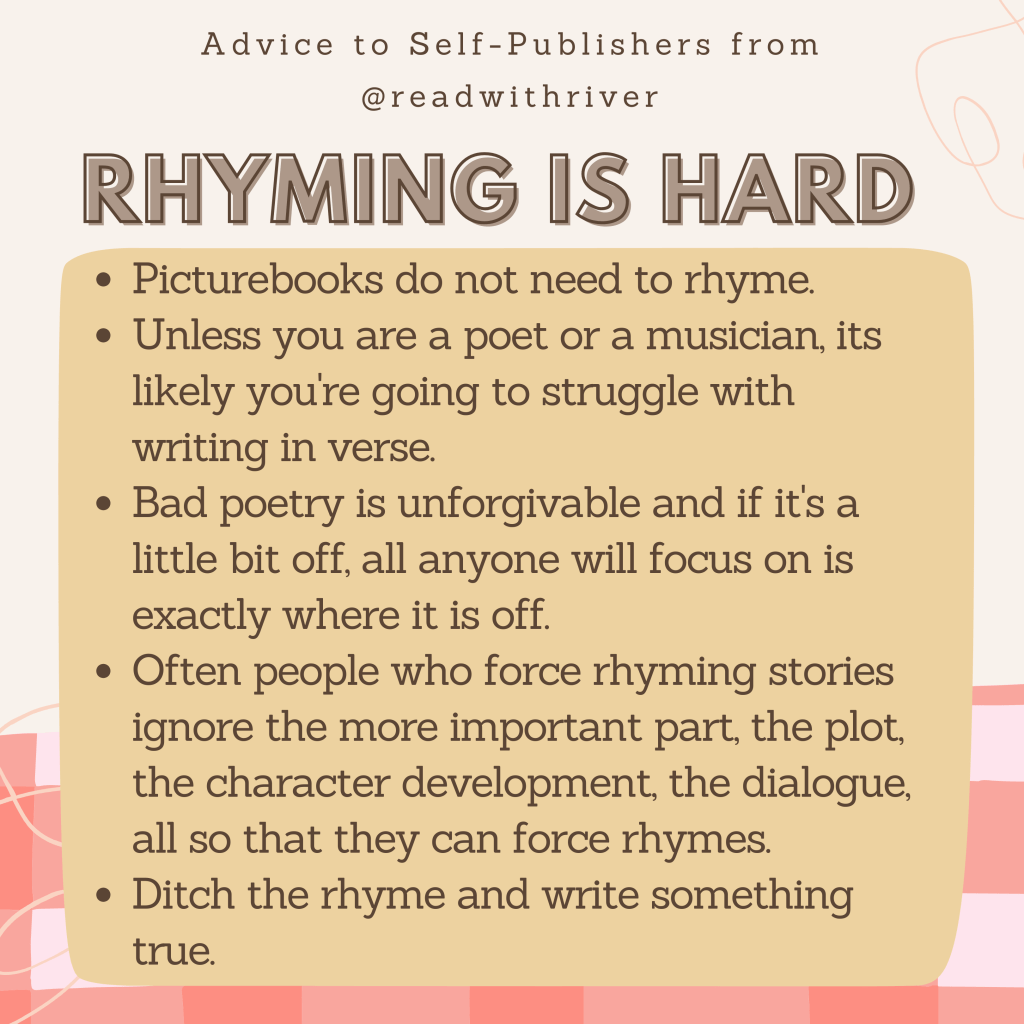
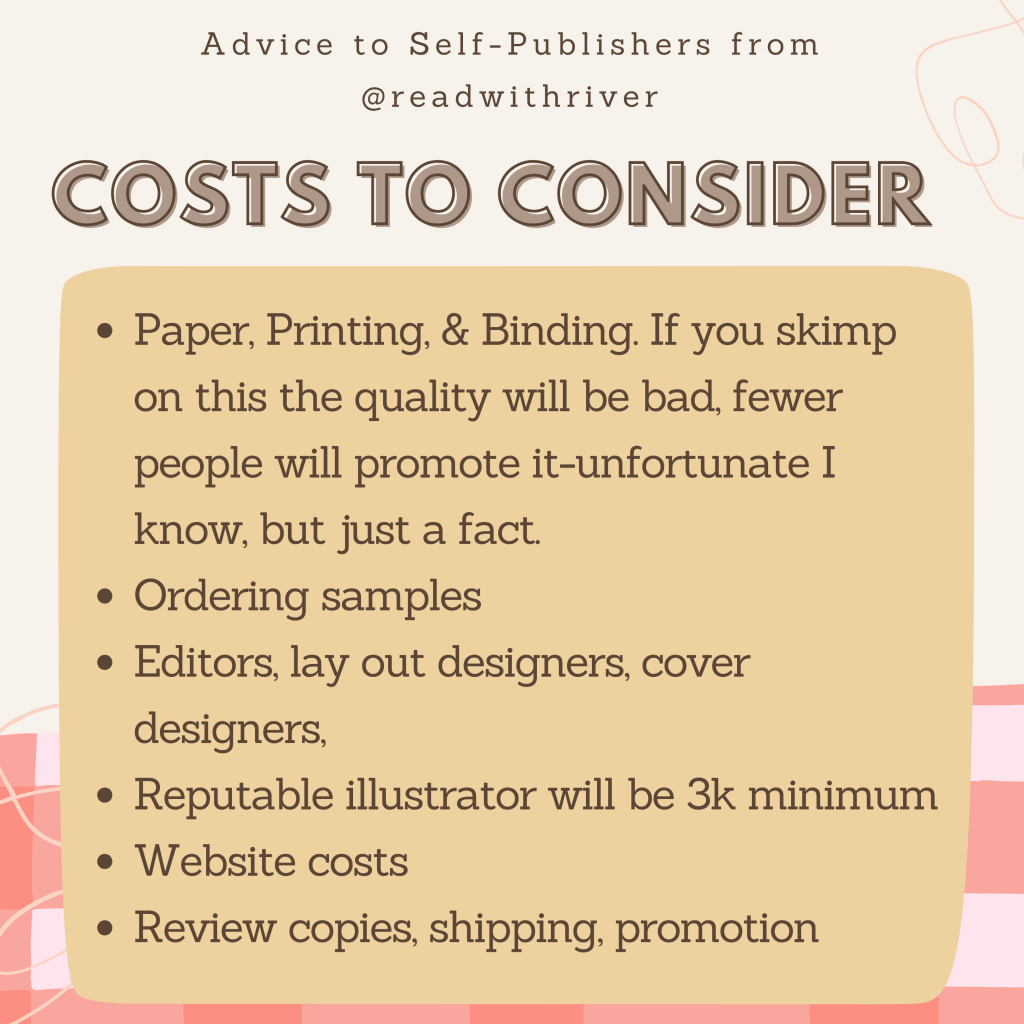
Recommendation: go to a library, read two hundred different picturebooks written in the last five years. Then go back to your idea and ask yourself ‘is this going to work?’Get it Edited: Your computer spell check program is not adequate for editing a book. You need more than one editor, who you are not related to. by blood or marriage. They should be looking at things like structure, logical consistency, dialogue believability, if it’s in verse is the meter good? If you’re including marginalized groups you are not a part of you need to hire a Diversity and Inclusion consultant/sensitivity reader.Rhyming is hard : Picturebooks do not need to rhyme. Unless you are a poet or a musician, its likely you’re going to struggle with writing in verse. Bad poetry is unforgivable and if it’s a little bit off, all anyone will focus on is exactly where it is off. Often people who force rhyming stories ignore the more important part, the plot, the character development, the dialogue, all so that they can force rhymes. Ditch the rhyme and write something true.The Picture in Picturebook is Key: The illustrations of a picturebook are arguably more important than the text. People can forgive a boring story if the pictures are beautiful. There’s no forgiving an ugly picturebook. You need a real artist, who knows how to do picturebooks. You also need someone who can do Cover Design, and text lay out (which the illustrator may not know how to do.) For the love of Jon Klassen do not use a weird font or comic sans, just don’t.Costs to consider: Paper, Printing, & Binding. If you skimp on this the quality will be bad, fewer people will promote it-unfortunate I know, but just a fact. Ordering samples Editors, lay out designers, cover designers, Reputable illustrator will be 3k minimum Website costs Review copies, shipping, promotionSetting up social: If you open up your Instagram/Twitter/Tiktok account three days before you launch nothing is going to happen for you.
If you’re just opening up your social accounts right now with the intetion of selling a book for Christmas you have missed the boat by six months.
All of the reputable influencers have their content planned until Christmas, most traditional publicists get out all the stuff they want featured in December out by August-October.There must be some way to get immediate promotion: You can pay people. (Not me, do not ask me..) But you can approach people and be upfront that it’s a paid ad opportunity. Influencer standard is $10 per a thousand followers so do the math before asking, some people may ask for more if you want it done quickly. Kirkus also has an expedited review program for self pub but it’s gonna cost you about $400 USD.I only want free publicity: You can pay people. (Not me, do not ask me..) But you can approach people and be upfront that it’s a paid ad opportunity. Influencer standard is $10 per a thousand followers so do the math before asking, some people may ask for more if you want it done quickly. Kirkus also has an expedited review program for self pub but it’s gonna cost you about $400 USD.Book influencers are friends. Behave Accordingly. We tell each other about self published authors who are difficult, audacious, rude or threatening. We share screenshots of your spam messages. No means no, do not keep badgering someone, do not investigate them or show up at their place of work, do not do it. If people are refusing to respond to your messages, ask yourself, did I have a bad interaction with an influencer? Because if you did, that’s why noone is answering.
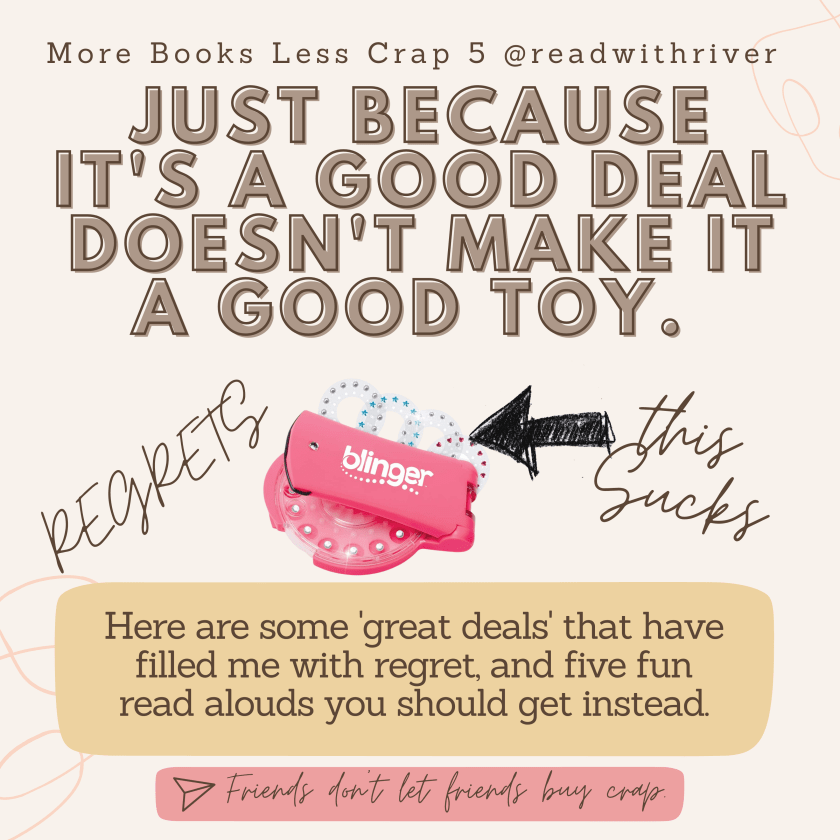
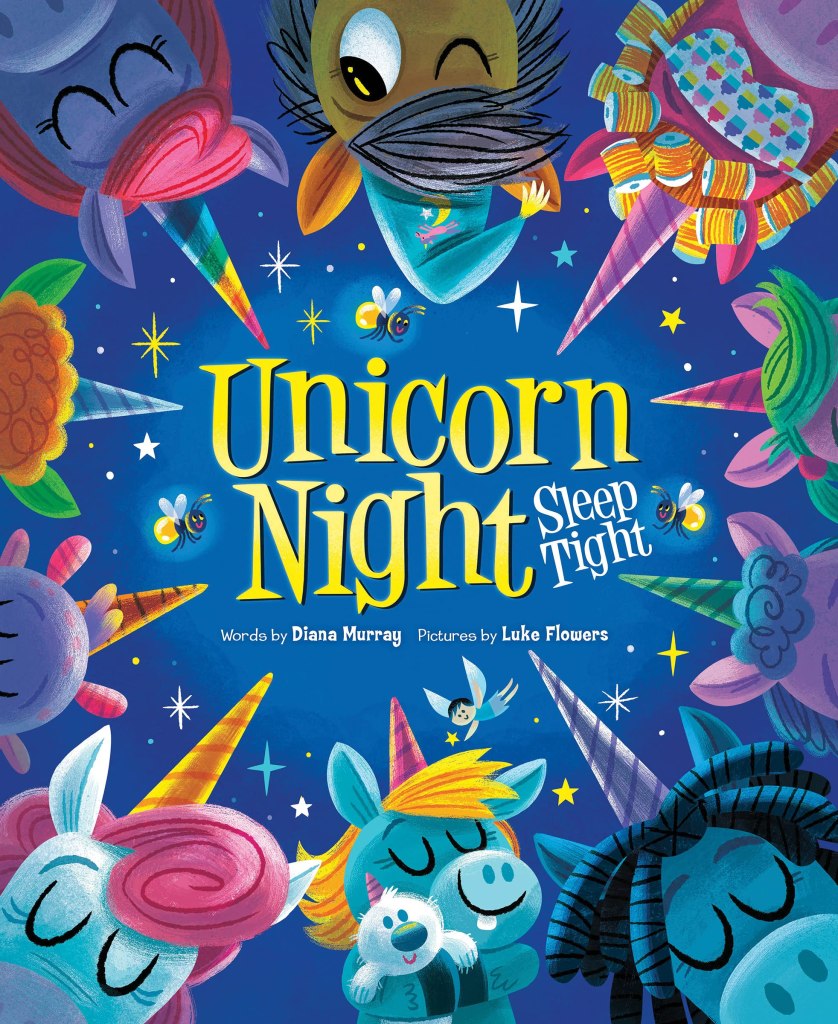
Here are 5 ‘great deals’ that have filled me with regret and five fun read alouds you should get instead!A blinger, it’s litteraly just a contraption for applying sticker jewels. I admit when I purchased it, I thought that the jewels would stay on more firmly than a regular sticker? But no. They’re just stickers. Ridiculous.So, one day, a few years ago, I was driving along on a cold November’s day, much like today and I saw a big sign! “GIANT TOY OUTLET SALE!” We were passing through a strange industrial complex we had never been through and I yelled “STOP THE CAR!” And my husband, reluctantly did. I jumped out and ran, into this giant warehouse, there were loads and loads of toys, they were in fact very cheap…in every sense of the word. The piano mat was not the only thing I bought from this sale, and all of it was garbage, I also bought a microphone with stand that never worked, period. But of course sales like this-all sales are final. So turns out, not such a great deal.My older daughter asked for a pogo stick, and we were like, why in the world do you want a pogo stick? She had seen one on a tv show and became obsessed with the idea. So we searched around for her birthday and found one, it was a pretty good deal, we bought it. She used it twice. Pogo sticks, are just not fun. Add to this they’re wildly impractical and dangerous.I was at Costco. Which is the number one place I fall for good deals that are in fact bad deals. They had this absolutely enormous packet of unicorn crystals. You grow these crystals with like a powder that then flakes off and leaves a disconcerting dust on everything. I said to my self “WOW! LOOK AT THIS GIANT PACKET! WHAT A GREAT DEAL!” Not a great deal, and now I’m going to have this enormous box in my house forever. Whoever came up with “Baby Alive” hates parents. It’s ugly, it’s noisy, and it yells at you when you’re trying to think and you jump five feet out of your chair. Just say no.Fun Read Alouds you should get instead! Light hearted books that pull little readers in and invite them to stay. All of the books today are from the submissions for the #bookstagang_bestof2021.“Unicorn Night Sleep Tight” by Diana Murray and Luke Flowers from Source Books Kids
This is a weird incidence of me really preferring a sequel to the original, “Unicorn Night Sleep Tight” is the sequel to “Unicorn Day” which was fine but it never really stole our hearts to be perfectly honest. “Unicorn Night” however, has become a fast favourite in our household. My kids just love this book, it’s one of my 3 year old’s go to bedtime picks. it’s a cute rhyming read aloud, and perfect for bed.
“A Pizza with Everything on it” Kyle Scheel and Andrew J. Pizza from Chronicle Kids Books
“A Pizza with Everything on it” is completely ridiculous. A kid and his dad make a pizza, but they have to put EVERYTHING on it, and they really explore the boundaries of that. I will be honest, I really questioned the physics behind the pizza dough continuing to expand when they started adding like, cars and things on it, but I think I need to let go of that. It’s one kids will enjoy and, the illustration is really full of personality. “My School Unicorn” by Willow Evans and Tom Knight from Simon Kids
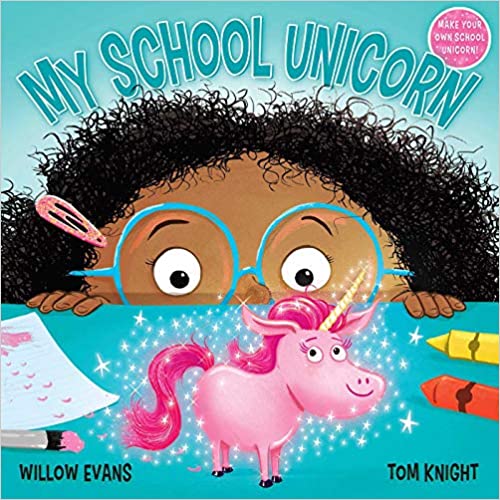
One little girl is nervous about starting kindergarten, but as luck would have it the school uniform store also provides a handy little school unicorn to lend emotional support. This story was adorable, my kids were confused about why the girl had to return the unicorn, and honestly I kind of wish they got to stay friends forever too. Either way, very cute, very colourful, fun read aloud.
“Room for Everyone” Naaz Khan & Simon Kids
“Room for Everyone” is an instant classic in my opinion, fast paced, colourful, fun read aloud. With a structure that really is reminiscent of classic folk tales. It’s beautifully written, wonderfully illustrated, and tons of fun for readers.
“Wolfboy” by Andy Harkness
“Wolfboy” is truly a delightful book, with it’s unusual plasticine illustration, that are fun and unique and a story that’s charming with a sweet twist at the end that readers will have a laugh at. Adorable.
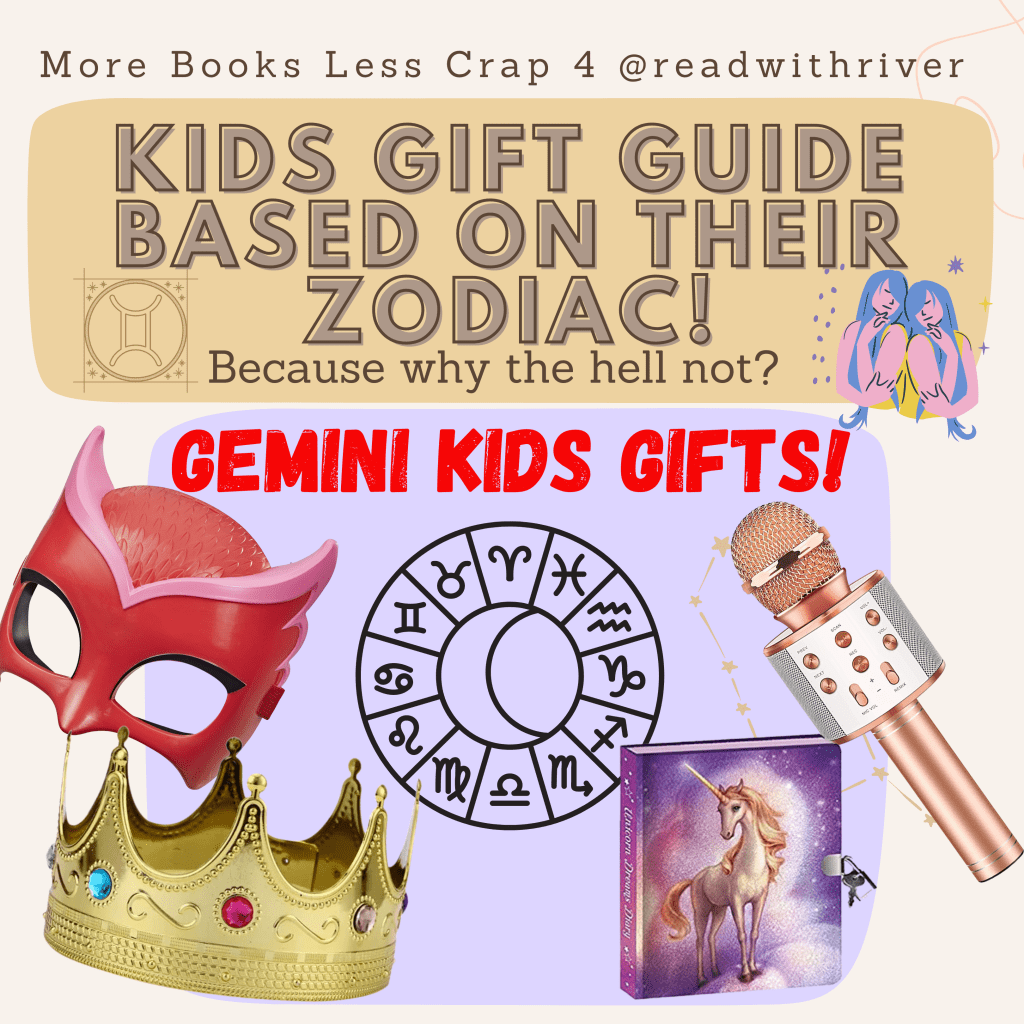
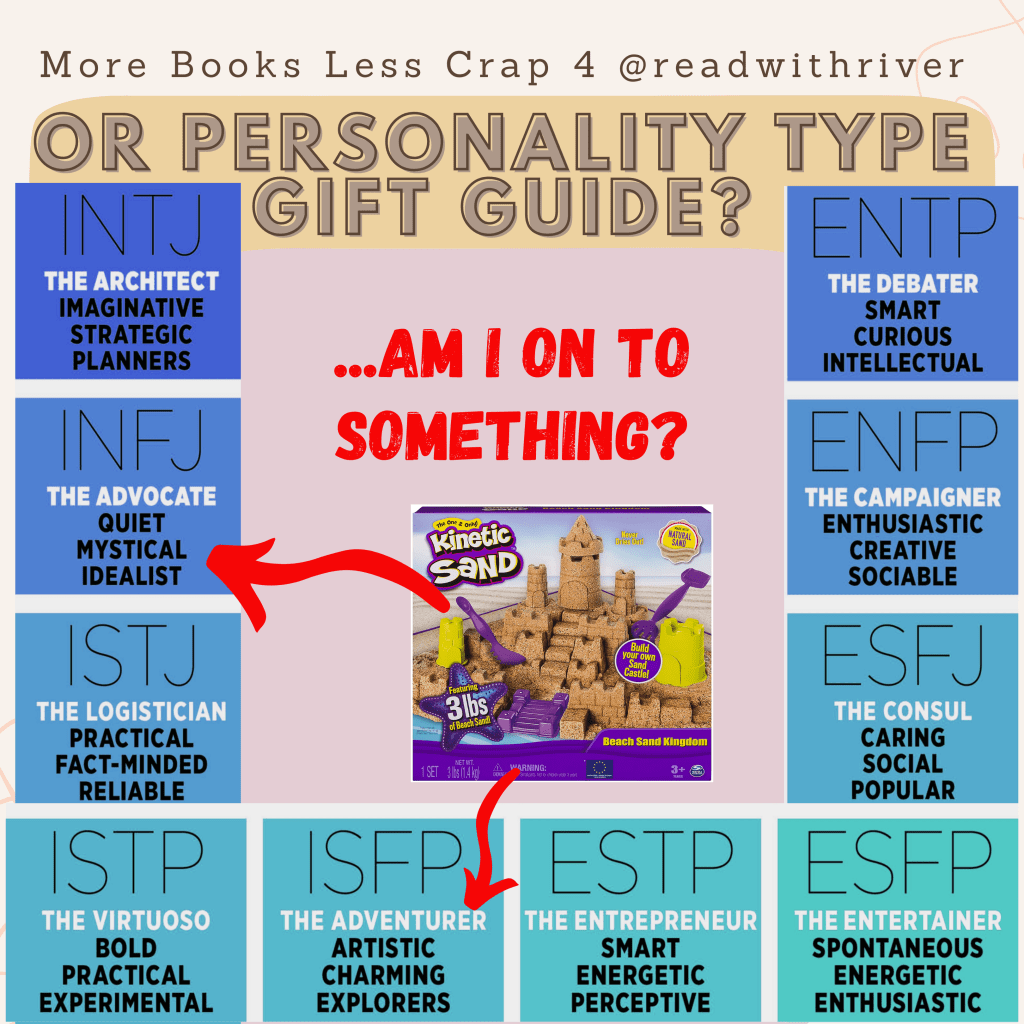
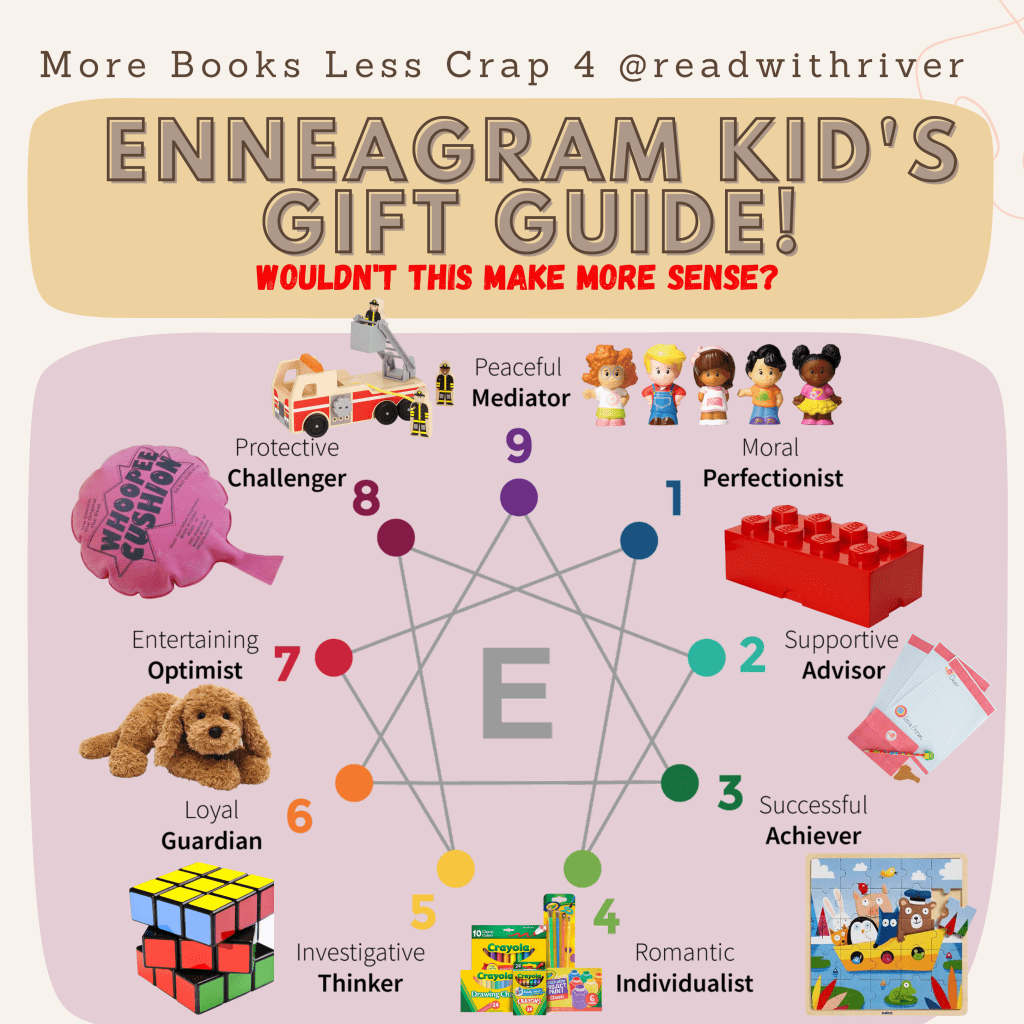
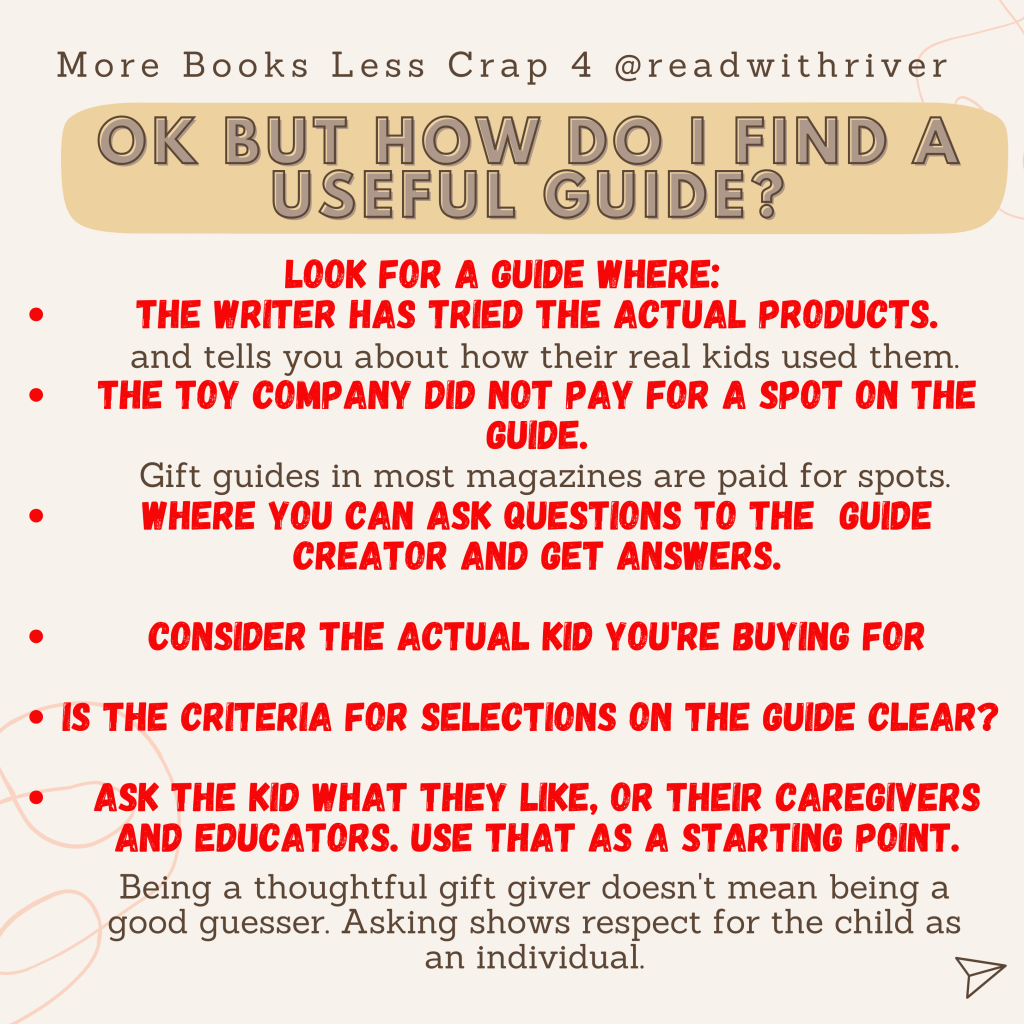
Most gift guides seem completely arbitrary, whether it’s a book guide or a toy guide, what do we look for in a guide that’s responsive to kids’ personalities?I’ve never bought anything my kids liked from an age based gift guide. All Flops. I should’ve asked ‘do my kids like trains?’ Not ‘are they two years old?’ What a waste!Any guides that distinguish between binary gender are awful. Who are building toys for? ids who like building! Toys have no gender!Age relation to developmental stage is not universal. Puzzle complexity, for example is about what a kid is ready for, and that is personal. And you might say, but what about choking hazards! Well yes naturally safety is one issue, but skill development is a completely different thing. Also five year olds who put crap in their mouth can choke just as much as a two year old. If we’re going to use random criteria to assign toy recommendations then we might as well make the categories fun…Kid’s gift guide based on their Zodiac! Because why the hell not? Gemini Kids gifts!Or Personality type gift guide?…Am I on to something?Enneagram Kids gift Guide? Wouldn’t this make more sense?OK but how do I find a useful guide?
Look for a guide where:
-the writer has tried the actual products and tells you about how their real kids used them. Helpful if you can tell if that kid’s personality aligns with the kid you are buying for.
-the toy company did not pay for a spot on the guide, gift guides in most magazines are paid for spots, and certainly in all junk mailers.
-where you can ask questions to the guide creator and get answers.
consider the actual kid you’re buying for.
-is the criteria for selections on the guide clear? And are they the criteria you yourself value?
-Ask the kid you’re buying for what they like, or ask their care givers and educators, use that as a starting point. If the child is going to daycare or kindergarten, they’re playing with lots of different kinds of toys, and their educator will know what they gravitate towards.
Being a thoughtful gift giver doesn’t mean being a good guesser. Asking shows respect for the child as an individual.
Delightful Funny Stories Your Kids Will Love, Gender and Age is irrlevant: These are all stories that my own children have enjoyed over multiple reads, or in some cases over the past year over and over again. The criteria is humour, enjoyability, good strong story line, likeable characters, excellent art, and that MY KIDS LIKED IT! All of my books are gifted, period, but I have not accepted any money and the links bellow are not affiliate links, I strongly suggest you buy them from your local indie bookstore.
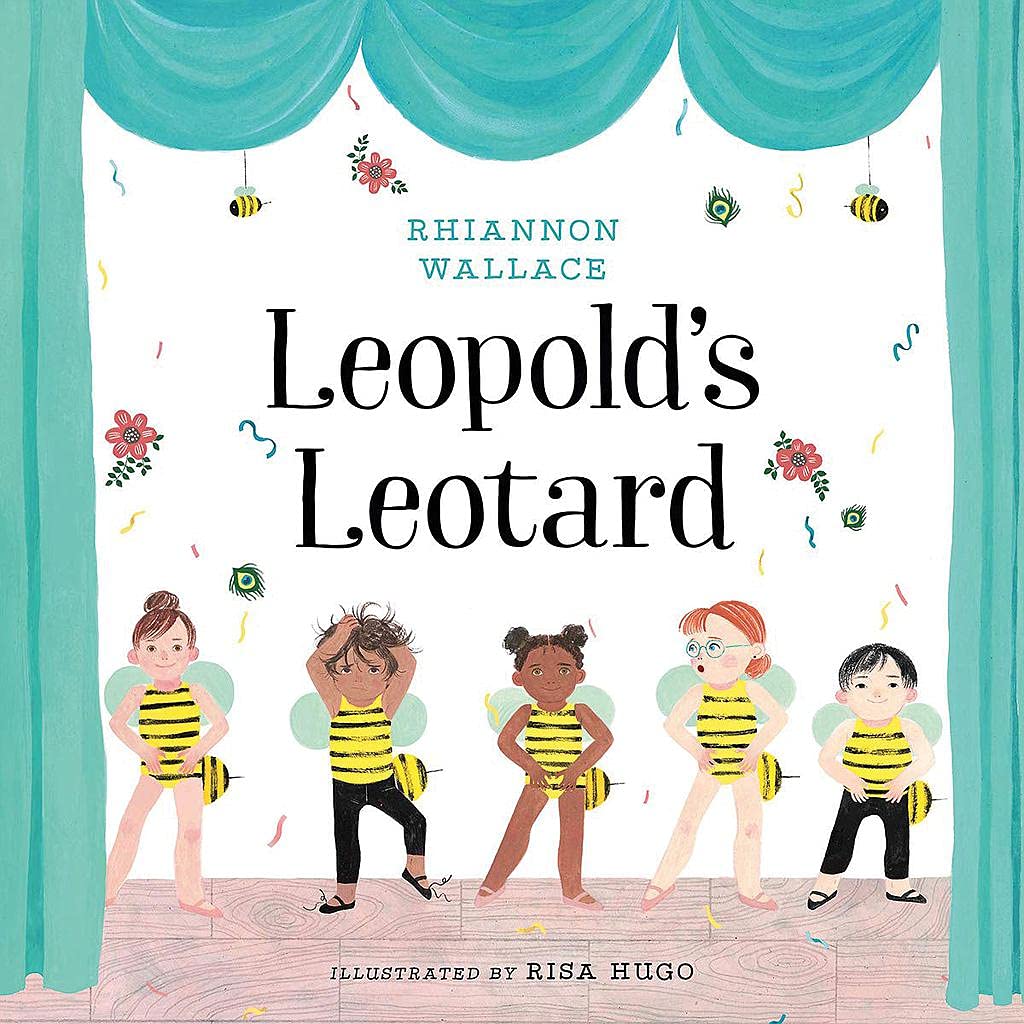
“Leopold’s Leotard” Rhiannon Wallace, Risa Hugo 2021, Orca Book Publishers.
Leopold loves the dance! He doesn’t love his itchy performance costume. What will he do?
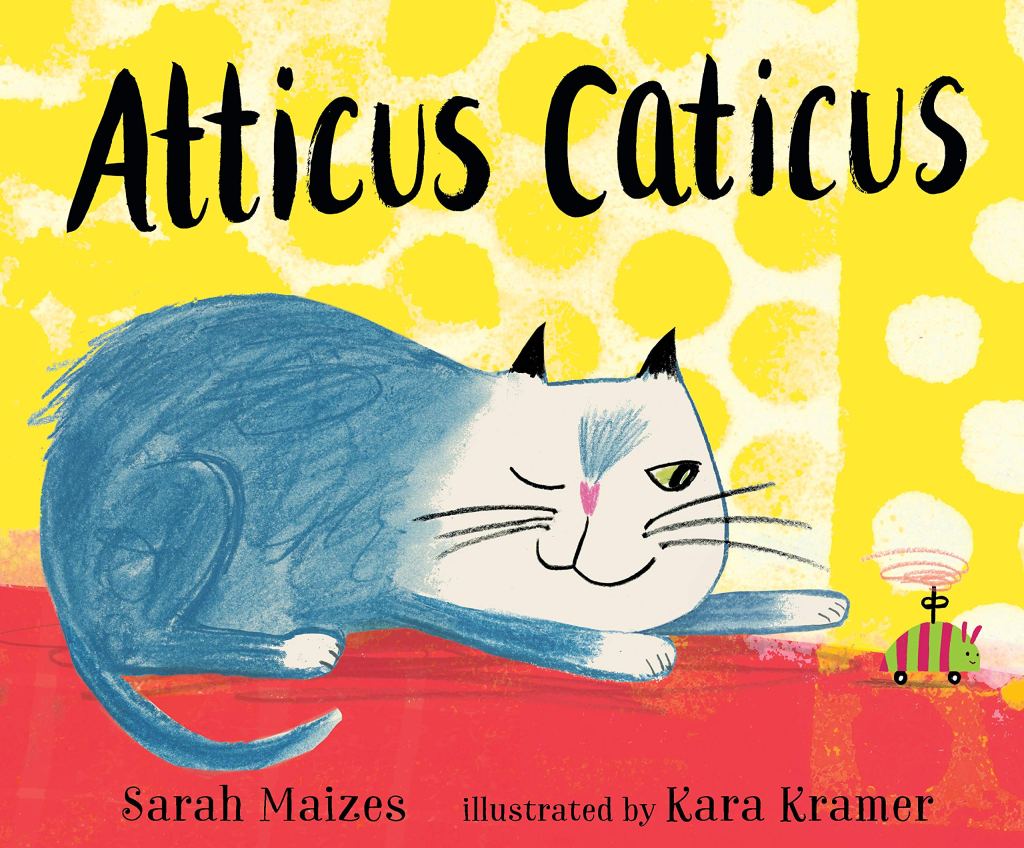
“Atticus Caticus” by Sarah Maizes and Kara Kramer, 2021, Candlewick.
A rhyming delightful tribute to a boy’s beloved cat. One of my three year old’s favourite book.
“Off-Limits” by Helen Yoon 2021, Candlewick
There’s nothing like the allure of office supplies, especially when they’re left unattended.
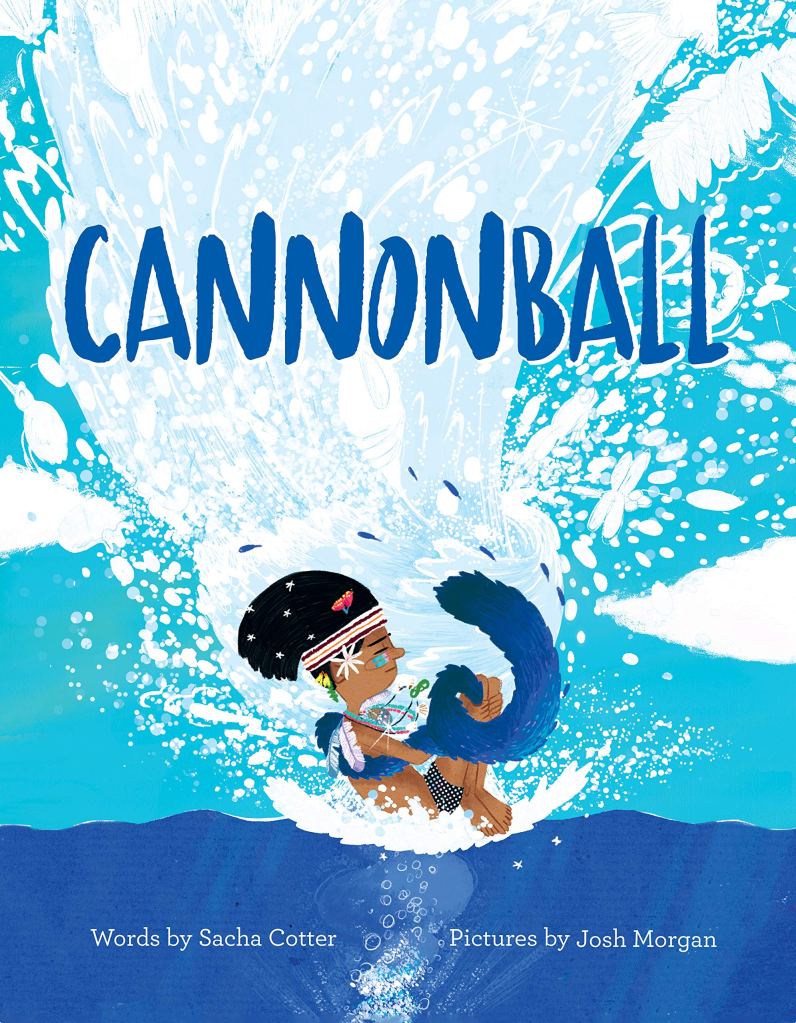
“Cannonball”by Sacha Cotter and Josh Morgan, 2020, Source Books Kids.
Doing a cannonball is no simple act, it takes courage, it takes chutzpah, has he got what it takes?
“On Account of the Gum” by Adam Rex 2020, Chronicle Kids Books.
A bad situation, and it just gets worse. Don’t sleep with gum in your mouth.
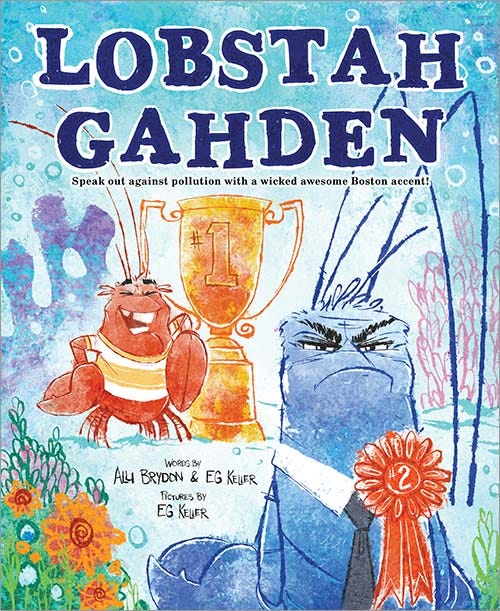
“Lobstah Gahden” by Alli Bridon and EG Keller, 2021, Sourcebooks Kids.
Two lobsters are just trying to win a gardening competition but boats keep dumping garbage on them, read in a Bahstan accent.
It’s Nov. 8 and I’d like to remind you, no matter what you see there’s no urgency that you buy all kinds of crap immediately.
In fact there’s no reason to by useless crap at all. Does anyone actually like getting baskets of soap? Or kitchen signs that say “live, laugh, love”? No.
Your kids will be just as loved if they don’t get a new menagerie of stuffed animals and whatever the new “hot” crap toys are. Trendy crap never lasts anyways
I know it’s hard to resist the insistent messages to buy, so I made you these screen savers to remind you, you can and should say no. Save up for something you really need, like a beach vacation. Wouldn’t that be nice?
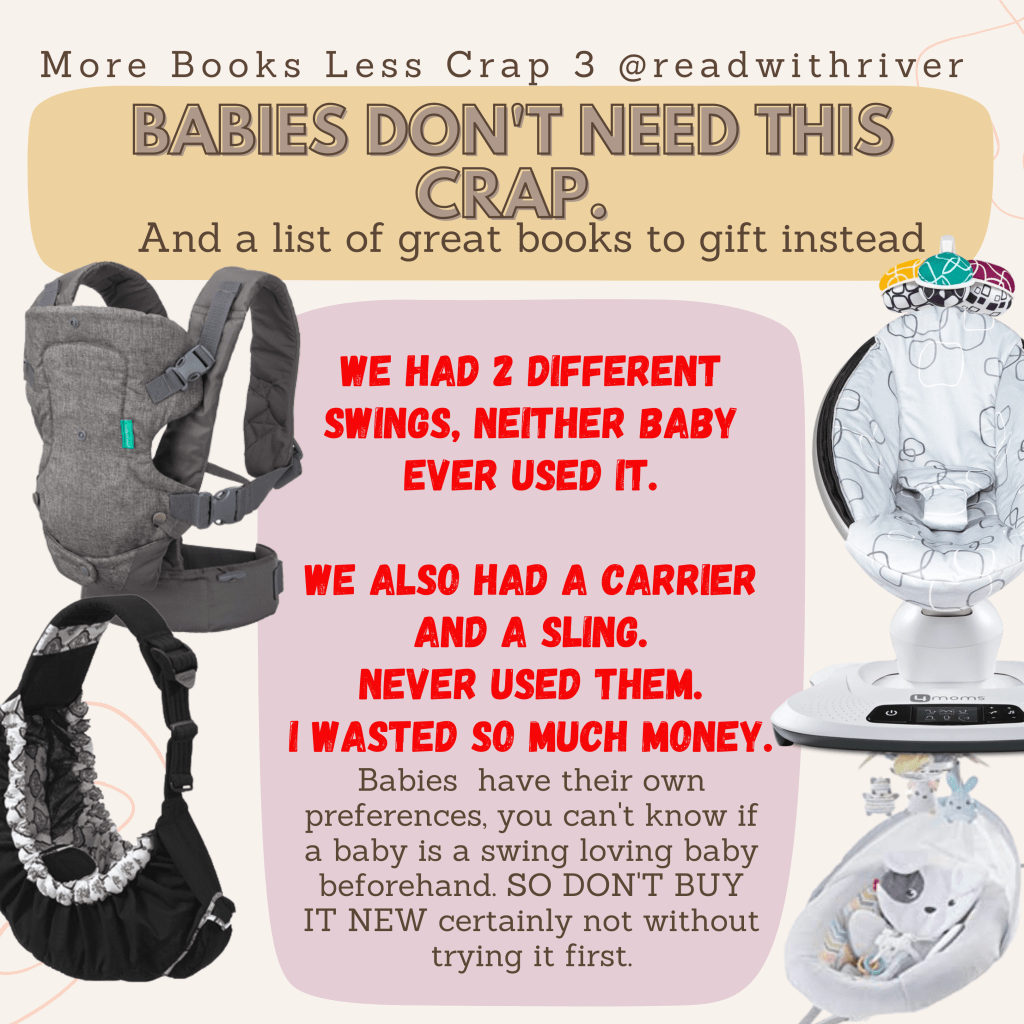
When I was pregnant with my first child, I bought all the things. Anything I didn’t buy, other people bought for us. Most of it was completely unnecessary and I try my best to block the entire thing out of my head.
I’m not unusual in these mistakes, when you’re waiting for a baby, whether you’re the parent or the aunty or just a very good friend you want to show your love and excitement and buying everything in sight is an easy and fast way to do it. The trouble is most of the stuff gathers dust, takes up space, creates waste, and at the end of the day it was money better spent on a RESP for school or diapers!
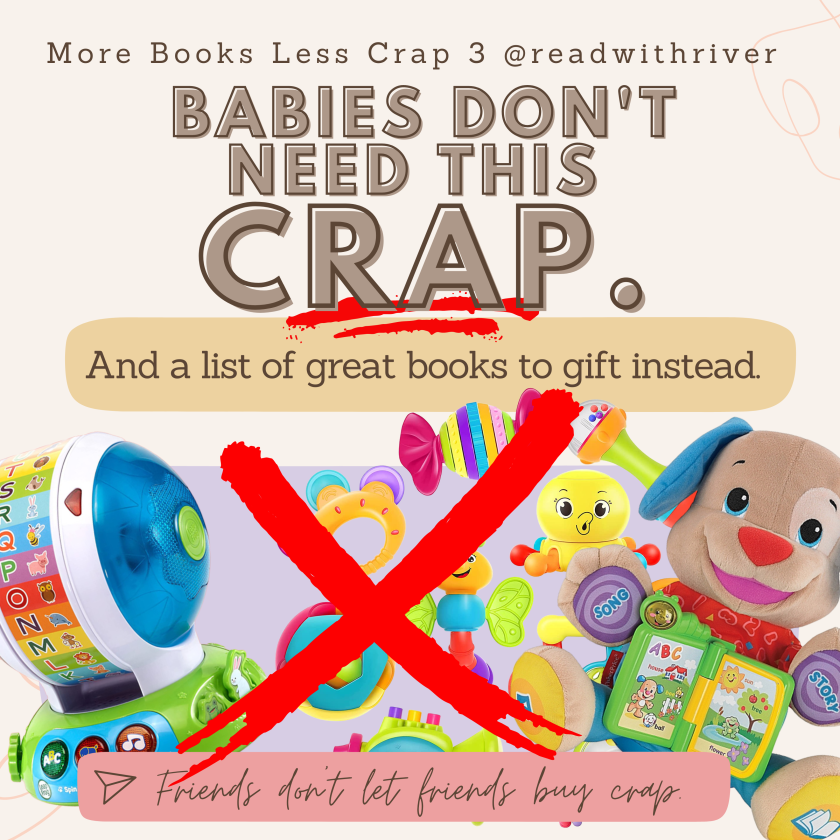
With Christmas coming, people don’t want to gift boring things like diapers and school money. It’s unfortunate but it’s true they want something they can wrap with a bunch of ribbons and watch the baby open. That’s just a fact, unfortunately when it comes to toys for babies-it’s basically all useless. Your baby really just wants to chew on your tv remote, or old water bottle. They’ll be more excited by the wrapping tissue than any fancy electronic rattle.
So here’s my solution for everyone. Buy books. You can wrap books. They’re made of paper instead of crap plastic. You can read to the baby you give it to, and that’s an experience you can enjoy together with actual value. And you can write a little message in it that will be kept for years to come. Books are relatively easy to store, and they’re not annoying. If everyone could just call up their local independent bookshop and order a ton of books for all their babies this year, the world would be a much calmer more literate place!
Now I know, you’re like, ‘but WHICH books?’ the baby might already have it? Well don’t worry I got you, I have two lists for you, one of active play books that babies and toddlers can experience and destroy with great joy over time, and a second list of beautiful books that are sure to be future classics in a child’s library. All of them new books of the last two years! So it’s unlikely they’ve got it already.
Click on the photos of the books to check out their publisher website, and place an order with a local independent book shop and support your local economy!
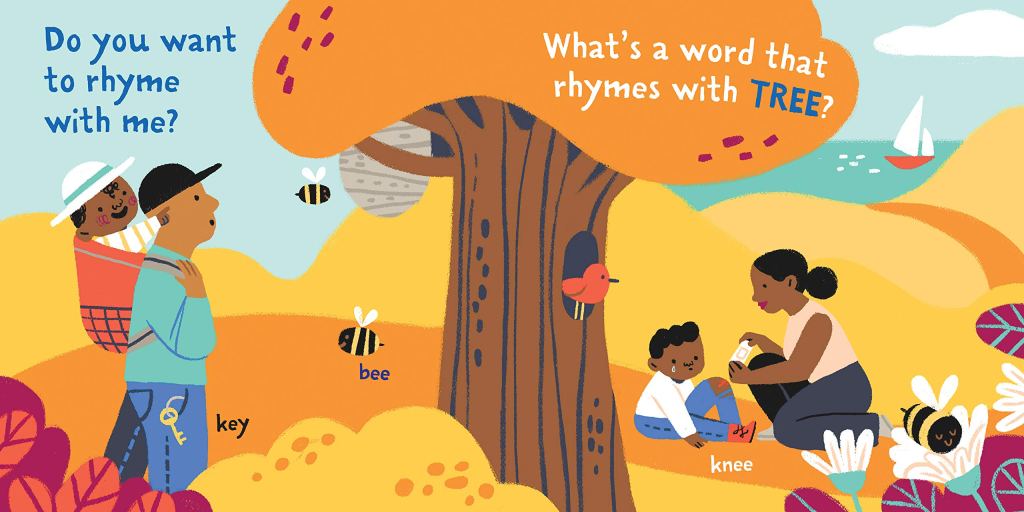
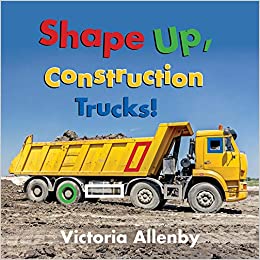
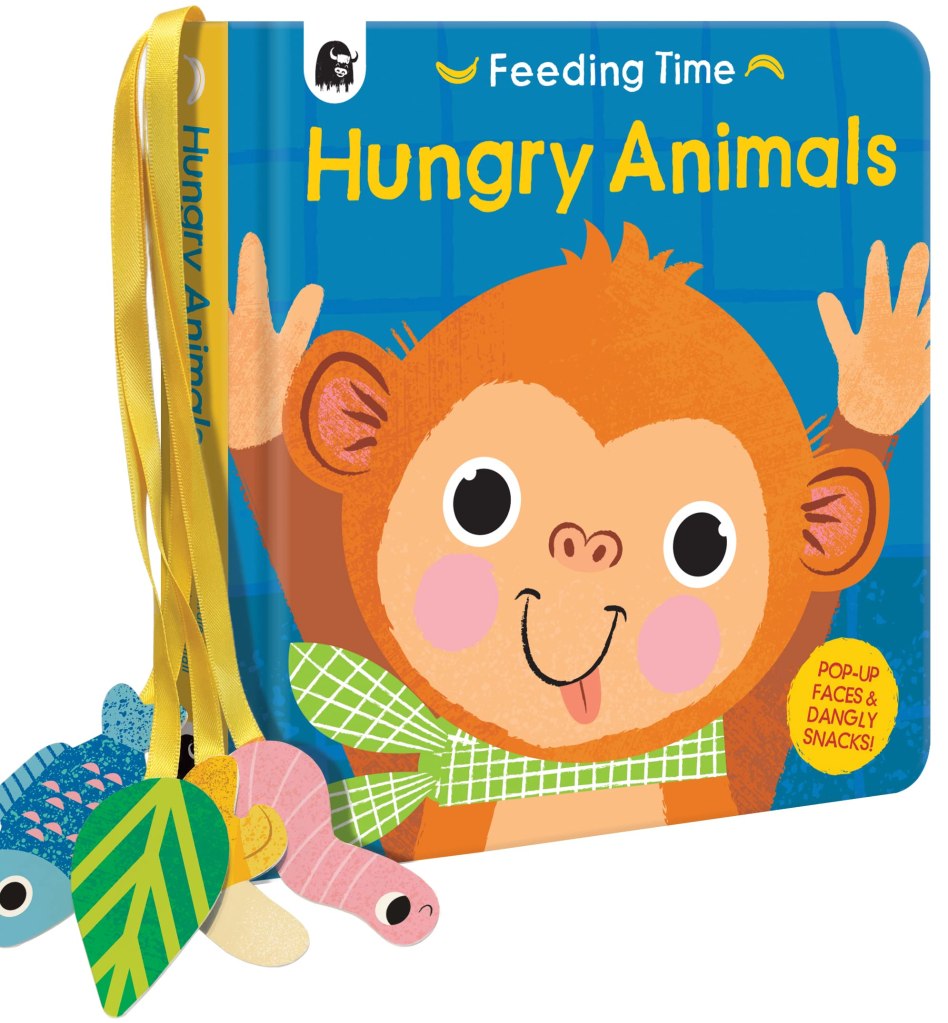
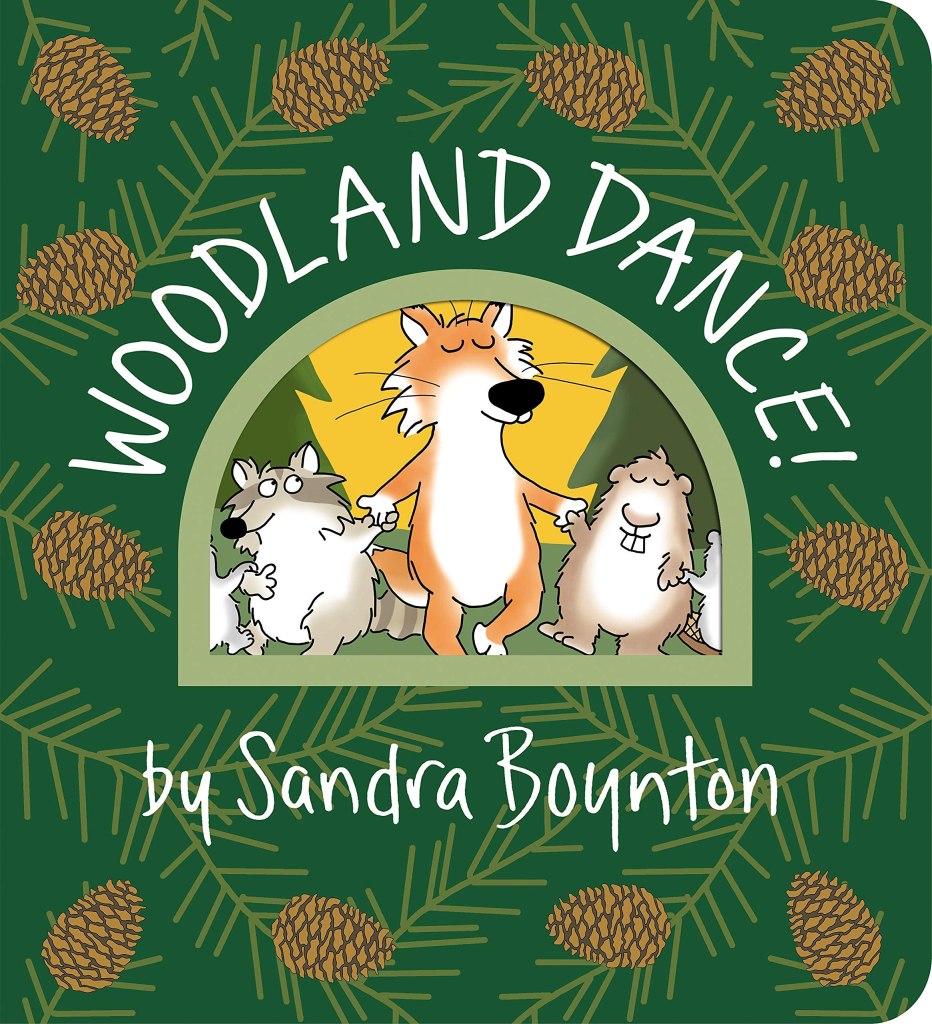
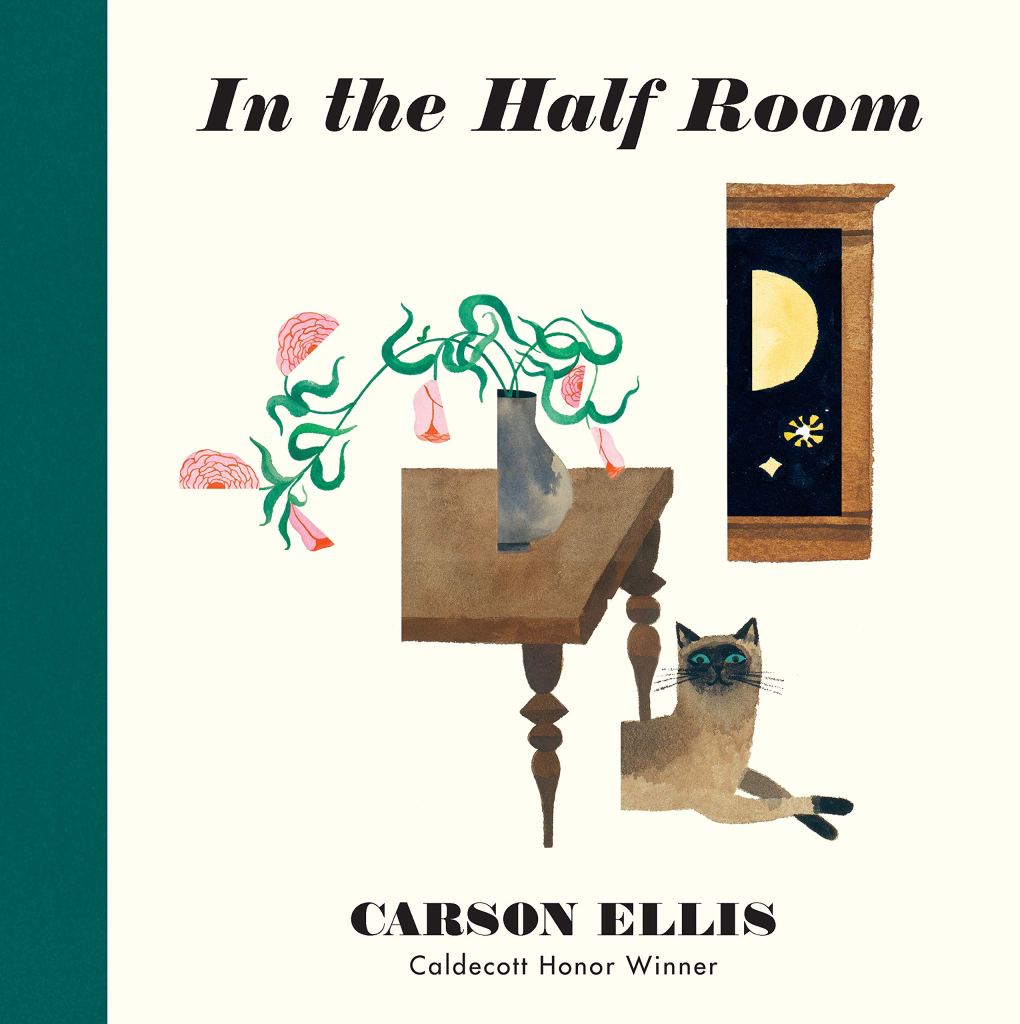
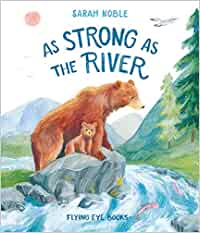
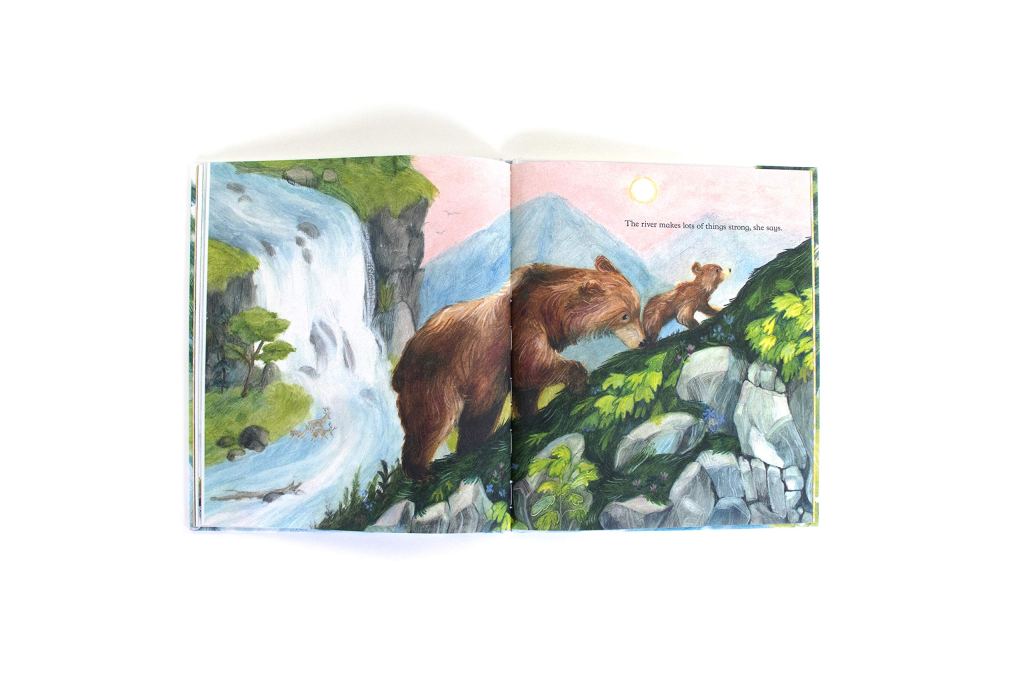
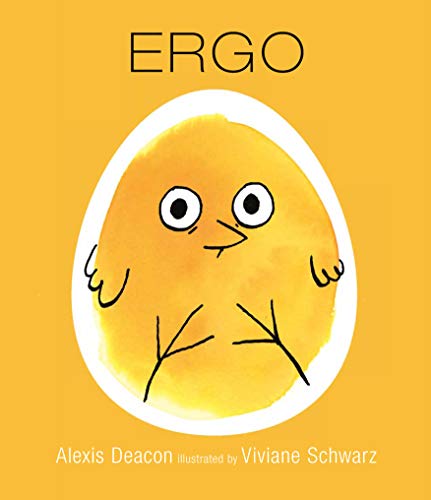
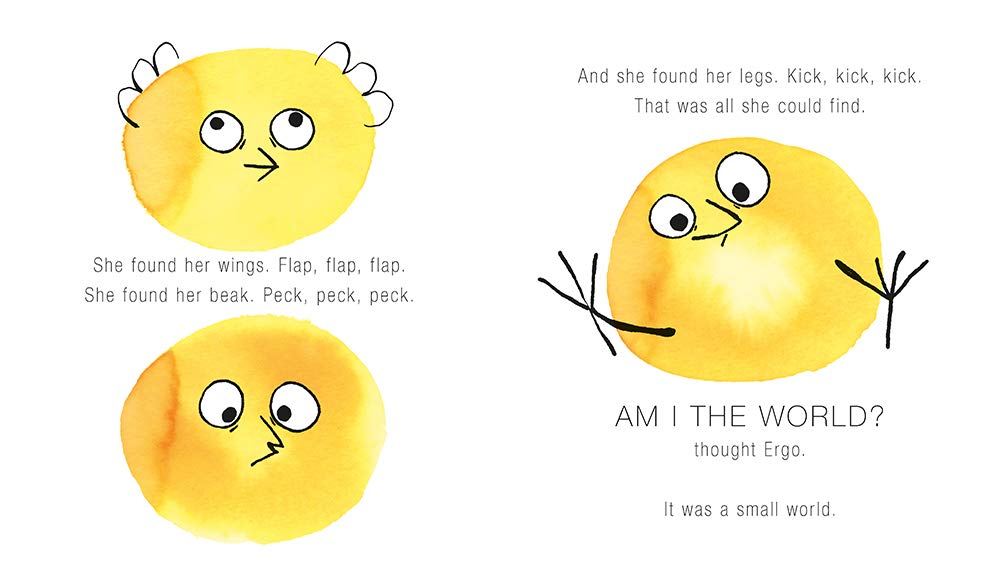
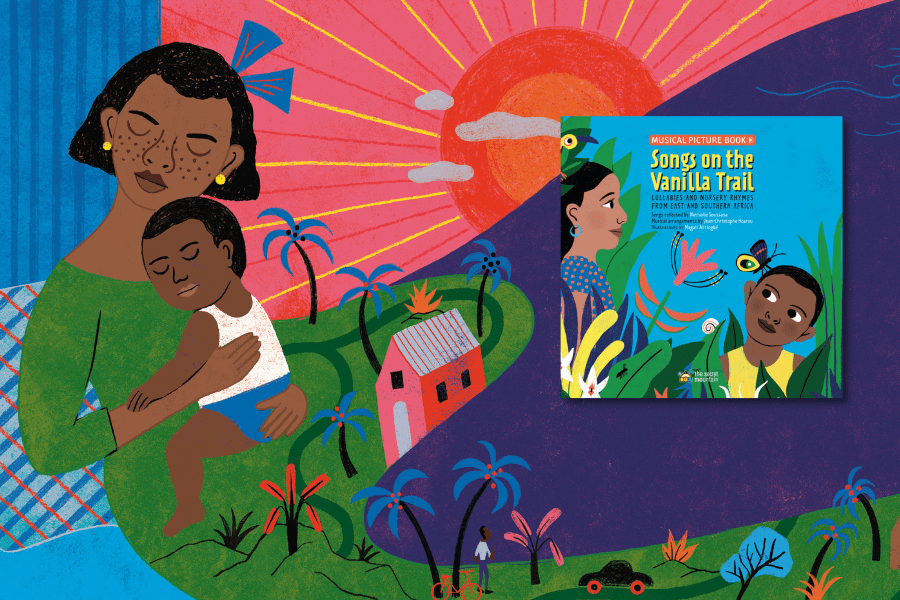
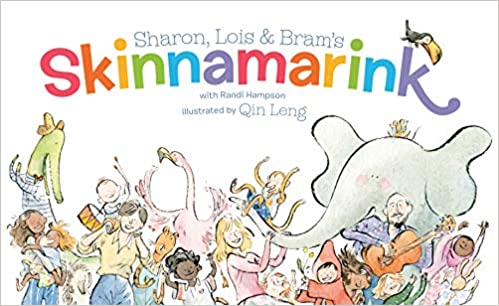
Indestructibles from Workman Publishing rip proof, chew proof, light, washable, great for any trip, or visit. Indestructibles from Workman Publishing rip proof, chew proof, light, washable, great for any trip, or visit. “Where is Everyone?” Tom Schamp my kids LOVE Tom Schamp’s work, and this lift the flap is a quirky masterpiece of the unexpected. Probably our favourite board book this year. @prestelpublishing “Where is Everyone?” Tom Schamp my kids LOVE Tom Schamp’s work, and this lift the flap is a quirky masterpiece of the unexpected. Probably our favourite board book this year. @prestelpublishing “Young Gifted and Black” with Mirror, a beautiful, board book celebrating Black icons and full of affirmations for little readers. @quartokids “Young Gifted and Black” with Mirror, a beautiful, board book celebrating Black icons and full of affirmations for little readers. @quartokids “Shape Up Construction Trucks” Victoria Allenby @pajamapress fun new rhyming book full of shapes and details to notice and discuss, perfect for a little vehicle lover!“Feeding Time: Hungry Animals” Part of a new pop out series from Happy Yak @quartokids that my toddler adores, feed the animals on each page with the little bookmarks.“Feeding Time: Hungry Animals” Part of a new pop out series from Happy Yak @quartokids that my toddler adores, feed the animals on each page with the little bookmarks. “Woodland Dance” Sandra Boynton @workmanpublishing the newest release by the master of all bedtime books, is it a song or is it a rhyme? Kinda both! “In the Half Room”Carson Ellis @candlewickpress is a surreal and gentle dream, beautiful and ethereal.“In the Half Room”Carson Ellis @candlewickpress is a surreal and gentle dream, beautiful and ethereal.“As Strong as the River” Sarah Noble @flyingeyebooks little bear sees the world around her and loves what she sees, in this book about the joys of growing up and the beauty and love in the world.“As Strong as the River” Sarah Noble @flyingeyebooks little bear sees the world around her and loves what she sees, in this book about the joys of growing up and the beauty and love in the world.“Ergo” Alexis Deacon and Viviane Scwarz @candlewickpress A chick discovers that there is infact a world beyond the egg, enjoy your new world little chick. Charming. “Ergo” Alexis Deacon and Viviane Scwarz @candlewickpress A chick discovers that there is infact a world beyond the egg, enjoy your new world little chick. Charming. “Songs on the Vanilla Trail: Lullabies and Nursery Rhymes from East and Southern Africa” Musical picture book with download and CD @secretmountainpress Beautiful, inclusive, and a wonderful introduction to lullabies of the world. “Sharon, Lois & Bram’s Skinnamarink” Randi Hampson and Qin Leng @tundrabooks the classic song we all know and love set to bright, and inclusive illustrations.“We are One: How the World Adds Up” Susan Hood and Linda Yan @candlewickpress Probably one of the best new release rhyming books, an instant classic, full of wonder.
































 Read With River


