Posted in Author Resources, Demystifying publishing

Picturebooks Wrapped: The 2024 Trend Report

After wrapping up as a judge for the Bookstagang 2024 picturebook awards and looking at my tallied list of themes that recurred in the 570 new releases that were submitted for scoring, I have serious question to ask our publishing friends.

Are you guys okay?

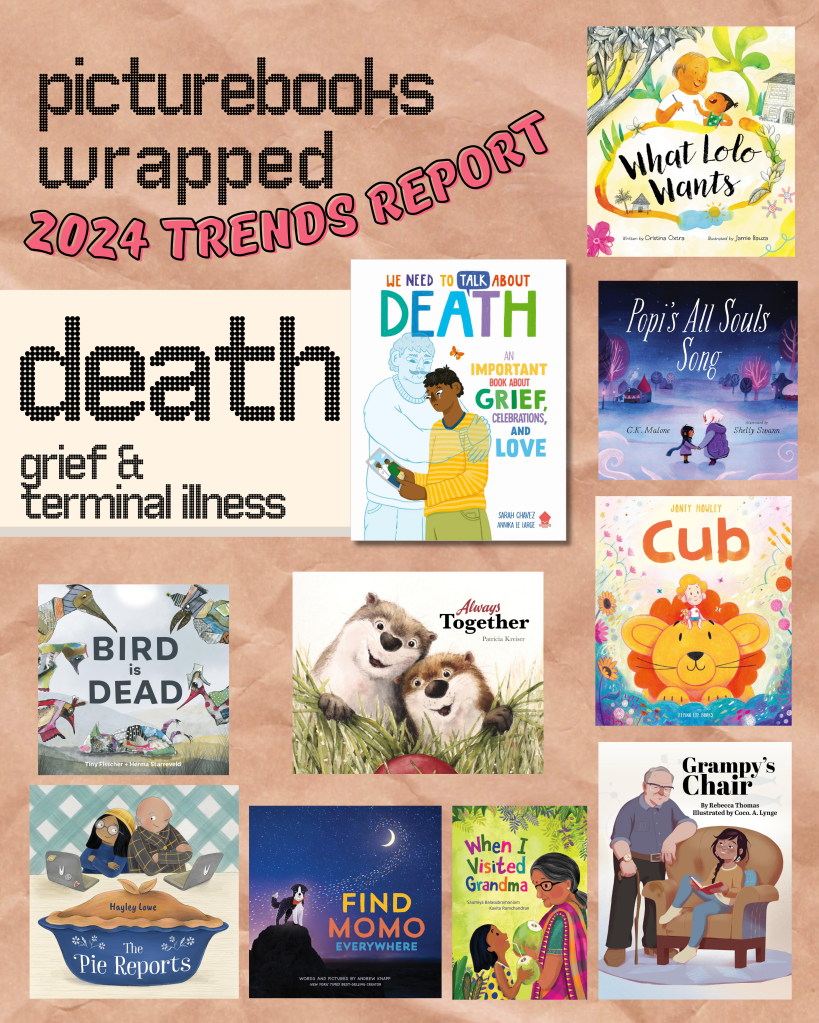
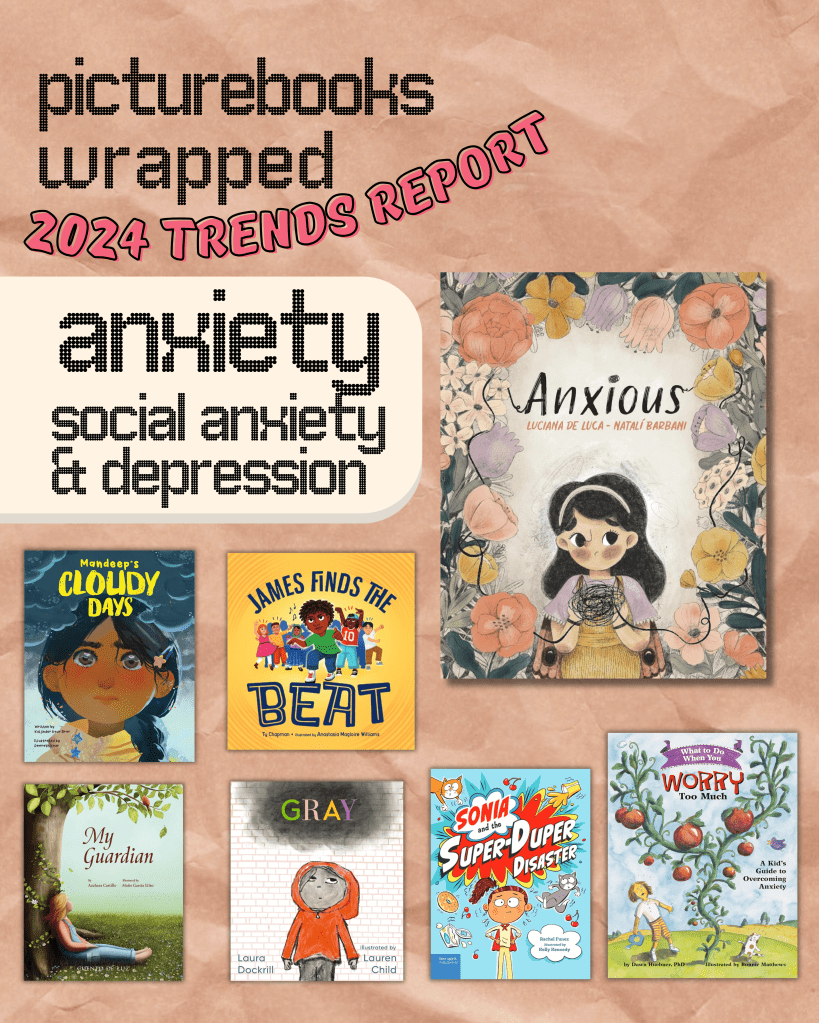
I am almost certain the answer is no, because nobody seems to be okay anymore and this year’s big trends are really driving that stake into our collective barely beating hearts. We’re seeing an unprecedented number of picturebooks about; death, depression, dementia, displacement, and a concerning dose of severe anxiety.
Little Bo Peep needing to practice therapeutic coping mechanisms to deal with the panic attacks brought on by the death of her sheep, as she wanders the moors in search of a new home would fit right in with this year’s catalogues.

Gone are the days of kindness and capybaras, oh no, now it’s dead dogs and dead otters and dead grandparents galore. Every time I saw a grandparent appear on a spread I clenched my butt hole readying myself for their inevitable and untimely demise.
It makes sense when you consider these books were acquired most likely some time in 2022. We were still in the throes of pandemic pandemonium, and had not become quite as desensitized to the ongoing onslaught of covid as it continues today. We were definitely not okay.  Was that back when there were still killer bees, or murder hornets, maybe there were the wildfires? Or was that 2023? Please someone put out a recent history book because I can’t keep track anymore and it’s still as fresh as the corpse of the dead bird in BIRD IS DEAD.

The question I have is, if this was the vibe that 2022 brought forth in picturebooks then what fresh illustrated hells will be unleashed upon us yet to come? Our global situation has moved laterally at best since 2022 and the forecast for 2025 isn’t looking sunny.

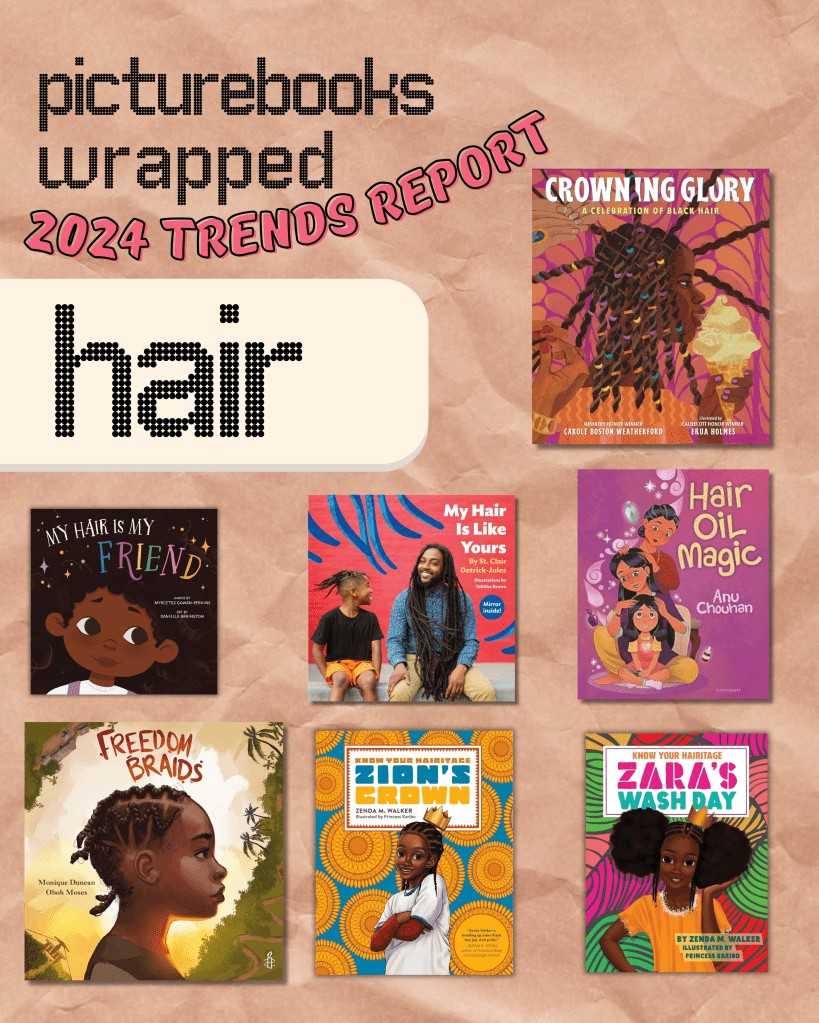
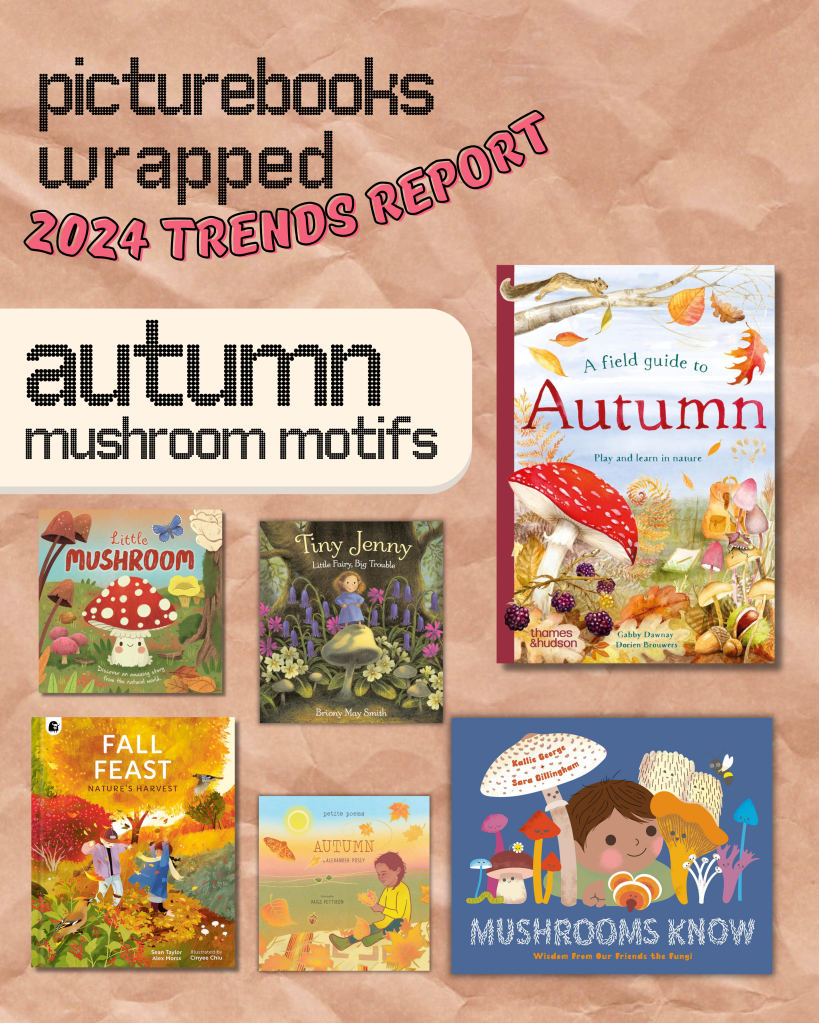
Not to worry, it’s not all doom and gloom, 2024 brought us a lot of very nice books about hair and a good number of cosy autumnal mushroom books popping up to soften the harshness of mortality in this cruel world.  So there’s that to find comfort in. 
There is a continued general movement away from the minimalism in design and efficiency of word counts that we were seeing back in 2020. The picturebook trends are flowing into full blown maximalism in almost every element except for paper printing and binding details. I’m seeing a real lack of gold foil and everyone is skipping the embossed covers (expensive paper engineering and print details are no longer in the budget it seems). 

Word counts are way up, testing and stretching the boundaries of this screen fed generation. It’s no longer a Hemingway-esque test of economy to see how much meaning you can jam into a paragraph shorter than a haiku and I for one am relieved. The scripts are getting downright flowery, poetry is seeping into every genre, both verse and prose. We’re even seeing poetry appearing in our non-fiction new releases. This is a nice extrapolation of the emergence of narrative non-fiction that has been really growing in the last few years.  
This year saw a real variety of artistic styles, and I love to see it. The boundaries of what qualifies as an appropriate illustration for a children’s book are being explored. A number of deep richly coloured hyper realistic painted books have come out.The overall palettes are natural and warm. We’re seeing lots of details being included all over the place. The possibilities are endless it seems and I can’t wait to see how things continue next year at this rate. 

I know the question everyone actually wants answered is are we really seeing a decline in diverse representation? After the recently released Guardian article citing a serious drop in diverse representation as tracked by the research from CLPE from 2022-2023 in UK published children’s there is real concern.

The CLPE data showed increase in the rise of background characters that were racially minoritized and a drop of racially minoritized main characters. Although picturebooks had the highest proportion of racially minoritized characters with a 3% increase from 2017. 

“Whilst this is disappointing, we have always expressed cautious optimism regarding the increased output of recent years,” writes Farrah Serroukh, CLPE research and development director, in the report’s foreword. “Historical patterns would indicate that gains regarding inclusion are susceptible to being constrained by the cyclical nature of publishing trends.”

Do those numbers hold up for North American publishing? According to the statistics put out by the CCBC, no. 2022-2023 did not see a decline. However there wasn’t a significant increase either. The market seems to have plateaued on how much diversity it’s willing to float. Furthermore the North American statistics indicated that the representation increase that did occur was localized to the representation of minorities by authors who did not share those identities, there was no significant increase in representation written by those minorities.  

So what did that mean for the books we received in 2024? The data from these organizations, the CLPE and CCBC respectively, does not exist yet for 2024. Admittedly the sample size we have here in the Bookstagang of 570 books is much smaller than the 4-5,000 that the CLPE and CCBC have for their studies, but it is an immediate look at what’s happening right now in 2024 and a more localized look at the kind of stories that are being told.

As someone who has judged this particular list for 5 of the past 6 years, I would say that I am noticing a general trend away from diverse narratives but not away from diverse representation. 

It seems to me that ‘diverse stories’ are more than ever being slotted into a category of books that don’t really need to have a narrative arc and I am concerned about how tenable that is for the continuation of the diversification of children’s literature. If diversity continues to be relegated to books that do not have storylines, then ‘diversity’ may very well prove itself to be a trend that doesn’t work under capitalism, instead of a genuine move to a more just system within children’s publishing. There are only so many books that people can buy that are catalogues of what different children look like accompanied by lists or poems. I am uncertain the market will be able to carry them. Only time will tell.

Forecast for the next few years:

Now, I’m no oracle, but here’s what I think we’re going to see in the next couple of years.

I think we will probably see a continuation for a little while at least of the exceptionally heavy topics, because it’s probably the beginning of the wave and then I suspect it will get very silly (which I’m looking forward to.)

I think we will see a continuation of the trend of maximalism, and I think that there will be a continued preference for the cosy and the comforting. I think we can expect more warm palettes and frogs making stew wearing little jackets. I think that it’s a reaction to these uncertain times and that it will continue for a while.

Given the uncertain political climate, I do wonder if we are going to see a decline in efforts to continue to diversify children’s publishing at least for the next five years. Certainly I think a lot more publishers who have been open to representing LGBTQ+ stories and racially minoritized stories may feel discouraged at the risk of losing money. We will have to see how that pans out, and I think that there are a lot of fights to be had in the coming times.

If I could make one request of publishers, for any who are listening, please stop killing dogs unexpectedly. We can’t take it anymore.

A.
Posted in Uncategorized

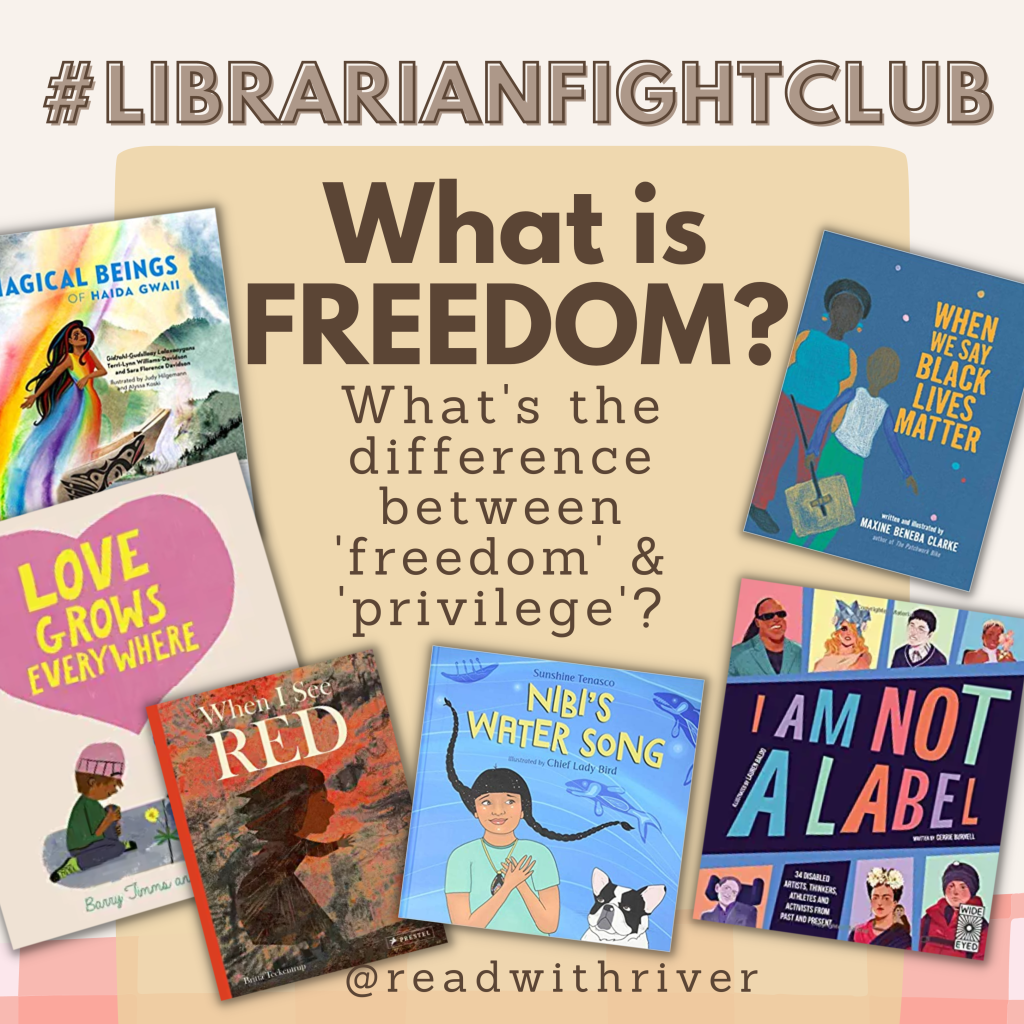
What is Freedom? Exploring the concept through Picturebooks. #LibrarianFightClub

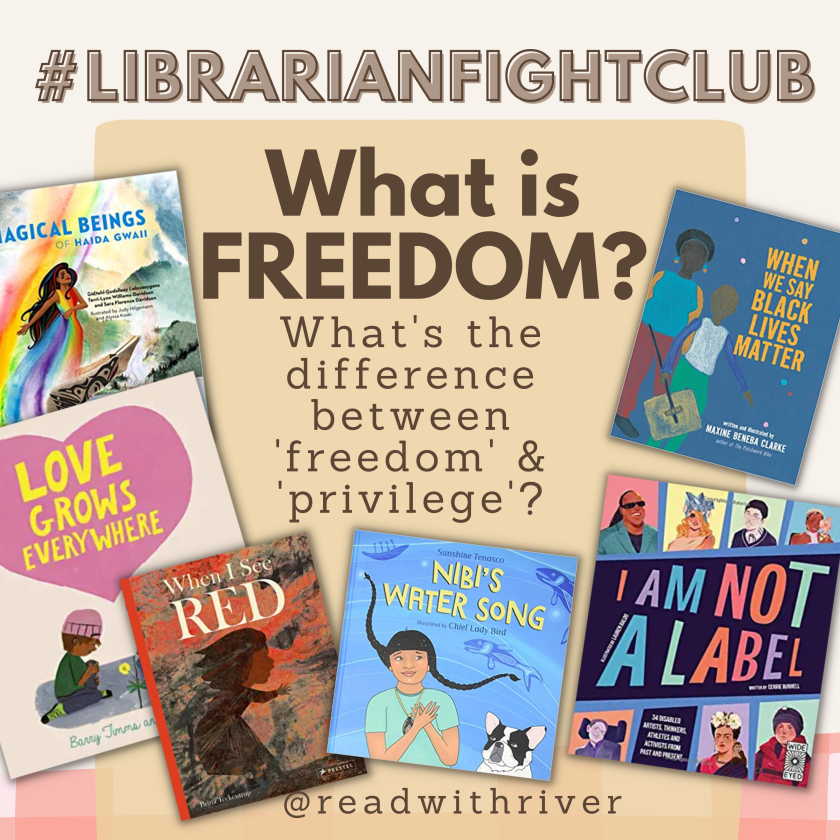
What is Freedom? What’s the difference between ‘freedom’ & Privilege’?

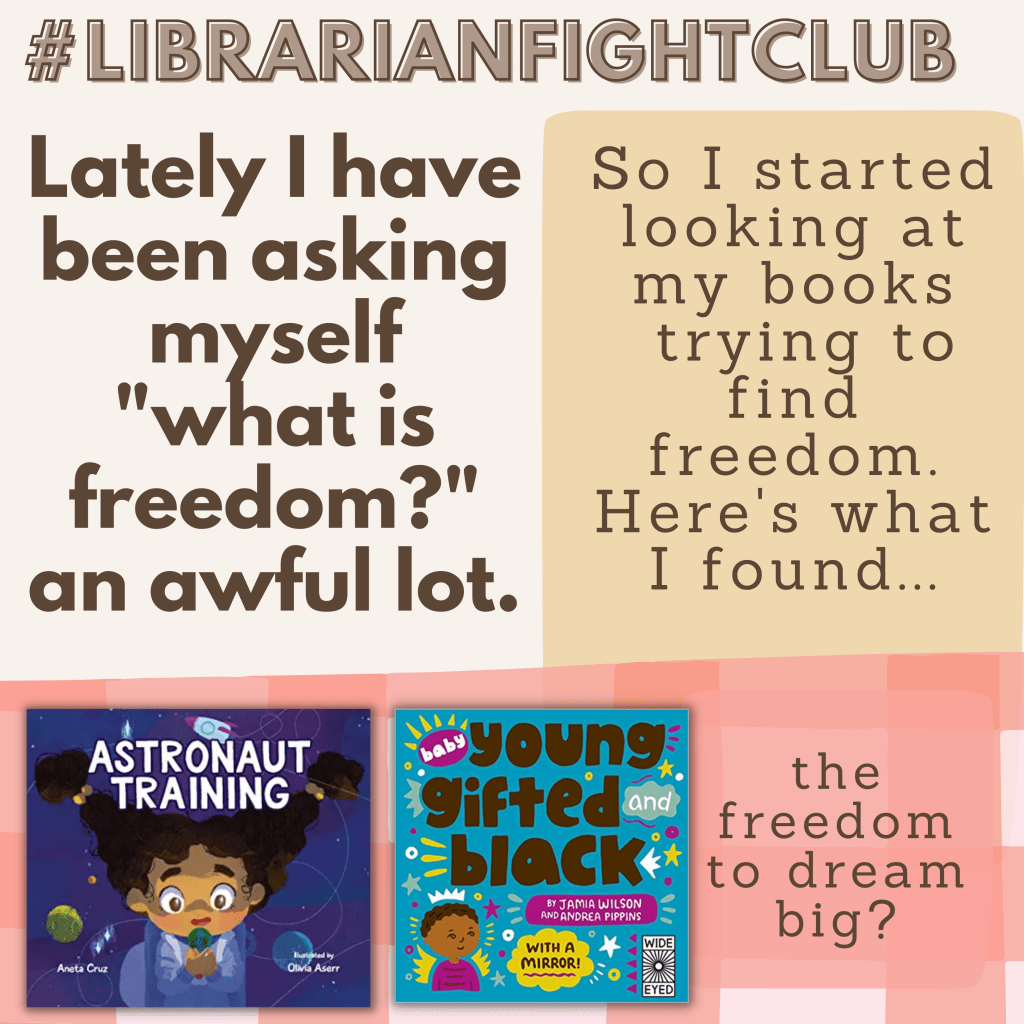
Lately I have been asking myself “What is freedom?” an awful lot. So I started looking at my books trying to find freedom. Here’s what I found…

Growing up in Canada, we don’t’ spend a lot of time talking about the concept of ‘Freedom.’ Not in the way that seems to take over a lot of the discussion in America around what they demand from their society, what they expect of their lives. “Freedom” has never been our primary value in our Canadian society.

But lately I’ve begun to really start thinking about what it means to have freedom, and where does freedom end and privilege begin? What is a basic freedom and what is entitlement? So I turned to my books, to search for freedom and this is what I’ve found.

The freedom to dream big?

On the surface level, I think a lot of people think of freedom as breaking free from the constraints of society, letting their hair down and, letting out their emotions.

Freedom is the space to run, to howl and cry.

Being able to count on your basic needs being met is freedom, freedom to live.

But, freedom is the right to clean drinking water, safety, food security.

Freedom from Oppression & Persecution. To be able to pass on your traditions, your history without fear.

Freedom from Oppression & Persecution

Freedom is autonomy over your own body.

Freedom is autonomy over your own body (not someone else’s.)

Freedom is, to be in your own skin, to love yourself and take up space without apology or explanation.

Freedom to exist in your body, to love yourself and, be respected.

Freedom is to be able to love without fear.

Freedom is to be able to love without fear.

Freedom is to be able to express your identity.

Freedom is to be able to express your identity.

What did they all have in common? Safety. The safety to dream, to feel, to love, to be, to live. If your idea of freedom is directly endangering any of that safety of others, then what you’re asking for isn’t freedom, it’s privilege.
Posted in #Librarian Fight Club

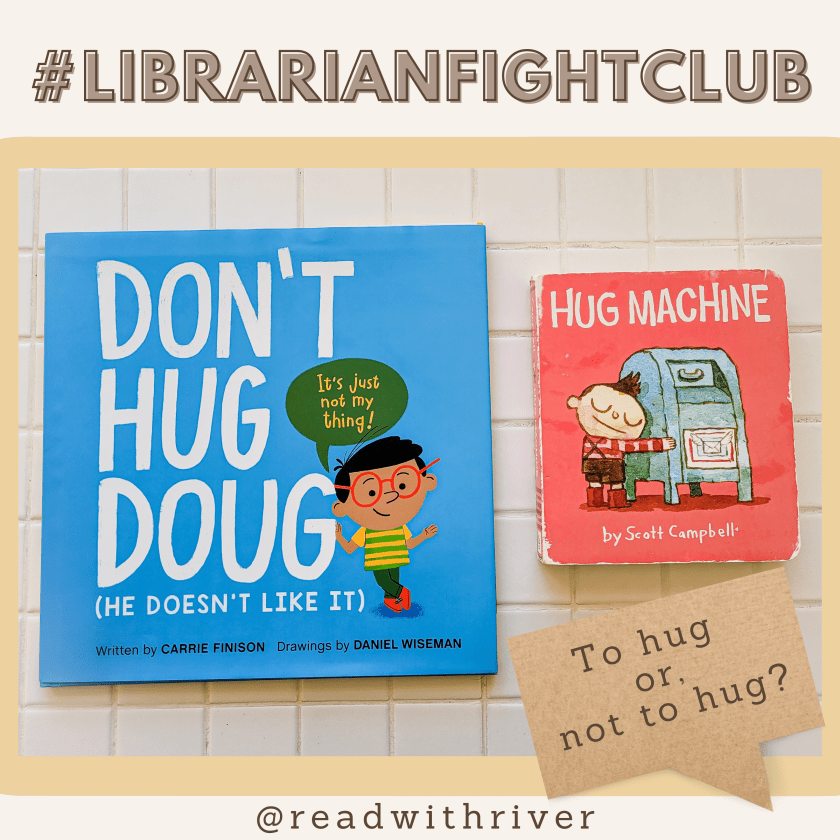
#LibrarianFightClub to Hug or not to Hug?

One of the reasons I love picturebooks is that they take all of the values and social discourse of the time they’re made in and present them in this beautiful little package to pick apart and wonder at.  Looking at two books made a handful of years apart can show how society has grown and changed and there is no better example than this than these two hug books.

  I love both of these books actually, “Hug Machine” by Scott Campbell 2014, and “Don’t Hug Doug (He Doesn’t Like it)” By Carrie Finison 2021. But what I find most fascinating about them, especially next to one another, is to marvel at how fast mainstream ideas are moving about issues around childhood, consent and, toxic masculinity. 

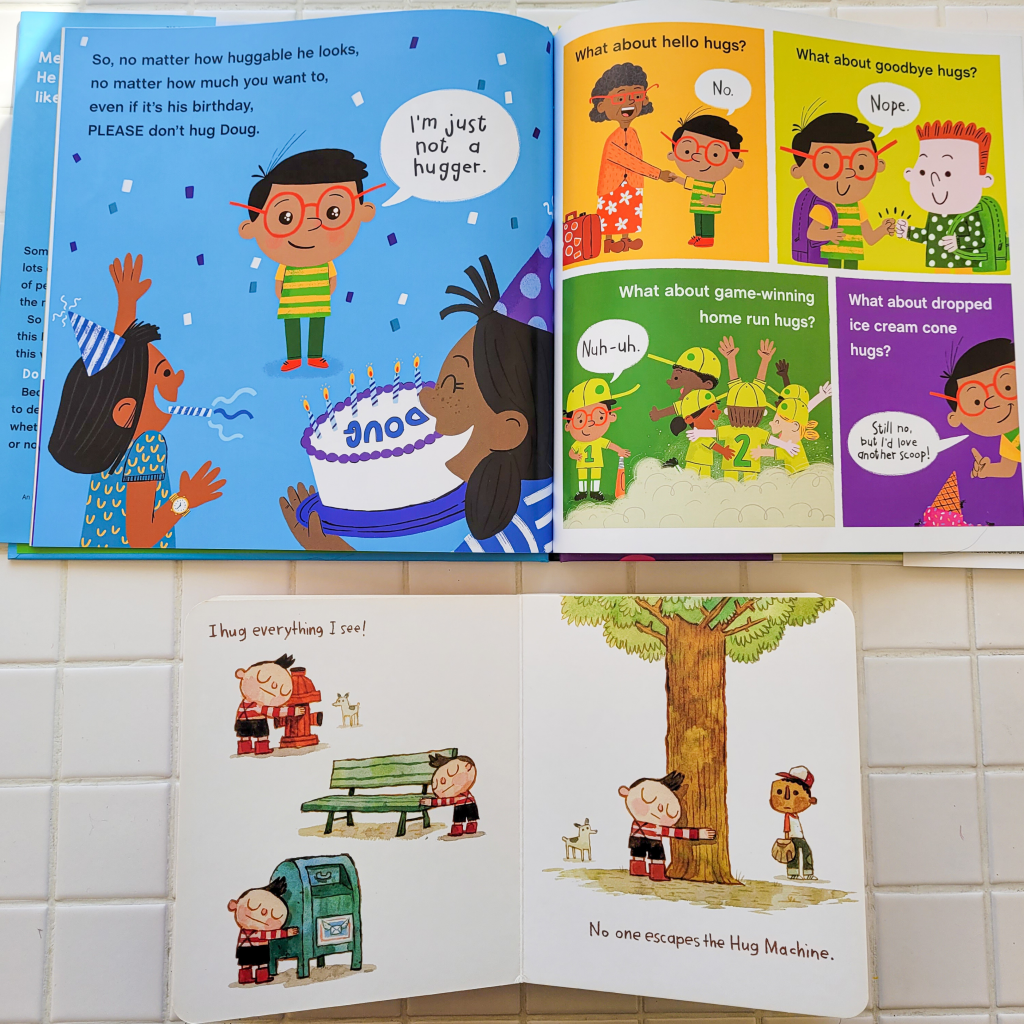
When “Hug Machine” came out in 2014 it was subversive in quietly challenging toxic masculinity and traditional gender roles in this beautiful pale pink and red ode to a little boy who loves to love and show affection.  Hug Machine is concerned with the emotional needs of those around him when; a baby is crying, a hedgehog feels unloved, etc. These things fundamentally challenge the emotional frigidity of toxic masculinity.

However, things have moved on, the world has moved on and become more complex, and isn’t that a wonderful thing? “Don’t Hug Doug” explores the complexities around consent, boundaries and, also the many ways that one can show their friendship. But I think what’s most poignant is the piece around expectations that children take on burden of emotional labour.

Less than a decade ago, it was seen as appropriate that the Hug Machine should be taking on the emotional labour of hugging literally everyone so that they felt better.  The kid didn’t even have a name he was reduced to his performance of giving.  In “Don’t Hug Doug” the onus is not on Doug to take on that burden, the children in this book are being relieved of that expectation and being given agency regarding their personal space.  This is a major step forward in society’s understanding of the fundamental rights of a child, and the nature of childhood itself.

Is there space to celebrate both of these books? Are they even fundamentally in opposition? #LibrarianFightClub  

Posted in Demystifying publishing

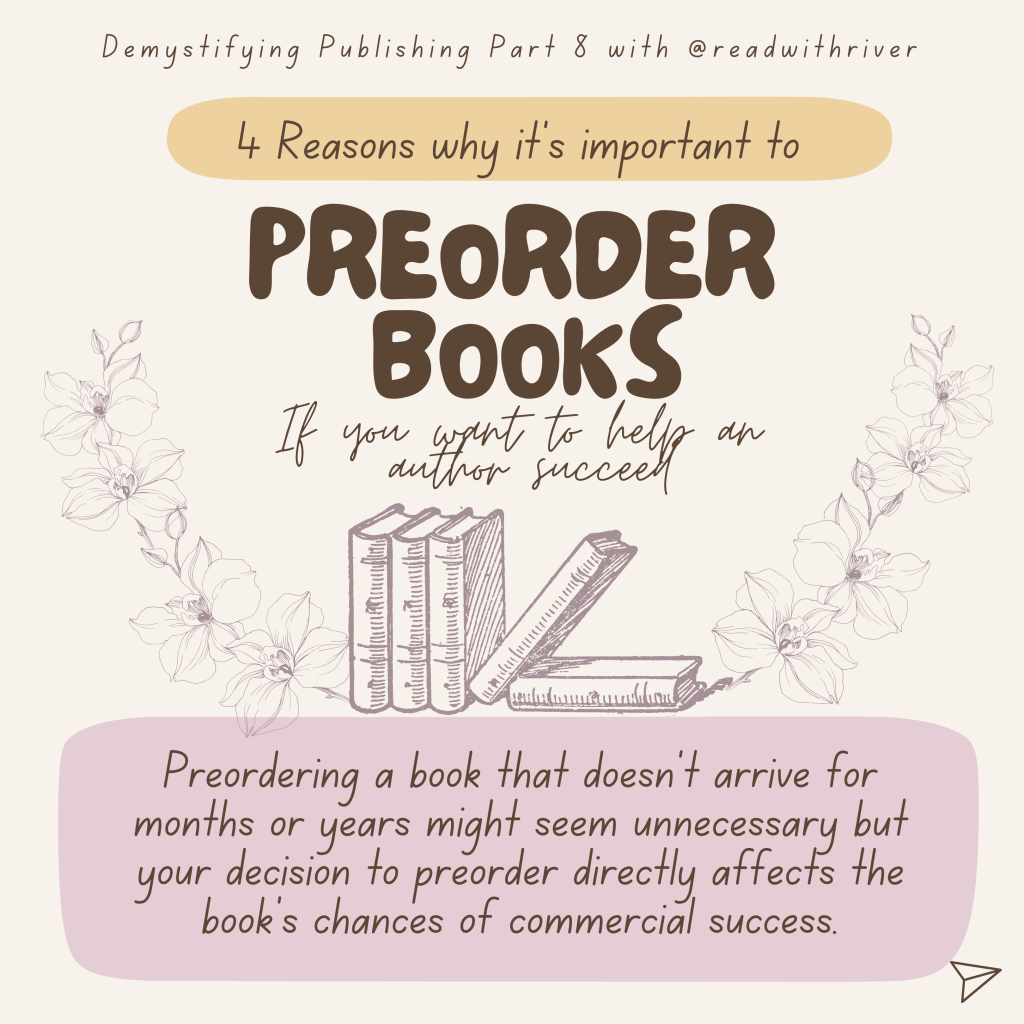
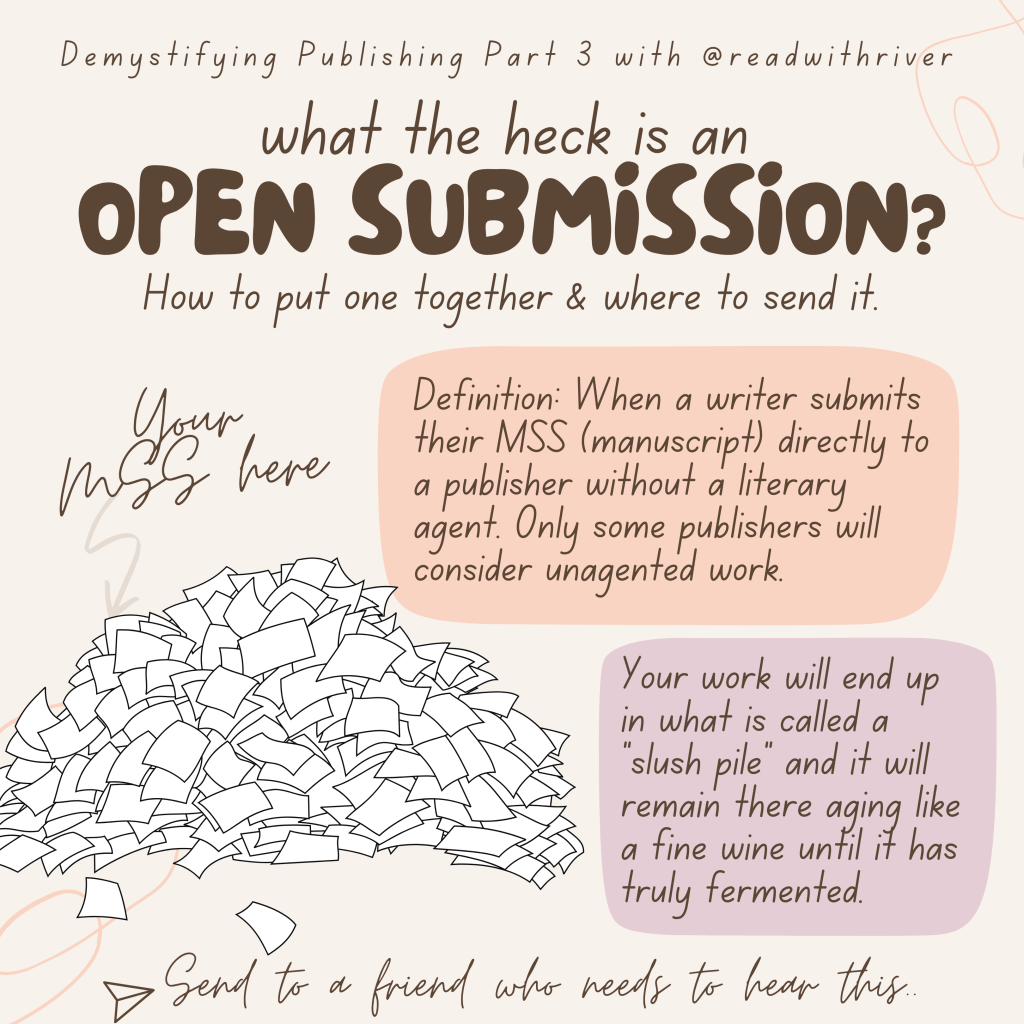
4 Reasons why it’s important to Preorder Books if you want to help an Author Succeed

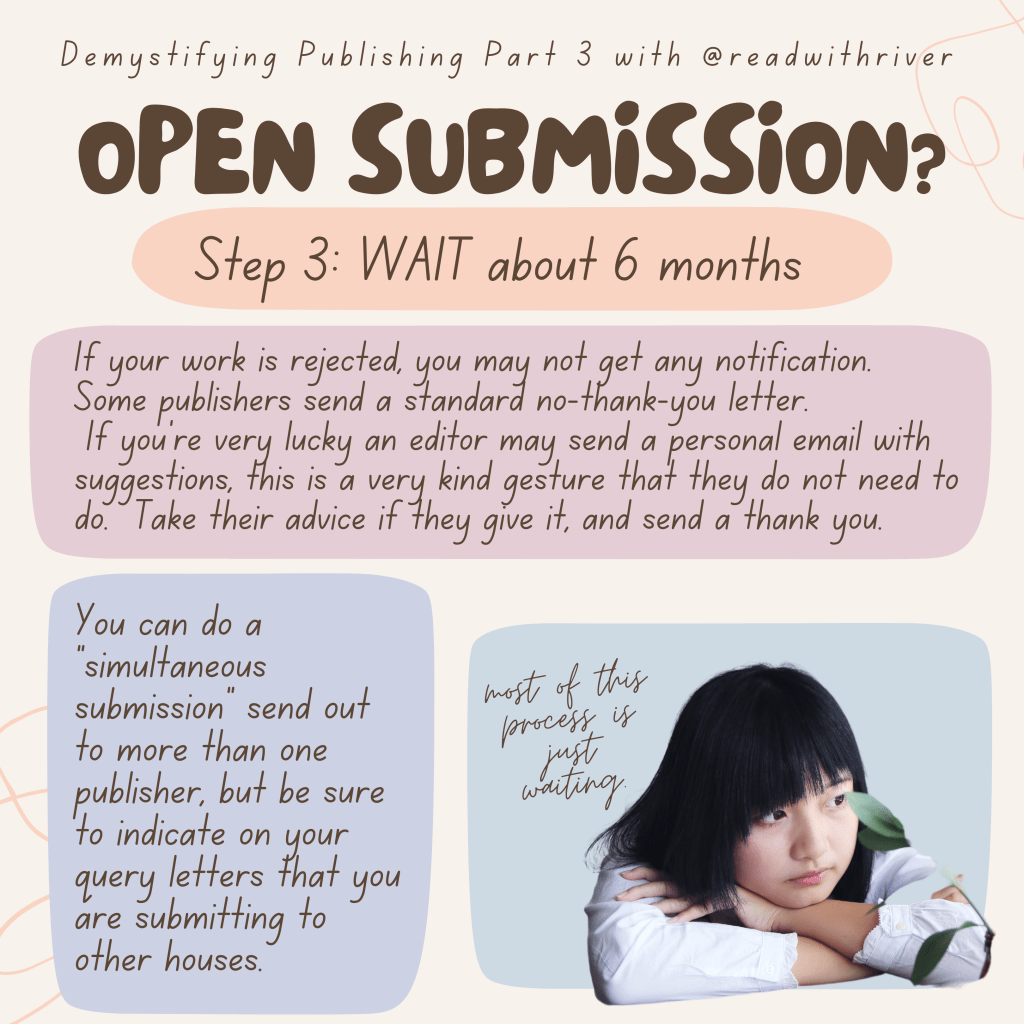
Have you ever wondered why publishers and authors are always publicizing preorder availability? There’s some very practical reasons for it!

Preordering a book that doesn’t arrive for months or years might seem unnecessary but your decision to preorder directly affects the book’s chances of commercial success.
1. Pre-release, preorders signal to publisher there will be interest, and they can adjust print runs to accurately meet demands. THe size of an initial print run announces to the world the confidence the publisher has in a book’s commercial success. The bigger the print run, the more confidence, the more buzz. Under printing can be a huge problem, because often people who cannot find a book in stock when they want it, will forget about it and not come back and buy it later.
2. Preorders then build buzz and encourage larger orders from big retailers. The buzz around the book is a great sales point that gets big retailers to make larger initial orders to prepare for consumer demand. This is of course not a good thing if after the fact nobody buys them, because they’ll be returned. But having them ordered and in stock means that they are available and a book has a chance to succeed.
3. Post-release, preorders sales count as part of first week sales. These inflated numbers allow books to launch and climb the rankings onto the bestseller lists which guarantee continued sales. Being on a bestseller list is one of the best things that can happen to a book commercially. People who have never heard of it, and might have never considered buying it, will go out and buy it because it is on this list.
4. Support independent Bookshops with guaranteed sale for their stock, helps mitigate risks. Independent bookshops help authors with creating readership and awareness. Preorders are guaranteed sales, and it allows retailers who operate on small profit margins and are risk averse to have a guaranteed sale on a book. Independent bookshops work hard to create opportunities for local authors and illustrators, to help them create buzz and get books out there. Supporting indie bookshops is supporting the culture of books.

Special thanks to the team at Walker Books for answering questions about this issue as well as UK Book Publisher, Editorial director at Andersen Press, Libby Hamilton @LibbyHamHam on Instagram

Posted in #Librarian Fight Club

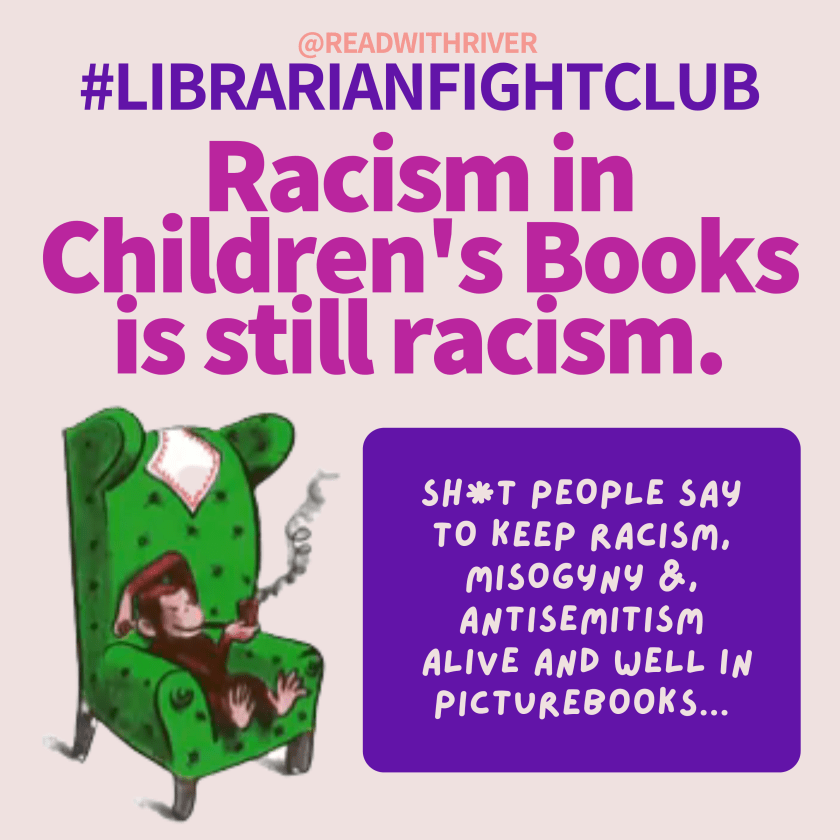
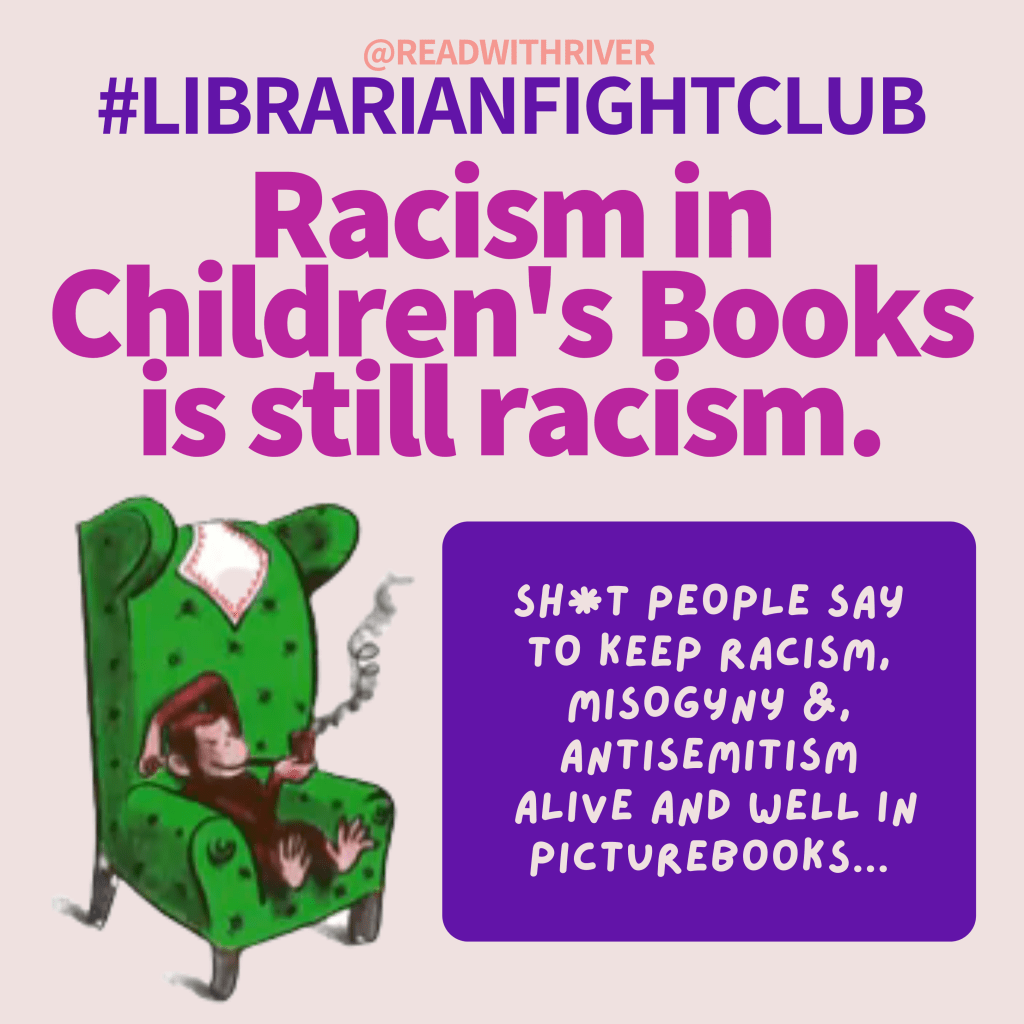
Racism in Children’s Books is Still Racism: #LibrarianFightClub

Shit People Say to Keep Racism Misogyny &, Antisemitism Alive and Well in Picturebooks…
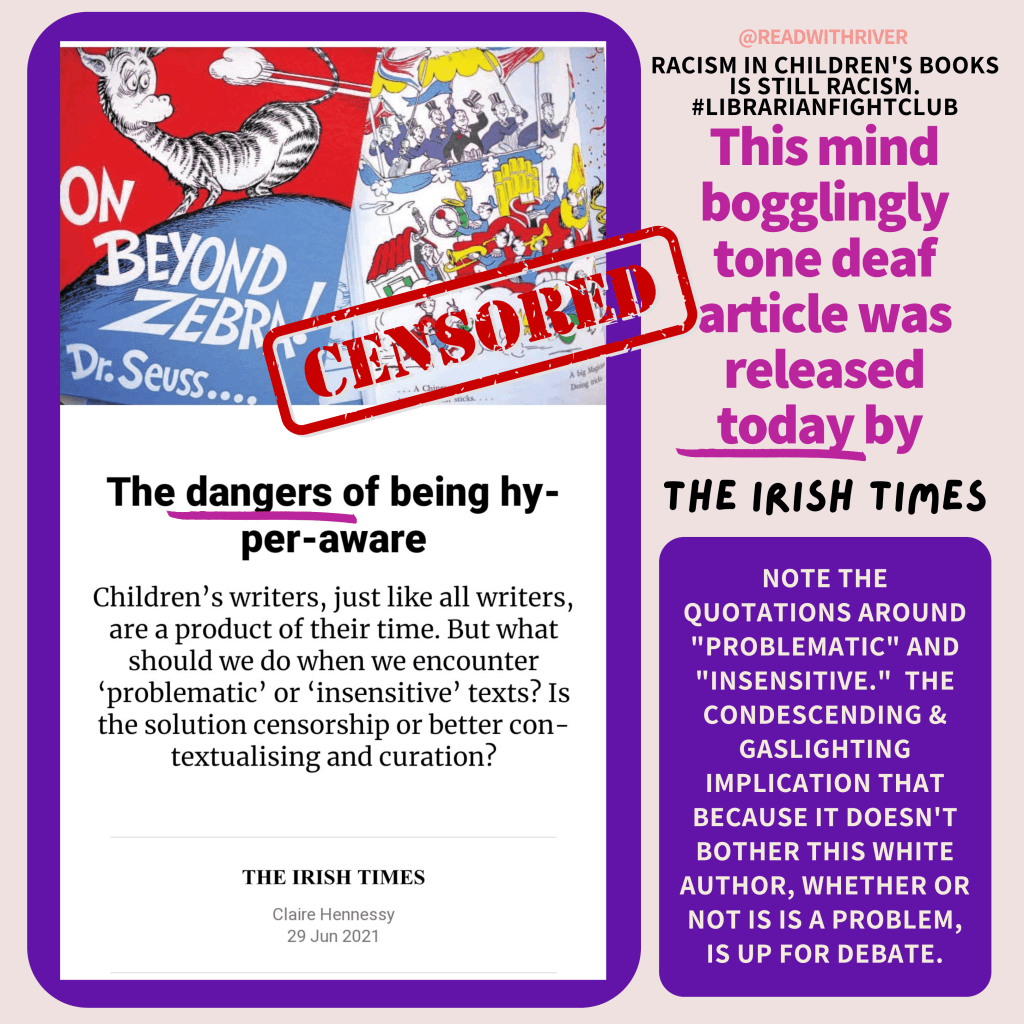
This mind bogglingly tone deaf article “The Dangers of being hyper-aware” by Claire Hennessy was released today in The Irish Times. Note the quotations around “problematic” and “insensitive.” The condescending & gaslighting implication that because it doesn’t bother this white author, whether or not it is a problem, is up for debate.
The author of this article, an established member of the publishing industry as both editor and author of 12 books, makes several points that we often see in defense of problematic children’s books. In fact, it makes the rounds so it’s a perfect case study! Let’s explore some of the main points shall we?
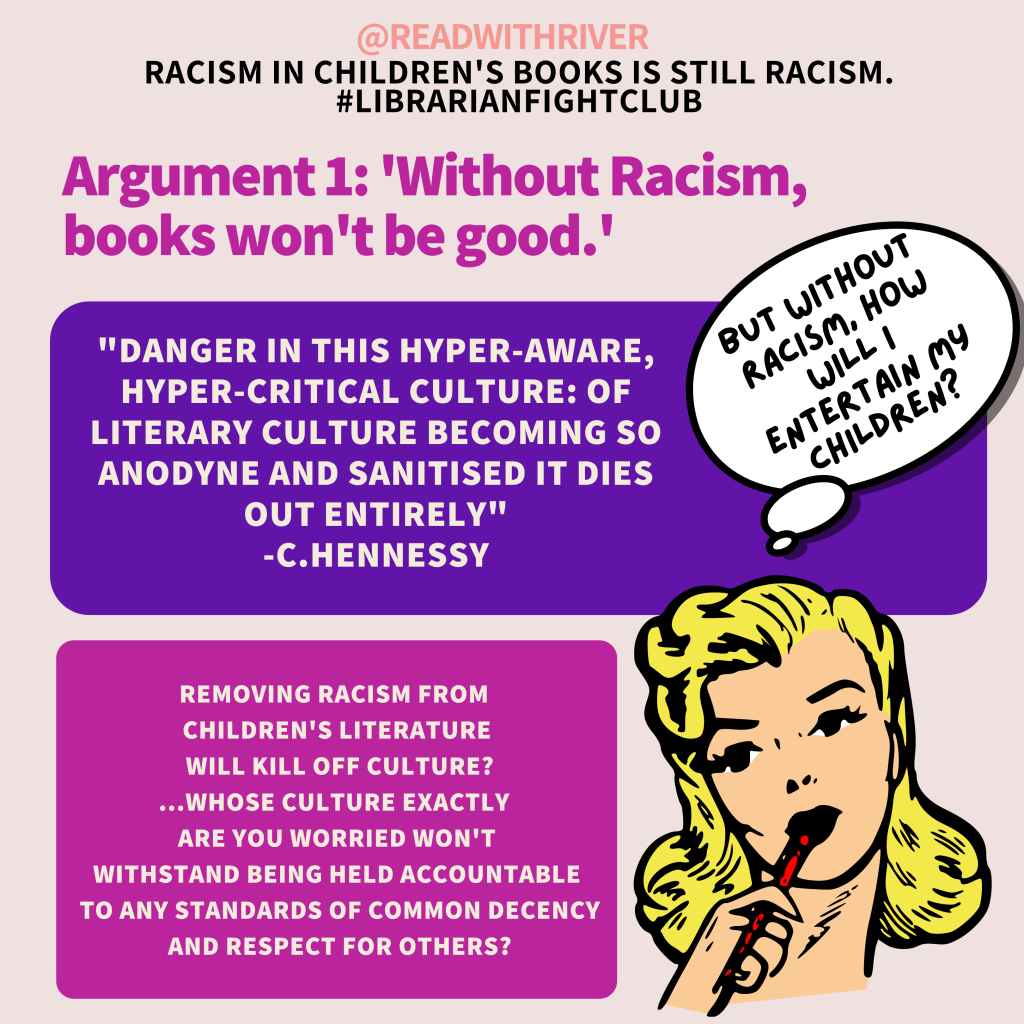
Argument 1: ‘Without Racism, books won’t be good.’ “Danger in this hyper-aware, hyper-critical culture: of literary culture becoming so anodyne and sanitised it dies out entirely”- C. Hennessy

Removing racism from children’s literature will kill of culture? …whose culture exactly are you worried won’t withstand being held accountable to any standards of common decency and respect for others?

Argument 2: ‘Just give your kids the Historical Context Disclaimer.” “Contextualizing the dodgy bits within Seuss’s overall body of work Developmentally ages-3-4 Time is a completely abstract concept. Ages 5-6 they begin to understand correlation between certain days in their daily life (holidays, birthdays, etc.) Concepts of historical time don’t develop until ages 9-11. History is valuable, discussion on literary theory is interesting but learning goals should be age appropriate. How do you teach a 5 year old historical context with any level of valuable understanding, when they do not know what Friday is?

https://www.scholastic.com/teachers/articles/teaching-content/ages-stages-how-children-develop-sense-time/

Argument 3: ‘But I liked it and it’s inconvenient you’re ruining it for me.’ “The delicious insanity of Roald Dahl’s fiction is forever tainted by his anti-Semitic comments (his family apologized in late 2020)”-C. Hennessy. Oh, his family apologized so as not to jeopardize their cash cow? Well then, that changes everything!
Argument 4: “Your fave is almost certainly problematic.”- C. Hennessy. Gosh could that be because picture books are written almost exclusively by white people, to this day? Maybe the publishing industry allowed other people traditionally to write picturebooks, we wouldn’t have such a crap selection.
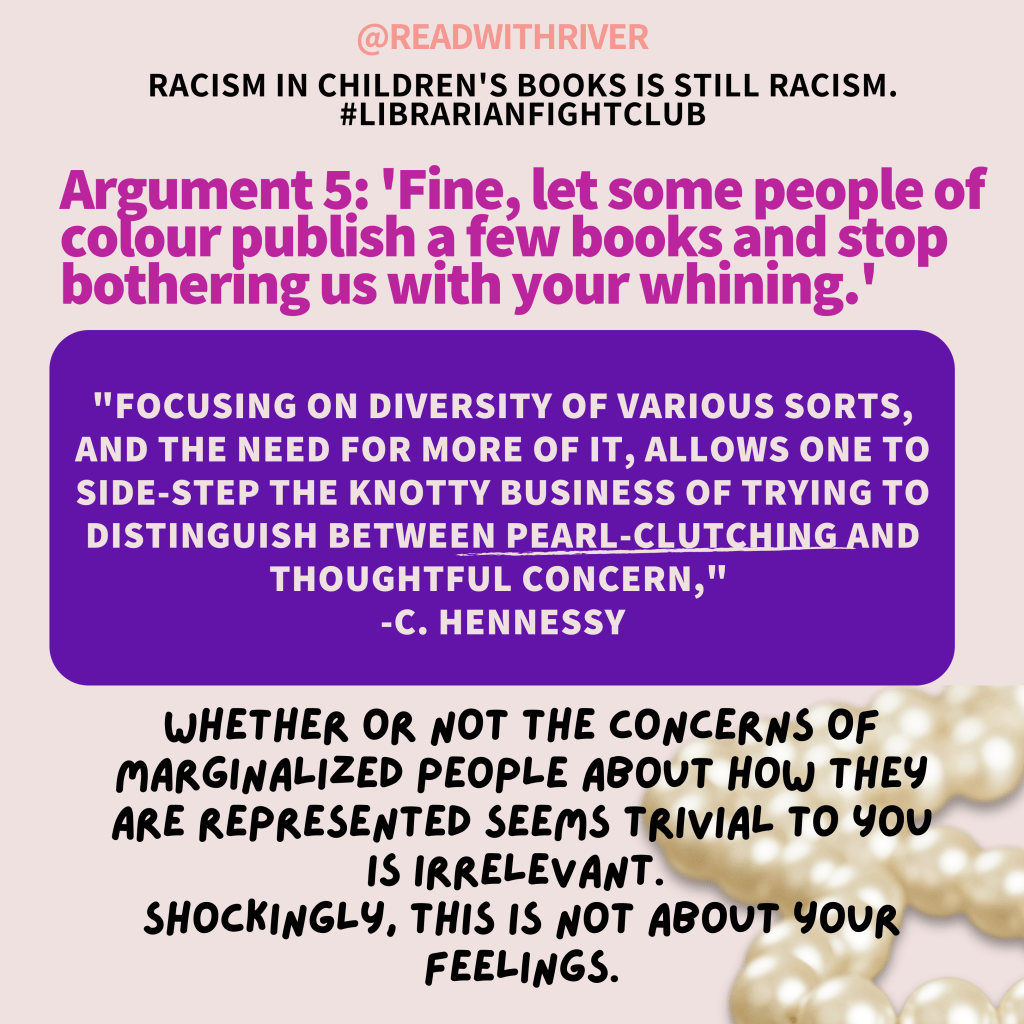
Argument 4: ‘Fine, let some people of colour publish a few books and stop bothering us with your whining.’ “Focusing on diversity of various sorts, and the need for more of it, allows one to side-step the knotty business of trying to distinguish between pearl-clutching and thoughtful concern,”-C. Hennessy. Whether or not the concerns of marginalized people about how they are represented seem trivial to you is irrelevant. Shockingly, this is not about you.
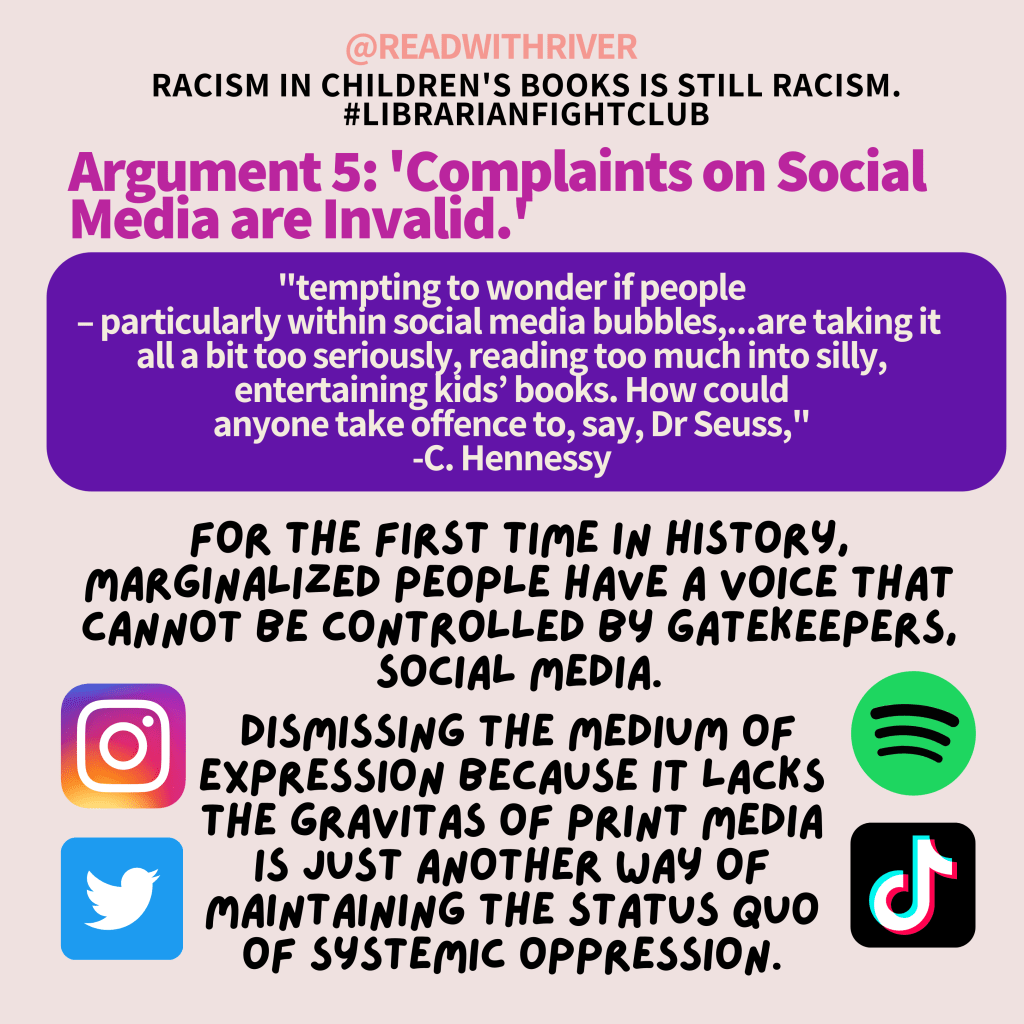
Argument 5: ‘Complaints on Social Media are Invalid.’ “tempting to wonder if people-particularly within social media bubbles…are taking it all a bit too seriously, reading too much into silly, entertaining kids’ books. How could anyone take offence to, say, Dr. Seuss,” -C. Hennessy. For the first time in history marginalized people have a voice that cannot be controlled by gatekeepers, Social media.; Dismissing the medium of expression because it lacks the gravitas of print media is just another way of maintaining the status quo and of systemic oppression.
Argument 6: ‘It’s too hard to fix we better do nothing about it.’ “Hard-and-fast rules to ensure inoffensive content are impossible” -C. Hennessy. Try not starting out with stereotypes? Try researching? Try editing? Try consulting with people you’re representing? Try harder.
Posted in #Librarian Fight Club

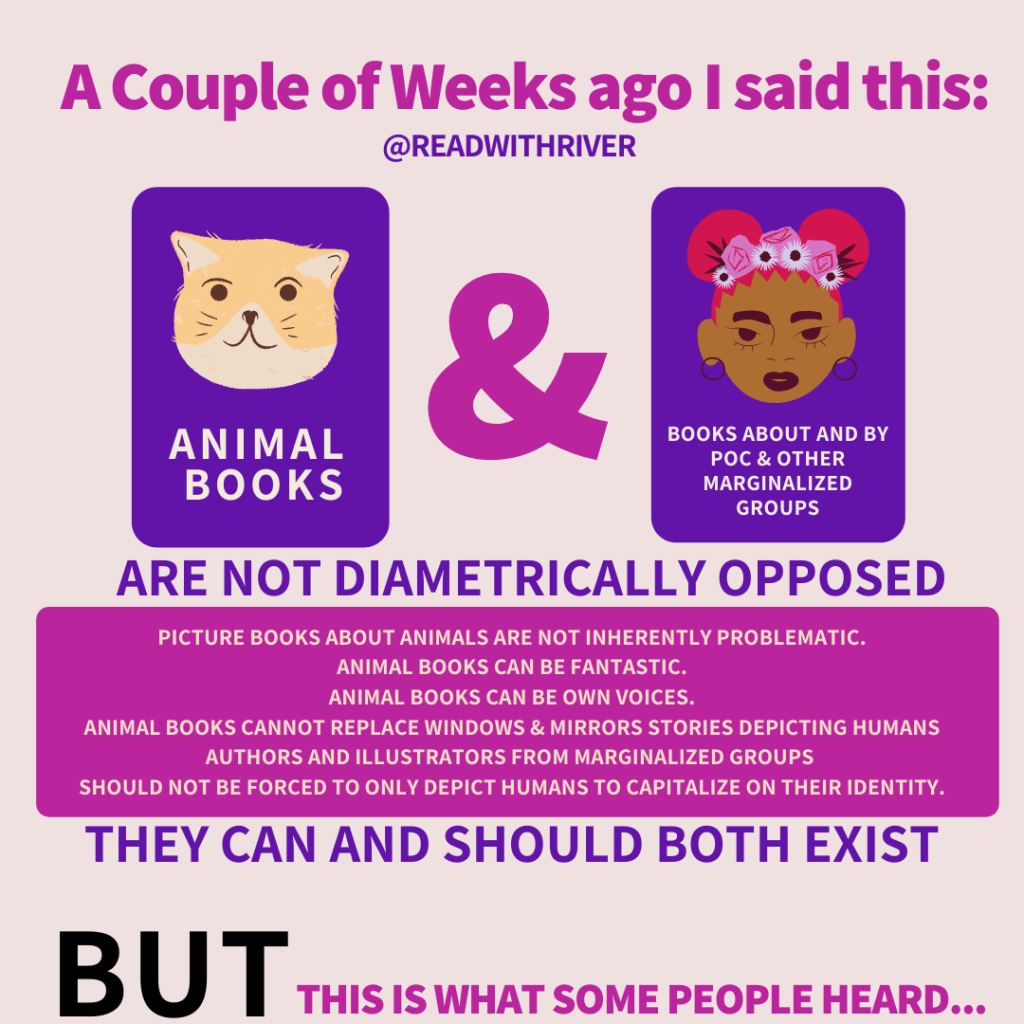
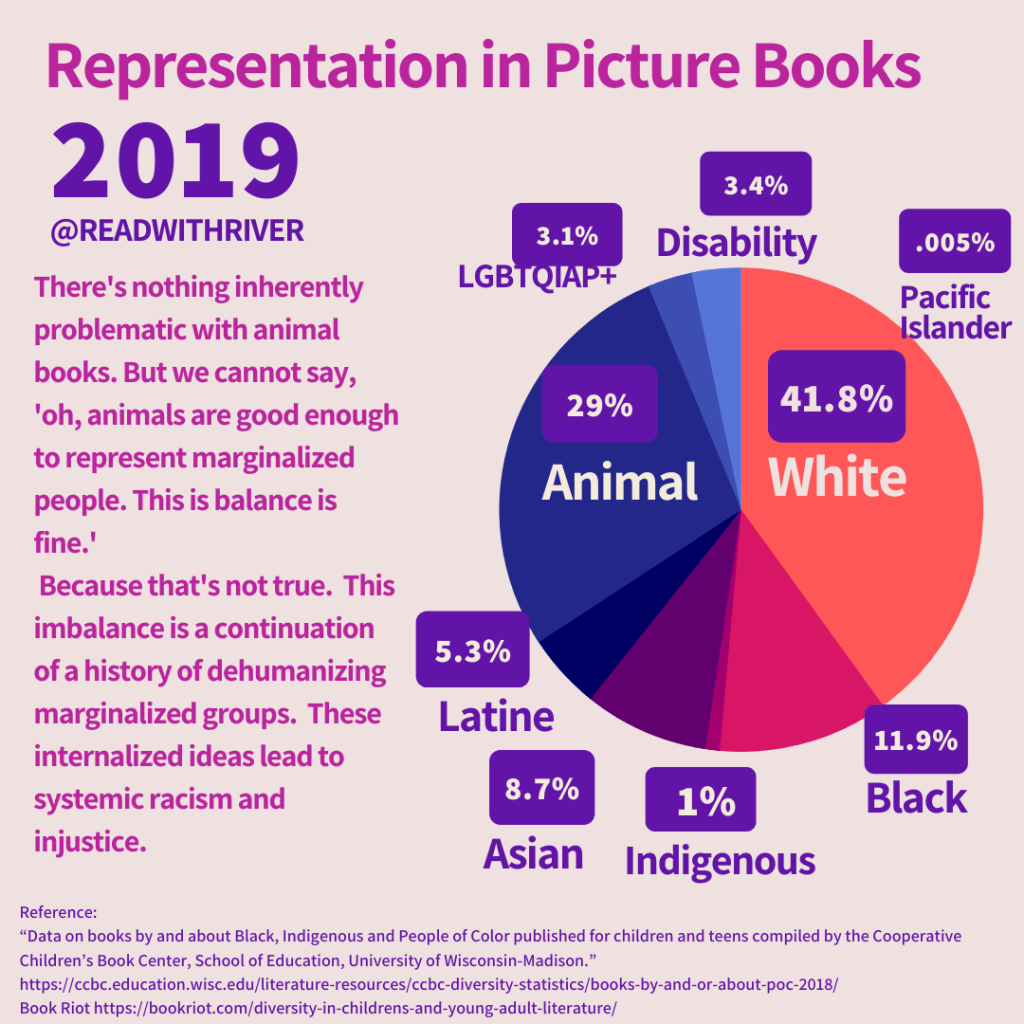
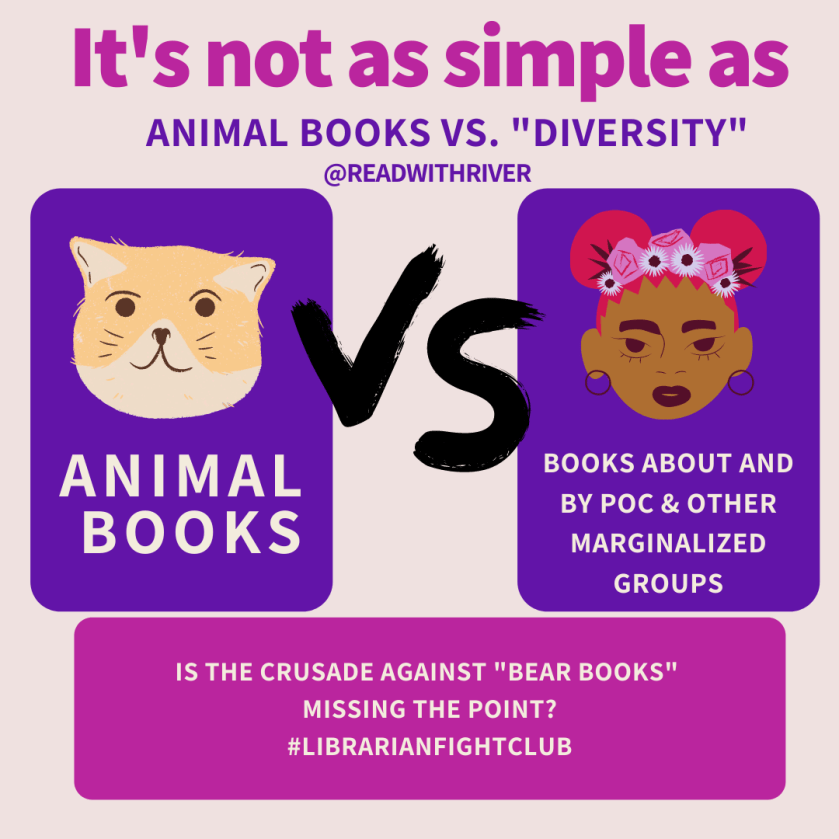
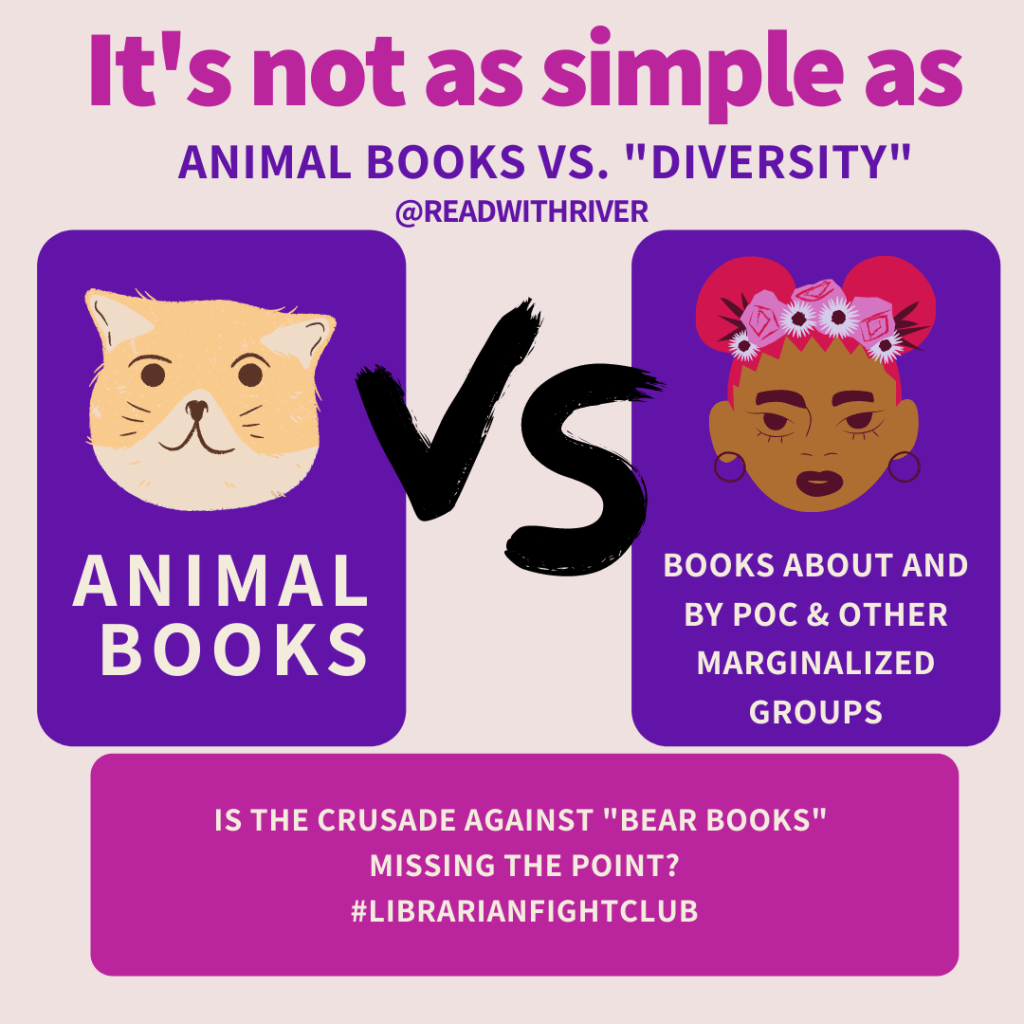
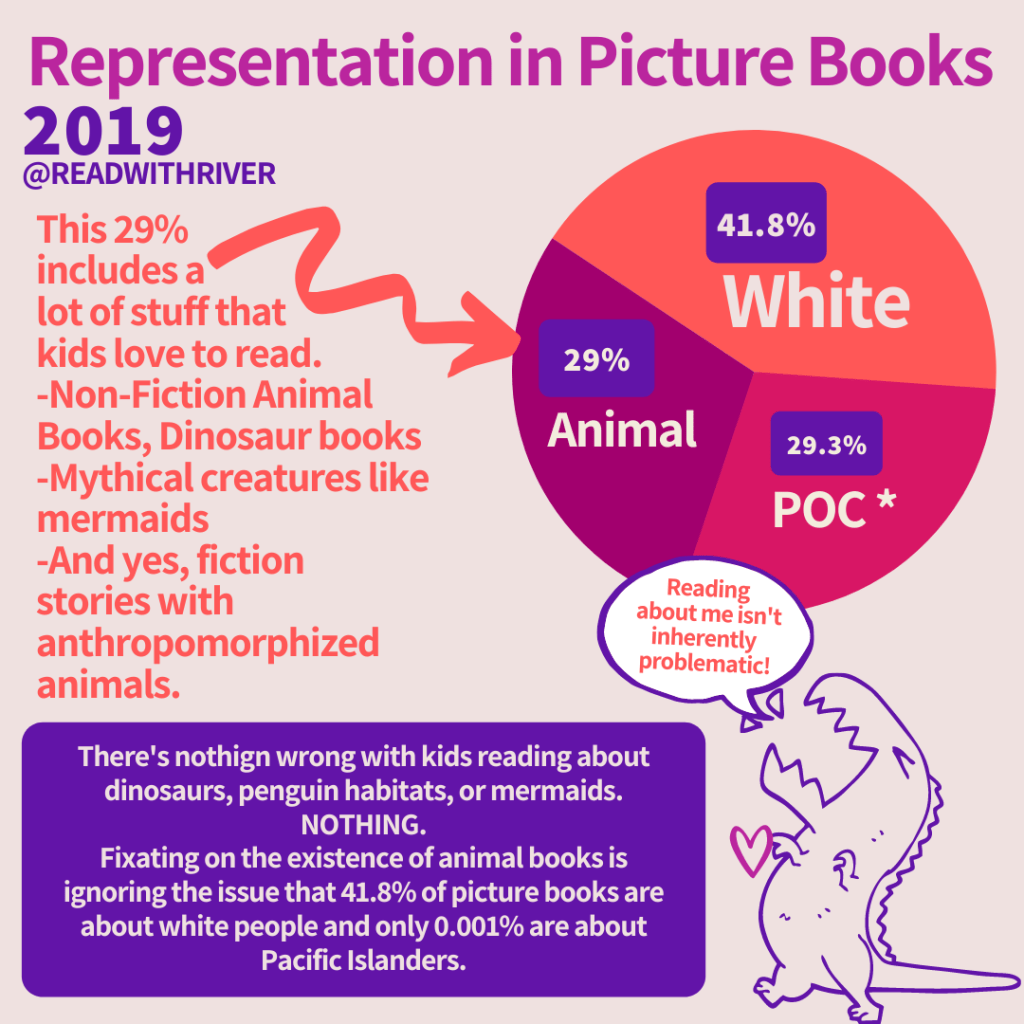
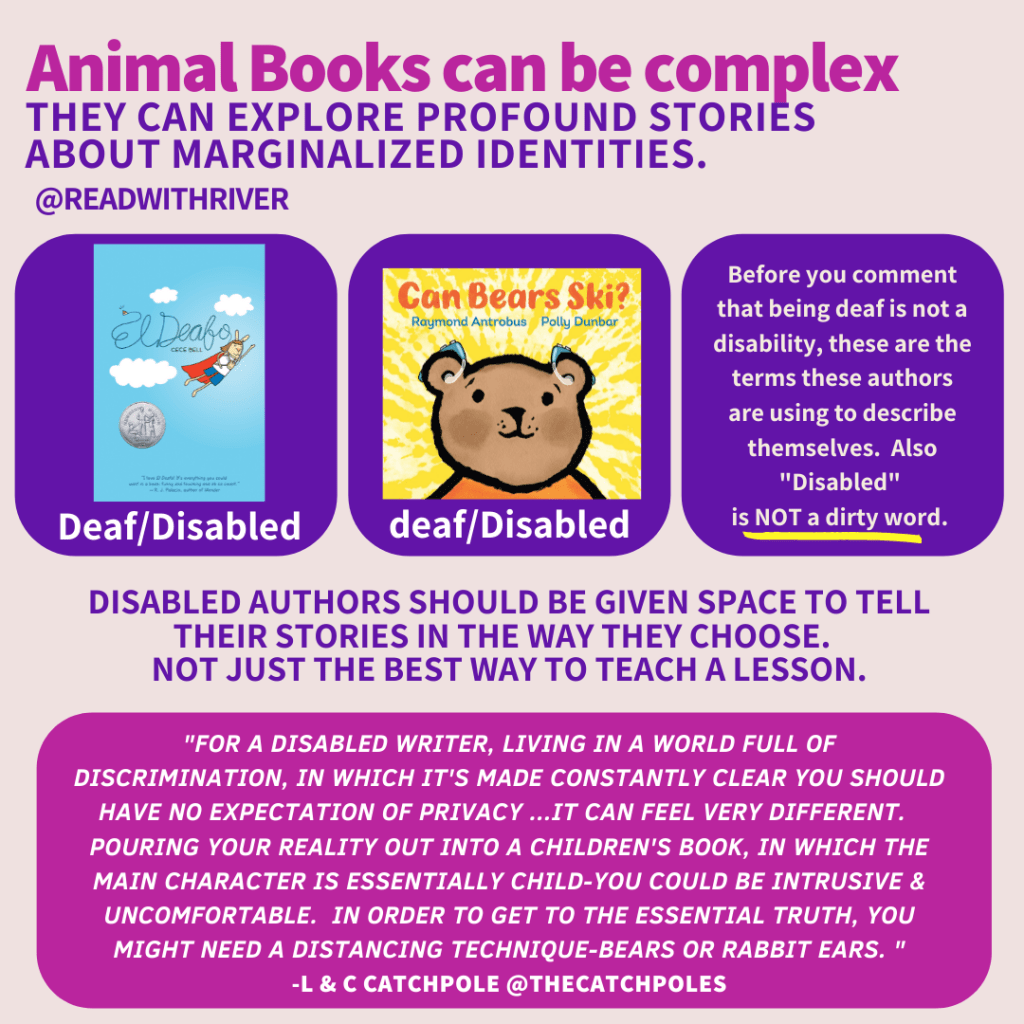
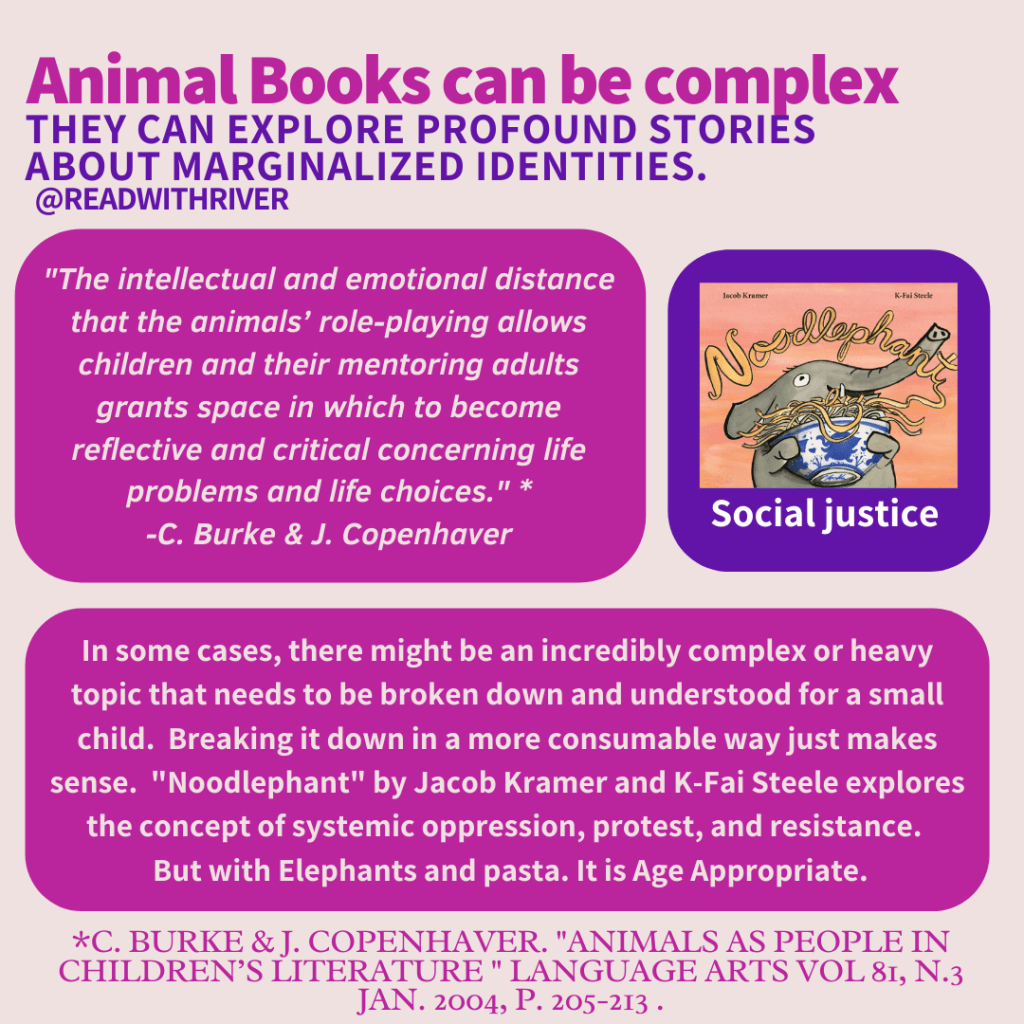
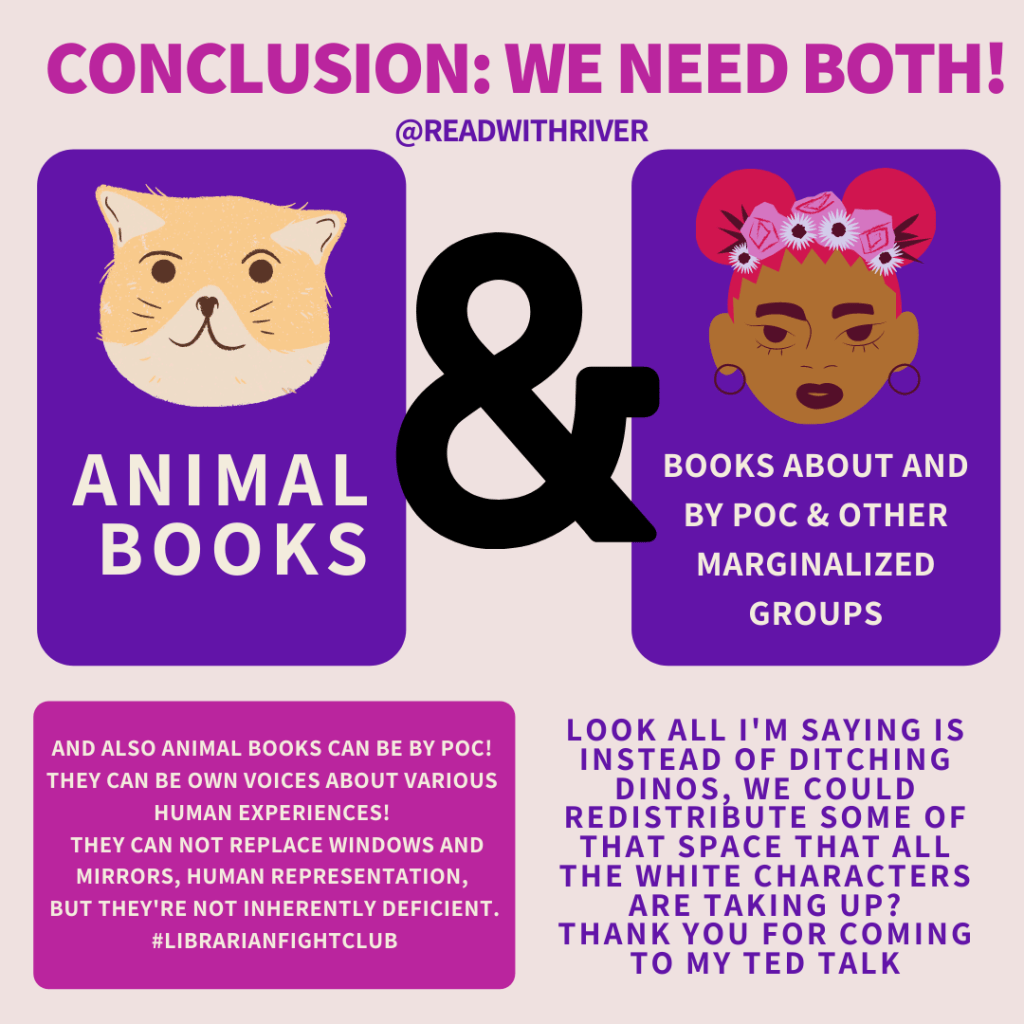
It’s Not as Simple as Animal Books Vs. “Diversity

Sources for this Post:

Lucy & James Catchpole https://thecatchpoles.net/

“Data on books by and about Black, Indigenous and People of Color published for children and teens compiled by the Cooperative Children’s Book Center, School of Education, University of Wisconsin-Madison.”

Book Riot https://bookriot.com/diversity-in-childrens-and-young-adult-literature/

https://www.scholastic.com/parents/books-and-reading/raise-a-reader-blog/why-its-important-kids-to-see-themselves-books.html

Larsen, N. Lee, K., & Ganea P.. “Do storybooks with anthropomorphized animal characters promote prosocial behaviours in young children?” Dev Sci. 2018 May; 21 (3): e 12590 2

*C. Burke & J. Copenhaver. “Animals as People in Children’s Literature ” Language Arts Vol 81, N.3 Jan. 2004, P. 205-213 .