What is Active Listening: and why is it essential?
Active Listening in the context of musical development means listening carefully to a sound or collection of sounds and paying particular attention to the qualities that make that sound unique.
Developing the ability to actively listen is 100% the most important cornerstone to being a successful musician and learning multiple languages. It is also a large component of successful pitch training and learning to sing.
What are the “qualities” that make a sound unique?
What makes your voice different from your friend’s? What makes your voice different from a Kookaburra’s? How is one song different from another? Every sound, every song, is made up of different pieces and elements that can be described, defined, understood and mimicked.
So the main job here in teaching and facilitating active listening is to help students build their ability to discern subtle differences in sounds and recreate them.
Practical Application
There are many different ways to build this skill, but I am going to be sharing with you picture books that can be used to train active listening and mimicry.
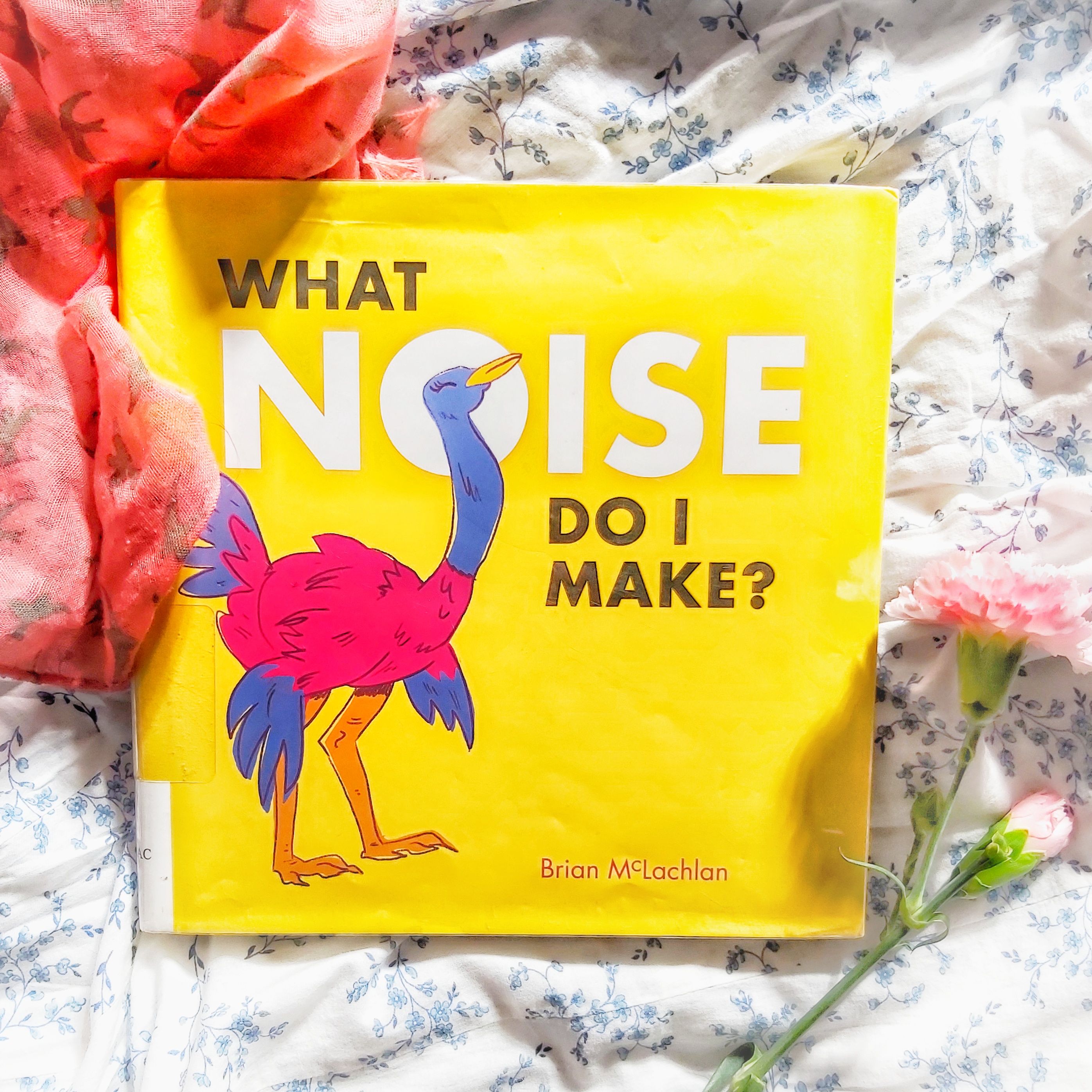
“What Noise Do I Make?” By Brian McLachlan
This book is a wonderful place to start with active listening and mimicry. It is a book of the strange noises animals make, not just your regular barnyard animals either!
Appropriate for toddlers to grade 2.

There is lots to talk about here especially for beginning readers! Read this book twice in one sitting.
The first time read it looking at the sounds the letters should make, and with your students guess what those sounds would be.
After the first read through, listen to recordings of the actual animals. Then discuss how close or far off we were the first time.
The second read through encourage the students to try and mimic the sounds as they heard them, still paying attention to how those sounds have been depicted in letters.
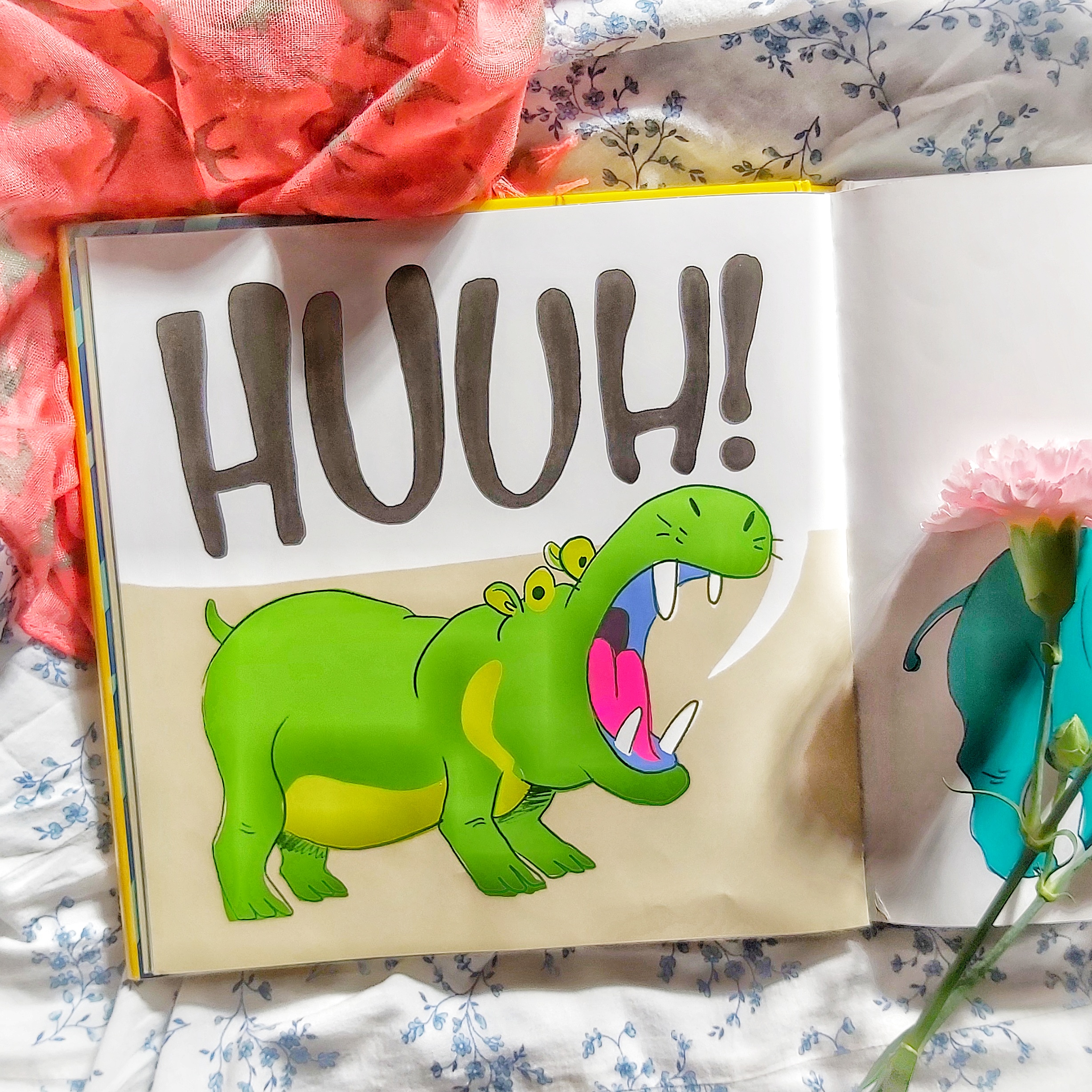
Point out the size and style of the letters, the use of punctuation. Consider how those elements affect the way it should sound. Ideally the students would use the vocabulary from the music curriculum documents (which you can find below) to explain their thinking.
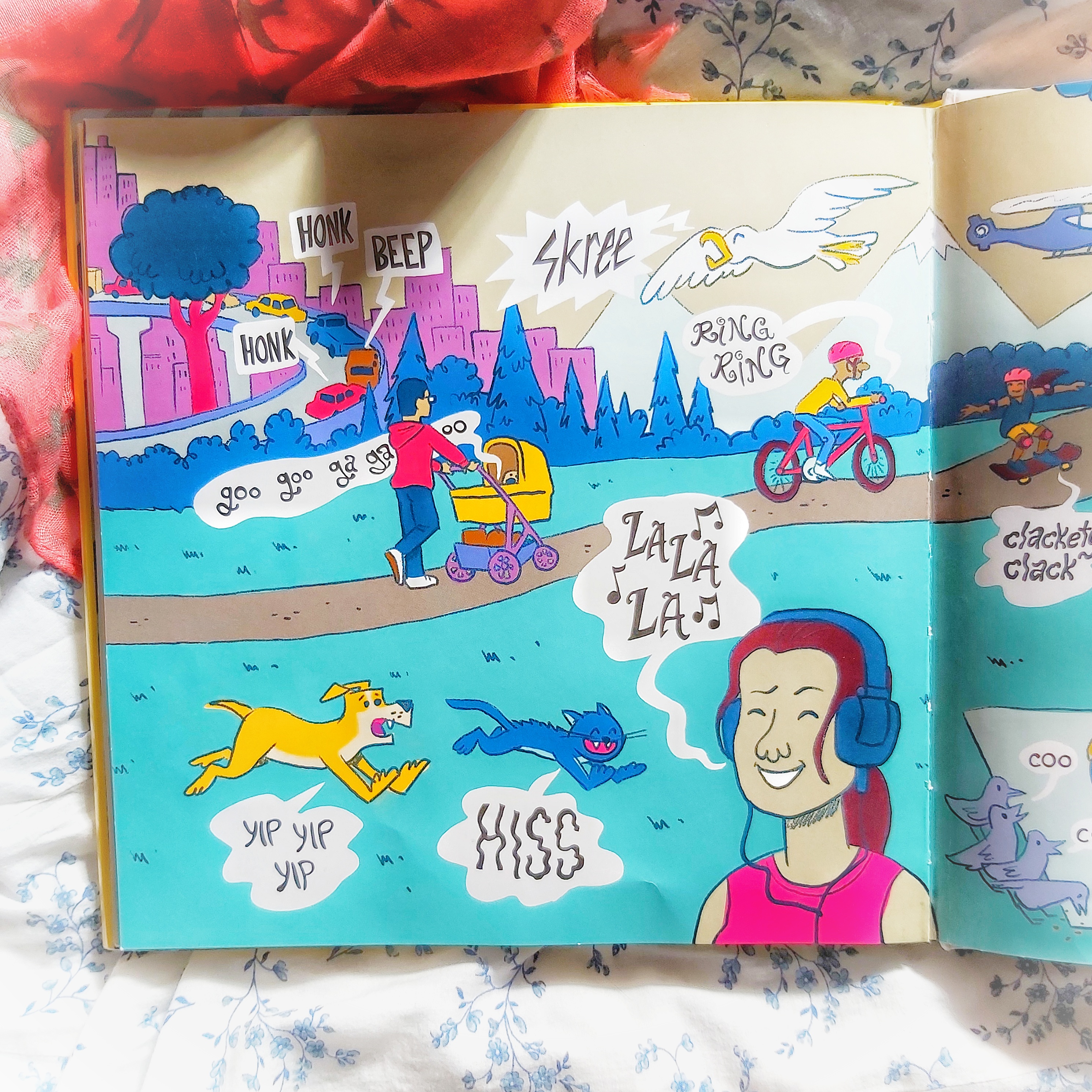
At the end of this book there is a double page spread depicting what we call a “soundscape.” A “soundscape” is all of the noises happening in a place at one time, and their effect as a whole. There is a lot you can do with “soundscapes” in the classroom, but that is the subject of another lesson entirely.
The Elements of Music: Technical Vocabulary and practical definitions in context of Music Theory and the Curriculum Expectations
The official language used to break down and analyze sounds is part of the “Fundamentals Concepts of Music” the vocabulary and categories we break it down to is referred to as”Elements of Music.”(These terms are straight out of the Ontario Curriculum Documents.) Although this may sound very posh like it applies to operas, it also applies to the sound of a quarter falling on the floor, or your uncle’s very loud belch.
Duration: Length of a sound.
Dynamics and other Expressive Controls: the volume, how it changes, and the articulation (smooth vs. choppy.)
Timbre: the quality and category that makes a sound unique such as classification eg., woodwind instrument vs. Strings.
Texture/Harmony: the way sounds work together, harmony, polyphony, etc..






 Read With River