Growing up in Canada, we don’t’ spend a lot of time talking about the concept of ‘Freedom.’ Not in the way that seems to take over a lot of the discussion in America around what they demand from their society, what they expect of their lives. “Freedom” has never been our primary value in our Canadian society.
But lately I’ve begun to really start thinking about what it means to have freedom, and where does freedom end and privilege begin? What is a basic freedom and what is entitlement? So I turned to my books, to search for freedom and this is what I’ve found.
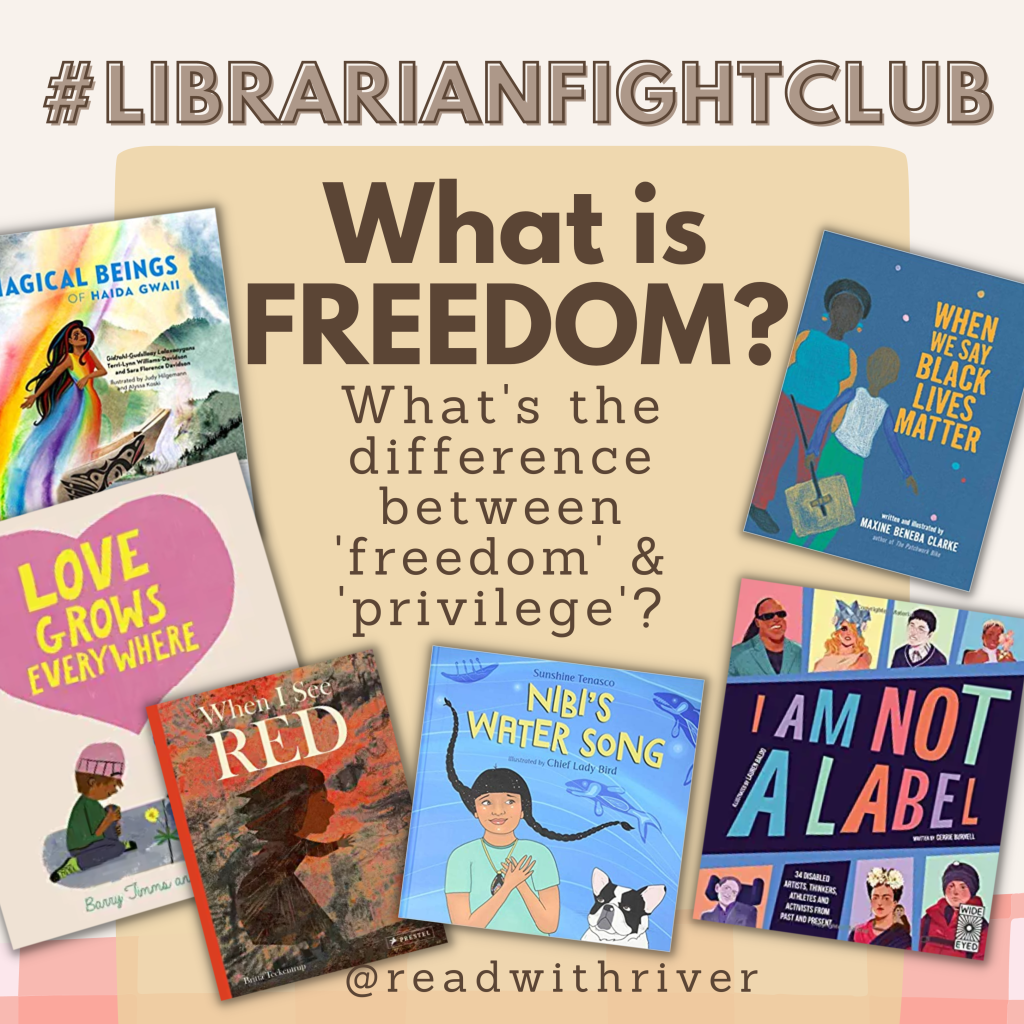
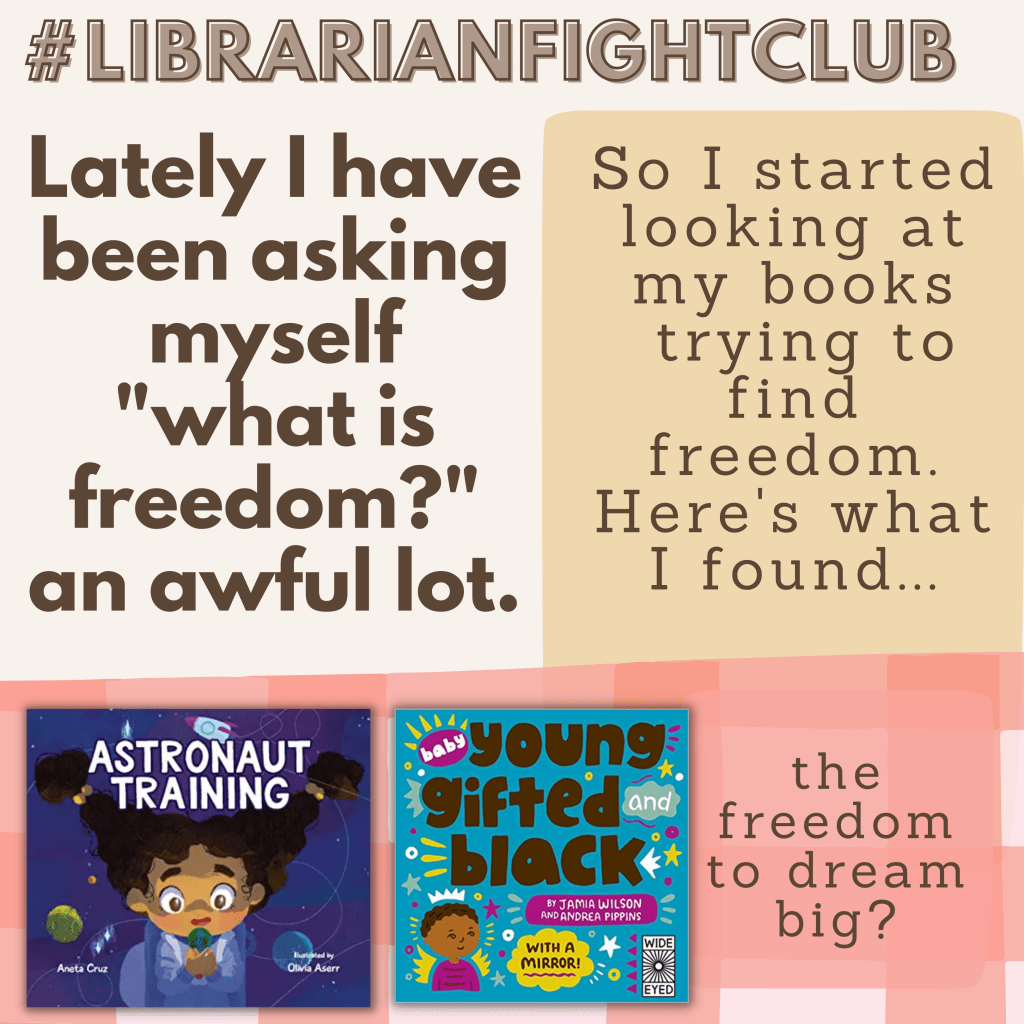
The freedom to dream big?
- “Astronaut Training” by Aneta Cruz & Olivia Aserr from Astra Publishing House
- “Baby Young Gifted and Black, With a Mirror” by Jamia Wilson and Andrea Pippins from Quarto

Freedom is the space to run, to howl and cry.
- “Howl” by Kat Patrick and Evie Barrow from Scribble
- We Became Jaguars” by Dave Eggars and Woodrow White from Chronicle
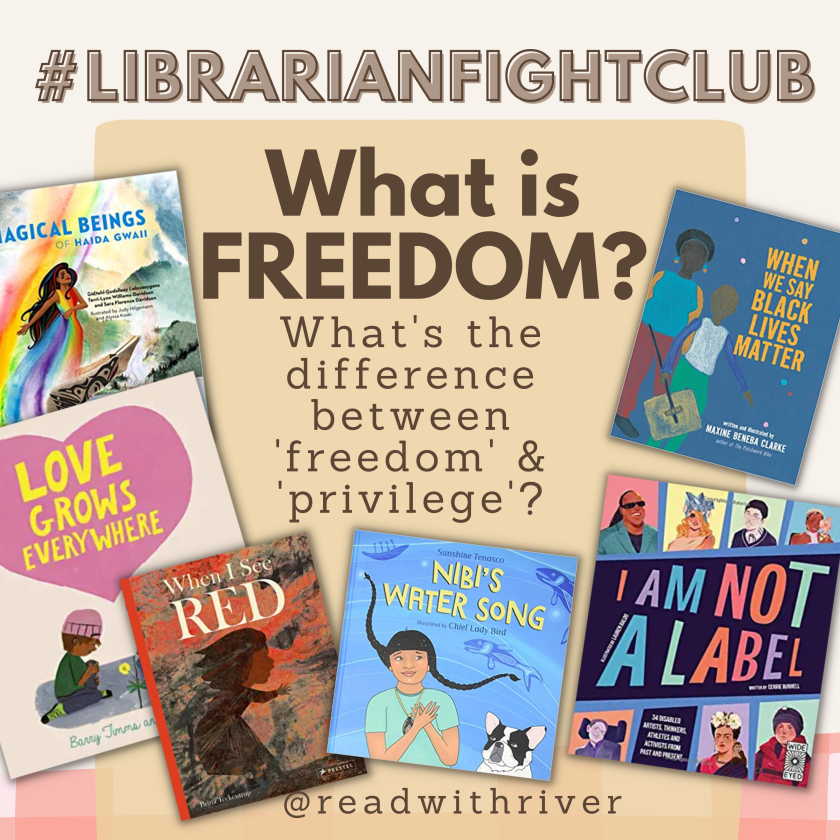
- “When I See Red” by Britta Teckentrup from Prestel

But, freedom is the right to clean drinking water, safety, food security.
- “Nibi’s Water Song” by Sunshine Tenasco and Chief Lady Bird from Scholastic
- “Bright Star” by Yuyi Morales from Holiday House Books
- “Saturday at the Food Pantry” by Diane O’Neil and Brizida Magro from Albert Whitman

Freedom from Oppression & Persecution
- “When We Were Alone” by David A. Robertson and Julie Flett from Highwater Press an imprint of Portage and Maine
- “Best-Loved Jewish Songs: Songs for Friends and Family” from Cottage Door Press
- “When We Say Black Lives Matter” by Maxine Beneba Clarke from Candlewick
- “The 1619 Project Born on the Water” by Nikole Hanna-Jones and Renée Watson and Nikkolas Smith from Penguin Random House
- “Magical Beings of Haida Gwaii” Terri-Lynn Williams-Davidson, Sara Florence Davidson, Alyssa Koski (Illustrator), Judy Hilgemann from Heritage House

Freedom is autonomy over your own body (not someone else’s.)
- “Don’t Touch My Hair” by Sharee Miller from Little Brown Books for Young Readers
- “Don’t Hug Doug (He Doesnt Like It)” by Carrie Finison and Daniel Wiseman from G.B. Putnam and Son’s Books for Young Readers
- “The Bare Naked Book” by Kathy Stinson and Melissa Cho from Annick Press

Freedom to exist in your body, to love yourself and, be respected.
- “What Happened To You?” by James Catchpole and Karen George from Faber
- “Laxmi’s Mooch” by Shelly Annand and Nabi H. Ali from Penguin Random House
- “Eyes that Kiss in the Corners” by Joanna Ho and Dung Ho from Harper Collins
- “Magic Like That” by Samara Cole Doyon and Geneva Bowers from Lee & Low

Freedom is to be able to love without fear.
- “Love Grows Everywhere” by Barry Timms from Quarto
- “Bathe The Cat” by Alice B. McGinty and David Roberts from Chronicle Books
- “Prince & Knight” by Daniel Haack and Stevie Lewis from Little Bee Books in partnership with GLAAD
- “Two Grooms on a Cake” by Rob Sanders and Robbie Cathro from Simon & Schuster

Freedom is to be able to express your identity.
- “Ho’Onani Hula Warrior” by Heather Gale and Mika Song from Tundra Books
- “The Spectacular Suit” by Kat Patrick and Hayley Wells from Scribble Kids Books
- “Téo’s Tutu” by Maryann Jacob Macias and Alea Marley from Penguin Random House
- “When Aiden Became a Brother” by Kyle Lukoff and Kaylani Juanita from Lee & Low



 Read With River